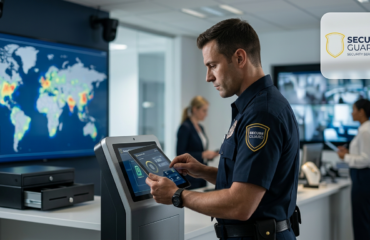
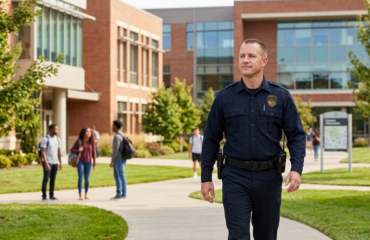
Physical security vulnerabilities can develop in areas that businesses use every day. Entrances, parking lots, loading docks, stairwells, employee doors, storage areas, and property perimeters may all create security gaps when procedures, lighting, cameras, access controls, or patrols do not match the way the property actually operates.
For that reason, an effective security plan should evaluate the entire property rather than focus only on the main entrance.
The Cybersecurity and Infrastructure Security Agency recommends reviewing access points, doors, parking areas, lighting, restricted areas, landscaping, visitor procedures, and communication systems when assessing physical security. Businesses can explore CISA’s physical security resources for additional planning guidance.
Here are nine common physical security vulnerabilities businesses and property managers should review.
1. Uncontrolled Entrances and Secondary Doors
Main entrances often receive the most attention, while side doors, employee entrances, rear exits, service corridors, and secondary gates may receive less oversight.
Common problems include:
- Doors that do not close or latch correctly
- Propped-open employee entrances
- Shared access codes
- Unmonitored service doors
- Unclear visitor procedures
- Old keys or credentials that were never deactivated
Property managers should identify every pedestrian and vehicle entrance and establish clear procedures for who may use each access point.
Depending on the property, professional armed or unarmed security officers can support visitor management, employee access, gate procedures, vendor verification, and restricted-area control.
2. Parking Lots and Parking Garages
Parking areas are often large, spread out, and less active than the main building. As a result, they can become one of the most overlooked physical security vulnerabilities on a commercial property.
Property managers should review:
- Lighting
- Camera coverage
- Pedestrian entrances
- Garage stairwells
- Vehicle gates
- Emergency communication options
- Areas hidden by walls, columns, or landscaping
CISA physical-security guidance recommends monitoring parking areas and evaluating whether they have adequate lighting.
For larger properties, mobile patrol services can provide scheduled or randomized checks of parking lots, garages, entrances, and property perimeters.
3. Loading Docks and Delivery Areas
Loading docks often involve frequent movement by drivers, vendors, contractors, employees, and delivery vehicles.
That activity can make it difficult to distinguish normal operations from unauthorized access.
Potential vulnerabilities include:
- Unverified drivers
- Open loading doors
- Unmonitored deliveries
- Vehicles entering restricted areas
- After-hours pickups
- Incomplete delivery records
Businesses should establish written procedures for vendor check-in, vehicle identification, delivery authorization, and access to warehouse or storage areas.
Warehouses and logistics properties may also benefit from Secure Guard’s transportation and logistics security services.
4. Camera Blind Spots and Poor Surveillance Placement
Installing cameras does not automatically eliminate security gaps.
Blind spots may remain around:
- Building corners
- Stairwells
- Rear entrances
- Loading areas
- Parking structures
- Equipment yards
- Exterior walkways
Camera placement should reflect how people and vehicles actually move through the property.
Businesses should also review image quality, lighting, storage, maintenance, and whether anyone actively responds when suspicious activity appears on camera.
Secure Guard’s video monitoring services can support camera observation, activity verification, documentation, communication, and client-approved escalation procedures.
5. Poorly Lit Exterior Areas
Lighting affects both visibility and the usefulness of security cameras.
Common problem areas include:
- Rear parking lots
- Loading areas
- Walkways
- Building perimeters
- Stairwells
- Trash or service areas
- Employee entrances
Property managers should routinely inspect exterior lighting rather than wait for employees or tenants to report failed fixtures.
Security officers and mobile patrol personnel can also document lighting problems and other property conditions during scheduled inspections.
6. Windows, Glass Doors, and Ground-Level Openings
Glass doors and windows are common in offices, retail centers, hotels, and other commercial properties.
However, ground-level glass areas should still be included in a physical-security review.
Consider:
- Whether doors and windows lock correctly
- Whether glass entrances are visible from occupied areas
- Camera coverage
- Alarm coverage
- Interior access to sensitive areas
- After-hours procedures
CISA facility-security guidance recommends evaluating windows, doors, and other ground-level building openings as part of the overall physical-security plan.
The goal is not to eliminate glass architecture. Instead, businesses should understand how exterior openings fit into the larger security program.
7. Stairwells, Rooftops, Utility Rooms, and Restricted Areas
Some of the most important areas of a property receive very little routine traffic.
Examples include:
- Stairwells
- Rooftop access points
- Electrical rooms
- Mechanical rooms
- Server rooms
- Storage rooms
- Employee-only corridors
These areas may contain valuable equipment, building systems, sensitive information, or routes into other parts of the property.
Access should be limited according to operational needs, and management should confirm that locks, badges, cameras, or patrol procedures remain effective.
8. Landscaping and Property Perimeters
Trees, shrubs, walls, storage containers, dumpsters, and other exterior features can create areas with poor visibility.
CISA recommends evaluating landscaping around facilities to reduce hiding places and improve visibility where possible.
Property managers should review:
- Perimeter fencing
- Gate condition
- Landscaping near entrances
- Camera sightlines
- Outdoor storage
- Trash enclosures
- Unoccupied areas near buildings
Large outdoor properties may also benefit from mobile surveillance towers when permanent camera infrastructure does not provide enough coverage.
9. After-Hours Procedures and Communication Gaps
A property may operate very differently after employees, tenants, or customers leave.
Common after-hours vulnerabilities include:
- Too many unlocked entrances
- Unclear employee access rules
- No procedure for late vendors
- Limited management availability
- Unclear alarm-response instructions
- No defined incident-escalation process
Security plans should explain what changes after normal business hours.
Post orders may identify:
- Which entrances remain open
- Who may authorize access
- Which areas require patrols
- Who officers should contact
- When emergency services should be notified
- What incidents require immediate reporting
Clear procedures help reduce confusion when management staff are not physically present.
Outdated or Poorly Maintained Security Equipment Can Create Gaps
A security system does not have to be old to become ineffective.
Even newer equipment can create problems when it is poorly maintained, incorrectly configured, or no longer matches the property’s operations.
Businesses should periodically review:
- Security cameras
- Access-control readers
- Locks
- Alarm systems
- Intercoms
- Exterior lighting
- Gate equipment
Instead of replacing equipment simply because something newer exists, property managers should ask whether the current system still provides the coverage and functionality the property requires.
Security Gaps Often Develop When Properties Change
Many physical security vulnerabilities develop over time rather than appearing all at once.
For example:
- A business adds a new entrance.
- A warehouse changes its loading process.
- A parking lot expands.
- A tenant begins operating after normal hours.
- A construction project blocks an existing camera.
- A new delivery area creates additional vehicle traffic.
When property operations change, security procedures should be reviewed as well.
CISA’s security-planning resources emphasize reviewing vulnerabilities and adjusting protective measures based on the facility and current risks.
How Security Officers Can Help Identify Physical Security Vulnerabilities
Security officers can provide useful observations because they regularly move through the property and interact with employees, visitors, vendors, and other users.
Depending on the assignment, officers may identify:
- Doors that do not secure properly
- Lighting failures
- Damaged fencing
- Unsecured gates
- Repeated trespassing locations
- Camera blind spots
- Parking concerns
- Unusual visitor activity
Those observations should be documented and communicated to property management rather than handled informally.
Reporting Turns Security Observations Into Actionable Information
Property managers need a reliable way to review what officers and patrol personnel observe.
Security reports may include:
- Daily activity reports
- Incident reports
- Patrol checkpoints
- Photographs
- Lighting concerns
- Broken doors or gates
- Access-control issues
- Follow-up recommendations
Secure Guard uses SecureTrack security reporting and patrol verification to support GPS-backed patrol records, incident documentation, photographs, checkpoints, and post orders depending on the client’s service configuration.
Over time, these records can help management identify recurring issues rather than treating every incident as an isolated event.
Use a Layered Approach to Physical Security
A stronger security program usually relies on more than one protective measure.
A layered program may combine:
- Security officers
- Mobile patrols
- Access control
- Security cameras
- Video monitoring
- Lighting
- Physical barriers
- Alarm systems
- Incident reporting
CISA provides planning tools and guidance for organizations that want to assess physical-security risks and improve facility resilience. Review CISA Hometown Security resources for additional information.
Questions to Ask During a Physical Security Review
Property managers can use the following questions to identify potential gaps:
- Do we know every entrance into the property?
- Are all exterior doors and gates functioning correctly?
- Are parking areas adequately lit?
- Do cameras have blind spots?
- Are restricted areas actually restricted?
- Are vendor and visitor procedures clear?
- Do after-hours employees know which entrances to use?
- Are loading-dock procedures documented?
- Are security incidents consistently reported?
- Have property changes created new vulnerabilities?
The answers can help determine whether security procedures, staffing, patrol routes, lighting, cameras, or access-control measures need adjustment.
Build a Security Program Around Your Property
Effective physical security starts with understanding how people, vehicles, visitors, employees, and vendors move through the property.
Secure Guard Security Services develops security programs using on-site officers, mobile patrols, video monitoring, surveillance towers, access procedures, field supervision, and SecureTrack reporting based on each property’s needs.
Explore our full range of professional security services.
To discuss potential security gaps at your property, call 888-908-7818 or request a security consultation with Secure Guard.