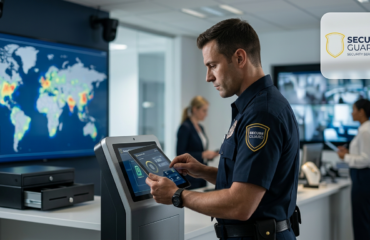
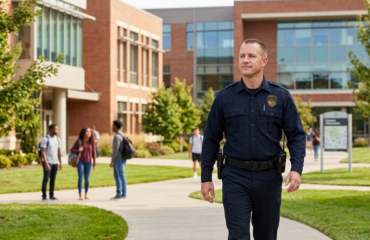
School security guards can support safer campus operations through access control, visitor management, patrols, incident reporting, and clear communication with school administrators.
However, security personnel are only one part of a complete campus safety program. Schools also need clear procedures, trained staff, appropriate technology, emergency planning, and strong coordination between administrators and security teams.
Every campus is different. An elementary school with one main building may need a different security approach from a large high school, college, or multi-building educational facility.
Here are seven ways professional school security guards can support daily campus safety.
1. Support Campus Access Control
One of the most important responsibilities of school security personnel is helping manage designated entrances and access points.
Depending on the assignment, officers may support procedures for:
- Student entrances
- Employee entrances
- Visitor check-in
- Contractor access
- Delivery access
- Restricted areas
- After-hours entry
Clear procedures are important because security officers should not create their own access rules. Instead, they should follow the school’s approved policies and post orders.
For example, a visitor who arrives without an appointment may need to wait while school staff confirm the purpose of the visit.
Security personnel can help carry out that process while maintaining a professional and respectful presence.
2. Assist With Visitor Management
Schools receive parents, guardians, contractors, volunteers, delivery drivers, vendors, and other visitors throughout the year.
A consistent visitor process helps the school understand who is on campus and why they are there.
Visitor Procedures May Include
- Directing visitors to a designated entrance
- Confirming the purpose of the visit
- Following the school’s approved identification process
- Contacting the appropriate staff member when needed
- Issuing a temporary visitor badge
- Limiting access to approved areas
- Recording departure when required
Security officers can support these procedures when visitor management is part of their assignment.
However, administrators should define the rules before service begins so both school staff and security personnel understand their responsibilities.
3. Conduct Campus Patrols
A security officer stationed at the front entrance cannot observe every part of a campus at the same time.
Campus patrols can provide additional visibility across designated areas.
Depending on the school, officers may inspect:
- Parking areas
- Exterior walkways
- Building entrances
- Perimeter gates
- Athletic facilities
- Common areas
- Portable buildings
- Other designated locations
During patrols, officers can observe and report conditions that require attention.
For example, an officer may identify an exterior door that does not close properly or a gate that has been left unsecured. The officer can document the issue and notify the appropriate school contact.
For larger campuses, mobile patrol services may also support scheduled inspections of exterior areas, parking lots, gates, and other designated locations.
4. Support Arrival, Dismissal, and Parking Areas
Arrival and dismissal can create some of the busiest periods of the school day.
Students, parents, staff, buses, visitors, and vehicles may all be moving through the campus at the same time.
When included in the assignment, security personnel may support:
- Observation of designated drop-off areas
- Monitoring parking areas
- Keeping designated access points clear
- Reporting unsafe or unusual conditions
- Communicating concerns to administrators
Security officers should follow the school’s approved traffic and access procedures rather than make independent changes to traffic flow.
In addition, the school should clearly define which duties belong to security personnel and which responsibilities belong to staff, crossing guards, or local law enforcement.
5. Document Incidents and Security Concerns
Clear reporting helps administrators understand what occurred during a security incident.
Depending on the assignment, school security reports may include:
- Date and time
- Location
- Observed activity
- People involved, when appropriate
- Actions taken by the officer
- School personnel notified
- Photographs when appropriate
- Follow-up information
Reports should focus on observable facts rather than assumptions.
For example, instead of writing that a visitor was “suspicious,” an officer should describe the specific actions or circumstances that created concern.
Secure Guard uses SecureTrack to support digital reporting, patrol documentation, checkpoint verification, and operational visibility when those features are included in the service configuration.
This type of documentation can help administrators review recurring concerns and decide whether procedures need to change.
6. Support School Events and After-Hours Activities
Schools often remain active after the regular school day ends.
After-hours activities may include:
- Athletic events
- Parent meetings
- Performances
- Graduations
- Community events
- Club activities
- Facility rentals
These events can create different access and staffing needs from normal school hours.
For example, a campus may open entrances that are normally closed or receive a much larger number of visitors.
Before an event, administrators should define:
- Which entrances will be used
- Where visitors should go
- Which areas remain restricted
- Where security personnel will be assigned
- How incidents will be reported
- Who makes operational decisions during the event
Clear planning helps security personnel understand their responsibilities before guests arrive.
7. Support Emergency Procedures
School security guards can support emergency procedures within the limits of their training and assigned responsibilities.
Depending on the campus plan, officers may need to know:
- Emergency contact information
- Evacuation routes
- Assembly areas
- Emergency vehicle entrances
- Management notification procedures
- Restricted areas
- Communication procedures
Security personnel should understand their role before an emergency occurs.
However, private security does not replace police, fire, emergency medical services, school administrators, counselors, or other professionals responsible for student welfare.
Officers should follow established procedures and contact the appropriate emergency resources when necessary.
How School Security Guards Work With Administrators
Security personnel should work as part of the school’s broader operational structure.
Administrators should identify who manages the security program and who officers should contact when questions arise.
Regular communication may include:
- Shift updates
- Visitor concerns
- Changes to campus procedures
- Upcoming school events
- Construction or maintenance activity
- Recurring access problems
- Incident follow-up
For example, if construction changes a normal entrance route, administrators should communicate the change to the security team before the next shift.
Clear communication helps prevent officers from relying on outdated instructions.
What Should School Security Post Orders Include?
Post orders provide security personnel with written instructions for the campus.
Depending on the assignment, they may include:
- Assigned security posts
- Visitor procedures
- Access-control responsibilities
- Patrol routes
- Parking-area duties
- Restricted locations
- Emergency contacts
- Incident-reporting requirements
- Management notification procedures
- Escalation instructions
Post orders should reflect the actual school rather than use generic instructions from another property.
In addition, administrators should update them when entrances, schedules, buildings, or school procedures change.
Armed vs. Unarmed School Security Guards
The choice between armed and unarmed security personnel should be based on the school’s specific requirements, applicable regulations, policies, and risk assessment.
Unarmed Security Officers
Unarmed officers may support responsibilities such as:
- Access control
- Visitor procedures
- Campus patrols
- Parking-area observation
- Incident reporting
- General security presence
Armed Security Officers
Armed assignments involve additional licensing, training, qualification, and operational considerations.
An armed presence should not be selected simply because it appears more secure. The decision should follow a careful review of the campus, duties, policies, and applicable requirements.
Secure Guard provides armed and unarmed security officer services based on the needs of each assignment.
How Security Guards Work With School Technology
Security personnel can work alongside existing school security technology.
Depending on the campus, that may include:
- Video surveillance
- Access-control systems
- Visitor-management systems
- Emergency communication systems
- Electronic patrol checkpoints
- Digital incident reporting
Technology should support clear procedures rather than replace them.
For example, a camera can provide visibility at an entrance, but administrators still need a process for determining who is allowed to enter.
Schools that want active camera oversight may also consider professional video monitoring as part of a broader security program.
School Security Guards and Physical Security Measures
Security officers are most effective when they work alongside the school’s other physical security measures.
These measures may include:
- Controlled entrances
- Fencing and gates
- Exterior lighting
- Video surveillance
- Access-control systems
- Visitor procedures
- Emergency communication tools
For a deeper look at facility-level security planning, read our guide to school physical security measures.
This keeps the two strategies connected without treating guards or technology as a standalone solution.
How to Evaluate a School Security Provider
Before selecting a security company, ask how the provider will manage the assignment after officers arrive on campus.
Consider asking:
- Do you have experience with educational environments?
- How are officers selected for school assignments?
- How will officers learn our campus procedures?
- How often will supervisors visit?
- How will patrols be documented?
- How are incidents reported?
- How are staffing issues handled?
- Who communicates with school administration?
- What technology is included?
- How can administrators review service performance?
A provider should be able to explain the service clearly rather than rely on general promises about safety.
Secure Guard also provides security programs for educational institutions and other campus environments. You can review our school and campus security services for additional information.
Frequently Asked Questions About School Security Guards
What Do School Security Guards Do?
School security guards can support access control, visitor management, campus patrols, parking-area observation, incident reporting, school events, and approved emergency procedures.
Can Security Guards Check School Visitors?
Yes. When visitor management forms part of the assignment, officers can support the school’s approved check-in and access procedures.
Can Security Guards Patrol a School Campus?
Yes. Officers can patrol designated interior and exterior locations according to the school’s post orders and service agreement.
Can School Security Guards Work Overnight?
Yes. Security coverage can include overnight hours when the campus requires after-hours security. Duties and coverage times should be clearly defined before service begins.
Can School Security Guards Monitor Cameras?
Yes, when camera monitoring is included in the assignment and the officer has clear procedures for how to handle observed activity or alerts.
Do School Security Guards Replace Police?
No. Private security personnel and law enforcement have different roles. Security guards should remain within their assigned duties and contact emergency or law-enforcement resources when necessary.
Should Schools Use Armed or Unarmed Guards?
The appropriate approach depends on the school’s risk assessment, policies, responsibilities assigned to the officer, and applicable requirements. There is no single option that fits every campus.
Build School Security Around Daily Campus Operations
School security guards can provide valuable support when their responsibilities are clearly defined and connected to the school’s broader safety plan.
Start with the campus itself. Review entrances, visitor activity, parking areas, common spaces, after-hours events, existing technology, and emergency procedures.
Then establish clear post orders, reporting procedures, communication channels, and supervision.
Most importantly, avoid treating the officer as the entire security program. Strong campus security combines trained personnel, physical security measures, technology, school procedures, and emergency planning.
For additional planning guidance, read Professional Security for Schools and Campuses.
Explore Secure Guard’s school and campus security services or contact Secure Guard Security Services to discuss your campus, coverage hours, access procedures, and security needs.