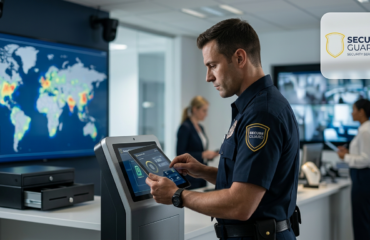
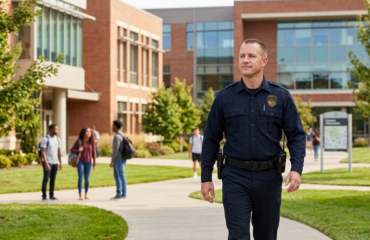
Physical security consulting helps businesses and property managers identify security vulnerabilities before deciding whether they need additional guards, patrols, cameras, access control, lighting, barriers, or other protective measures.
A useful security assessment should begin with the way the property actually operates. That includes entrances, parking areas, employee activity, visitor traffic, deliveries, restricted areas, previous incidents, operating hours, cameras, alarms, and existing security procedures.
The Cybersecurity and Infrastructure Security Agency uses a similar approach through its Security Assessment at First Entry program. CISA’s SAFE assessment reviews existing security measures, identifies vulnerabilities, and provides mitigation options for facility owners to consider.
Businesses can review the CISA Security Assessment at First Entry program for additional information.
Here are eight practical steps that can help organizations approach a physical security assessment more effectively.
What Is Physical Security Consulting?
Physical security consulting is the process of reviewing a property, its operations, and its existing safeguards to identify security gaps and determine which improvements may be appropriate.
A physical security review may examine:
- Entrances and exits
- Parking areas and garages
- Building perimeters
- Loading docks
- Employee entrances
- Visitor procedures
- Restricted areas
- Security cameras
- Lighting
- Alarm systems
- Security officers and patrols
- Emergency communication
- Incident reporting
The goal is not to recommend every available security measure. Instead, the assessment should help determine which controls address the property’s actual risks.
Step 1: Define Your Security Objectives
Before reviewing cameras, guards, or equipment, determine what the organization is trying to protect.
Common objectives may include:
- Reducing unauthorized access
- Protecting employees and visitors
- Improving parking-area security
- Protecting equipment or inventory
- Improving after-hours coverage
- Strengthening visitor procedures
- Improving emergency communication
- Creating better incident documentation
Clear objectives make it easier to separate useful security improvements from unnecessary additions.
For example, a warehouse concerned about unauthorized truck access may need stronger gate procedures. A commercial office may need better lobby access control. A construction site may need perimeter patrols and additional camera coverage.
Step 2: Review the Property’s Current Security Measures
The next step is to document what is already in place.
Review existing:
- Locks and doors
- Fencing and gates
- Security cameras
- Alarm systems
- Exterior lighting
- Visitor procedures
- Access-control systems
- Security officers
- Mobile patrols
- Incident-reporting procedures
Do not assume an existing security measure is effective simply because it is installed.
A camera may have a blind spot. A gate may remain open during deliveries. An access-control system may still contain credentials for former employees. A security patrol may not cover the areas where incidents actually occur.
The assessment should determine whether existing safeguards still match current operations.
Step 3: Identify Physical Security Vulnerabilities
A physical security assessment should look for areas where unauthorized access, theft, vandalism, disturbances, or other incidents may be more difficult to detect or manage.
Common vulnerabilities include:
- Secondary doors with limited oversight
- Poorly lit parking areas
- Camera blind spots
- Uncontrolled loading zones
- Weak visitor procedures
- Damaged fencing or gates
- Unsecured storage areas
- Unclear after-hours access rules
- Inconsistent patrol coverage
Secure Guard’s guide to common physical security vulnerabilities provides additional examples of security gaps businesses often overlook.
Step 4: Review How People and Vehicles Move Through the Property
Security planning should reflect normal property activity.
Review how the site handles:
- Employees
- Visitors
- Vendors
- Contractors
- Delivery drivers
- Customer traffic
- Shift changes
- Vehicle entry
These movement patterns can reveal risks that are not obvious during a simple building inspection.
For example, an entrance may appear secure during normal business hours but become uncontrolled during shift changes. A loading dock may have strong camera coverage but weak driver-verification procedures.
Security officers can support access procedures when their responsibilities are clearly defined. Secure Guard provides armed and unarmed security officers for properties that need professional entrance management, patrols, visitor procedures, and incident reporting.
Step 5: Determine Whether Guard Coverage or Mobile Patrol Is Appropriate
Not every property needs a full-time security officer at one fixed post.
Some sites may need a consistent officer at a lobby or gate. Others may benefit from patrol-based coverage across a larger footprint.
On-site officers may be useful for:
- Lobbies
- Gates
- Reception areas
- High-traffic entrances
- Restricted locations
By contrast, mobile patrols may provide broader coverage across:
- Parking lots
- Building perimeters
- Warehouses
- Business parks
- Construction sites
- Multi-building properties
Secure Guard’s mobile patrol services can provide scheduled or randomized property checks based on approved patrol routes and reporting procedures.
Step 6: Evaluate Cameras and Video Monitoring
Security cameras can provide valuable visibility, but a physical security assessment should review more than the number of cameras installed.
Evaluate:
- Camera placement
- Blind spots
- Image quality
- Lighting
- Storage and retention
- Maintenance
- Who reviews footage
- Who responds to suspicious activity
There is also an important difference between cameras that simply record and cameras that are actively monitored.
Secure Guard’s video monitoring services can support camera observation, activity verification, communication, documentation, and client-approved escalation procedures.
For some large outdoor properties, mobile surveillance towers may also provide additional temporary or flexible camera coverage.
Step 7: Review Reporting, Supervision, and Emergency Procedures
Physical security depends on more than equipment and staffing.
The assessment should also review how information moves through the organization.
Ask:
- How are security incidents reported?
- Who receives notifications?
- Who supervises security personnel?
- How are patrols verified?
- How are recurring concerns reviewed?
- Who should officers contact after hours?
- When should emergency services be called?
Secure Guard uses SecureTrack security reporting and patrol verification to support GPS-backed patrol records, incident reports, photographs, checkpoints, and post orders depending on the client’s service configuration.
Clear procedures help turn security observations into information that property managers can actually use.
Step 8: Prioritize Recommendations and Review Them Over Time
A physical security assessment may identify several possible improvements.
Not every recommendation needs to be implemented at the same time.
Organizations can prioritize recommendations based on:
- Risk level
- Likelihood of an incident
- Potential impact
- Cost
- Operational disruption
- Existing controls
- Implementation time
CISA’s SAFE assessment follows a similar approach by identifying existing good practices, vulnerabilities, and mitigation options while allowing facility owners to determine which improvements fit their operations and constraints.
Security reviews should also be repeated when conditions change.
Examples include:
- New buildings or entrances
- Changes in operating hours
- Expansion of parking areas
- New tenants
- Changes to delivery procedures
- Serious security incidents
- New equipment or inventory
What Should a Physical Security Assessment Include?
A useful assessment should provide practical information rather than generic recommendations.
A final review may include:
- Observed vulnerabilities
- Existing safeguards
- Priority risk areas
- Recommended procedural changes
- Guard or patrol recommendations
- Camera or monitoring recommendations
- Access-control improvements
- Lighting or perimeter concerns
- Reporting improvements
- Implementation priorities
The recommendations should reflect the site instead of simply listing every security product or service available.
How to Evaluate a Physical Security Provider
If the assessment may lead to contract security services, businesses should verify that the provider meets applicable licensing requirements.
In California, companies providing contract security services are generally regulated as Private Patrol Operators by the Bureau of Security and Investigative Services. BSIS also regulates security guard registrations.
Businesses can review the California BSIS Private Patrol Operator requirements and Security Guard Registration requirements.
When comparing providers, ask:
- Is the company properly licensed?
- Are assigned guards properly registered?
- Does the company carry required insurance?
- How are site assessments performed?
- How are post orders created?
- How are officers supervised?
- How are incidents documented?
- Can patrol activity be verified?
Do not assume that certifications such as CPP or PSP are legally required for every physical security consultant or guard company. Certifications can demonstrate professional development, but the actual licensing and qualification requirements depend on the services being provided and the jurisdiction.
Physical Security Consulting Should Support Layered Security
A strong security program generally uses more than one protective measure.
Depending on the site, layered security may combine:
- On-site security officers
- Mobile patrols
- Access-control procedures
- Video monitoring
- Lighting
- Fencing and gates
- Alarm systems
- Incident reporting
CISA offers additional physical security planning resources for organizations reviewing facility security and protective measures.
The goal is not to make a property impossible to access. Instead, the goal is to create a security program that supports normal operations while reducing unnecessary vulnerabilities.
Questions to Ask During a Physical Security Consultation
Property managers can use these questions during an assessment:
- What are our most important assets?
- Where are our weakest access points?
- Do cameras have blind spots?
- Are visitor and vendor procedures clear?
- Are parking areas adequately covered?
- Do we need a fixed security post or mobile patrol?
- Who reviews security incidents?
- How are patrols documented?
- What changes after business hours?
- Which improvements should be prioritized first?
These questions help move the conversation from generic security advice to practical decisions.
Build a Physical Security Plan Around Your Property
Effective physical security consulting should help an organization understand its current risks before adding personnel, equipment, or technology.
Secure Guard Security Services develops customized physical-security programs using professional officers, mobile patrols, video monitoring, surveillance towers, site-specific post orders, field supervision, and SecureTrack reporting.
Explore our full range of professional security services.
To discuss your property’s security needs, call 888-908-7818 or request a security assessment with Secure Guard.