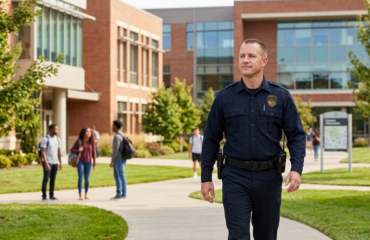
Residential security guard services can support apartment communities, HOAs, gated neighborhoods, condominiums, and other residential properties through access control, patrols, visitor procedures, reporting, and a visible security presence.
Residential properties have different security needs from offices, warehouses, or construction sites. Residents come and go throughout the day, guests arrive at different hours, delivery drivers need temporary access, and parking areas may remain active overnight.
For that reason, a residential security program should reflect the property’s actual layout, access points, common areas, operating procedures, and resident needs.
Here are eight ways professional security personnel can support a residential community.
1. Support Gate and Entrance Security
Entrances are one of the most important areas to review in a residential security plan.
Depending on the property, security officers may support:
- Vehicle gate procedures
- Pedestrian entrance monitoring
- Visitor check-in procedures
- Delivery access
- Vendor and contractor entry
- Resident access concerns
- After-hours visitor procedures
Clear instructions are important. Officers should understand who can authorize access, what information should be recorded, and what to do when a visitor cannot be verified.
For example, a visitor who is not on an approved list may need confirmation from the resident or property management before entering.
Access procedures should remain professional and consistent. Officers should make decisions based on the property’s approved rules rather than assumptions about a person’s appearance.
2. Conduct Residential Property Patrols
A security officer stationed at one entrance cannot observe every area of a residential property at the same time.
Patrols can provide additional visibility across designated community areas.
Depending on the assignment, officers may inspect:
- Parking areas
- Community streets
- Building exteriors
- Clubhouses
- Pool areas
- Mail and package areas
- Pedestrian gates
- Vehicle entrances
- Common walkways
- Other designated spaces
The patrol plan should clearly identify which areas require attention and how often officers should inspect them.
For communities that do not need a full-time officer at every location, mobile patrol security services can provide scheduled or randomized property checks.
3. Monitor Parking Areas
Parking areas can remain active long after management offices close.
Residents may return home late, guests may use temporary parking, and delivery or service vehicles may enter during different periods.
Residential security personnel can observe designated parking areas and report conditions that require management attention.
Depending on the community’s procedures, officers may look for:
- Unauthorized vehicles
- Blocked access points
- Damaged gates
- Lighting problems
- Unusual activity
- Vehicles parked in restricted areas
Security personnel should follow the HOA or property management company’s approved parking procedures rather than create or enforce their own rules.
4. Support Visitor and Vendor Management
Residential communities receive many different types of visitors.
These may include:
- Family members and guests
- Delivery drivers
- Maintenance personnel
- Landscapers
- Contractors
- Moving companies
- Utility workers
- Other service providers
A consistent visitor process can make access easier to manage.
Visitor Procedures May Include
- Confirming the destination
- Checking an approved visitor list
- Contacting the resident when required
- Recording visitor information according to policy
- Providing temporary access instructions
- Directing vendors to approved work areas
Property management should define these procedures before security service begins.
5. Observe Common Areas and Amenities
Apartment communities and HOA properties often include shared facilities that remain active throughout the day.
These may include:
- Clubhouses
- Pools
- Fitness centers
- Playgrounds
- Mailrooms
- Package rooms
- Outdoor recreation areas
Depending on the assignment, security personnel can patrol these areas and report unusual conditions, access problems, property damage, or other concerns.
For example, an officer may discover that a clubhouse door has been left unsecured after closing. The officer can document the condition and notify the appropriate property contact.
Security personnel should not replace maintenance staff. Their role is to observe, document, and report conditions according to the post orders.
6. Document Incidents and Property Conditions
Security reporting gives property managers a clearer record of what occurred during a shift.
Depending on the security program, documentation may include:
- Daily activity reports
- Incident reports
- Patrol records
- Checkpoint scans
- Photographs
- Visitor activity
- Parking concerns
- Management notifications
Reports should describe observable facts. They should explain where the issue occurred, what the officer observed, what action was taken, and who received the notification.
Secure Guard uses SecureTrack to support digital reporting, patrol documentation, checkpoint verification, and operational visibility when those features are included in the service configuration.
Good reporting also helps management identify repeated problems that may require a change in procedure.
7. Work Alongside Cameras and Access-Control Systems
Residential security personnel can work alongside existing security technology.
Depending on the property, technology may include:
- Video surveillance
- Gate-access systems
- Resident credentials
- Intercom systems
- Visitor-management systems
- Electronic patrol checkpoints
Technology and security officers perform different functions.
For example, a camera may record activity at a gate, while an officer can follow the approved visitor-verification process and communicate with property management.
If a community wants active camera oversight, professional video monitoring services can complement physical security when appropriate.
8. Support Emergency and After-Hours Procedures
Residential communities should have clear procedures for emergencies and serious incidents.
Security personnel can support those procedures within the scope of their training and assignment.
Depending on the property, officers may need to know:
- Emergency contact information
- Management notification procedures
- Fire-lane locations
- Emergency vehicle access points
- Evacuation or assembly areas
- Gate procedures for first responders
- Important property locations
However, private security does not replace police, fire, or emergency medical services.
Officers should contact the appropriate emergency resources when required and remain within their assigned responsibilities.
Residential Security Guards vs. Mobile Patrols
Residential communities do not all need the same staffing model.
On-Site Security Officers
An on-site officer provides a continuous presence during the contracted hours.
This option may be appropriate for communities that need:
- Gatehouse staffing
- Visitor management
- Lobby security
- Continuous access control
- Regular foot patrols
Secure Guard provides armed and unarmed security officer services based on the needs and requirements of each property.
Mobile Patrol Security
Mobile patrol officers visit the property at scheduled or randomized intervals rather than remaining continuously on site.
This approach may work well for communities that need:
- After-hours inspections
- Parking-area patrols
- Gate checks
- Common-area inspections
- Property perimeter checks
Some residential properties use both approaches. For example, an officer may staff the main gate while mobile patrol units inspect parking areas and community streets.
What Should Residential Security Post Orders Include?
Post orders explain what security personnel should do at the property.
Depending on the community, they may include:
- Gate procedures
- Visitor procedures
- Patrol routes
- Parking-area responsibilities
- Common-area checks
- Vendor access procedures
- Emergency contacts
- Incident-reporting requirements
- Management notification procedures
- Escalation instructions
Post orders should reflect the actual community rather than use generic instructions copied from another property.
When community rules or access procedures change, management should update the instructions and make sure assigned officers receive the new information.
How to Choose a Residential Security Company
Before hiring a provider, define what you expect security personnel to accomplish.
Then ask potential security companies:
- Do you have experience with apartments, HOAs, or gated communities?
- How will officers learn our property procedures?
- How are officers selected?
- How often will supervisors visit?
- How are patrols documented?
- How are incidents reported?
- Who handles after-hours concerns?
- How are staffing problems handled?
- What technology is included?
- How can management review security activity?
The answers can help property managers compare providers based on the actual service rather than price alone.
How Residential Security Can Support HOAs and Apartment Communities
HOAs and apartment properties may share some security needs, but their management structures and access procedures can differ.
An HOA may focus heavily on gate procedures, guest access, community patrols, parking rules, and common amenities.
An apartment property may also need lobby coverage, package-area observation, building access, and coordination with property-management staff.
Secure Guard’s apartment security services include residential-focused security options for apartment communities and similar properties. :chatgpt-content-reference{index=”1″}
For HOA-specific planning, read our guide to HOA security tips and best practices.
Frequently Asked Questions About Residential Security Guard Services
What Do Residential Security Guards Do?
Residential security guards can support access control, visitor management, patrols, parking-area observation, incident reporting, common-area checks, and other responsibilities included in the property’s post orders.
Can Residential Security Guards Work Overnight?
Yes. Security coverage can be scheduled overnight when the property requires it. The coverage hours and duties should be defined in the service agreement.
Can Security Guards Patrol Apartment Parking Areas?
Yes. When included in the assignment, officers can patrol designated parking areas and report conditions that require management attention.
Can Security Guards Manage a Residential Gate?
Yes. Officers can support gate procedures when those duties are included in the assignment. Property management should define the approved visitor and access process.
Are Mobile Patrols Suitable for Residential Communities?
Yes. Mobile patrols can provide scheduled or randomized inspections of designated residential areas. However, patrol visits do not provide the same continuous presence as a dedicated on-site officer.
Can Residential Guards Work With Existing Cameras?
Yes. Security personnel can work alongside surveillance, access-control, and visitor-management systems when those responsibilities are included in the security plan.
How Are Residential Patrols Documented?
Depending on the service configuration, patrols can be documented through activity reports, GPS tracking, electronic checkpoints, photographs, timestamps, and incident reports.
Build Residential Security Around the Community
Residential security should support the way people actually live and move through the property.
Start with the entrances, parking areas, common spaces, visitor activity, delivery procedures, patrol needs, and existing technology.
Next, define what security personnel should do and how management will review their work. Clear post orders, reporting procedures, supervision, and communication make the program easier to manage.
Finally, review the security plan as the community changes. New gates, updated parking rules, renovations, changing visitor patterns, or new amenities may require different procedures.
Secure Guard Security Services provides residential security solutions for apartment properties, gated communities, HOAs, and other managed residential environments.
Contact Secure Guard Security Services to discuss your property, access procedures, patrol needs, coverage hours, and security requirements.