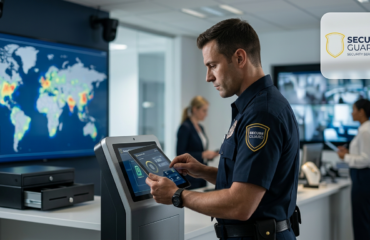
Security technology in Los Angeles can help businesses, apartment communities, warehouses, construction sites, retail properties, healthcare facilities, and commercial buildings improve visibility, document incidents, verify patrol activity, and coordinate security personnel across larger properties.
However, technology works best when it supports a clear physical-security plan. Cameras, alerts, patrol-tracking systems, and monitoring platforms cannot replace professional judgment, site-specific procedures, or trained personnel when a situation requires physical verification or communication.
Secure Guard combines professional security officers, mobile patrols, video monitoring, mobile surveillance towers, dispatch coordination, and SecureTrack reporting to help Los Angeles properties build security programs around their actual operating risks.
The Cybersecurity and Infrastructure Security Agency also recommends a layered approach to physical security rather than relying on one safeguard. Property managers can review CISA physical-security resources for additional planning guidance.
What Does Modern Security Technology Include?
Modern physical-security technology can include several tools that help security teams observe, verify, document, and communicate activity across a property.
Depending on the site, those tools may include:
- Live video monitoring
- Security cameras
- Motion or intrusion alerts
- Mobile surveillance towers
- GPS-supported patrol checkpoints
- Digital incident reports
- Photos and video documentation
- Electronic post orders
- Dispatch communication
- Existing access-control systems
The goal is not to install every available technology. Instead, businesses should select the tools that address the property’s actual risks and support the personnel responsible for managing them.
1. Live Video Monitoring Adds Active Oversight
Traditional security cameras often record footage for later review. That can be useful for documentation, but recorded video alone may not provide active oversight while an incident is developing.
Secure Guard’s video monitoring services can support live camera observation, activity verification, documentation, communication, and client-approved escalation procedures.
Depending on the property, monitoring may cover:
- Building entrances
- Parking lots and garages
- Loading docks
- Warehouse yards
- Construction sites
- Apartment common areas
- Perimeter gates
- After-hours activity
When an alert or unusual event appears, trained monitoring personnel can review the available footage and follow the response procedures established for the site.
Those procedures may include notifying property management, communicating with on-site officers, contacting mobile patrol personnel, issuing an approved audio warning when supported by the equipment, or contacting emergency services when appropriate.
2. AI-Assisted Alerts Can Help Prioritize Activity
Some modern camera systems and surveillance towers can use analytics or automated alerts to identify activity such as motion, intrusion, or after-hours access.
These tools can help reduce the amount of video that personnel need to review continuously.
However, an automated alert should not automatically be treated as proof that a crime or emergency is occurring.
Instead, trained personnel can review the available information and determine whether the activity requires further attention.
For example, an alert may be triggered by:
- A person entering a defined area
- A vehicle arriving after normal hours
- Movement near a construction perimeter
- Activity around an equipment yard
- Motion near a restricted entrance
The value of analytics comes from helping personnel focus attention on relevant activity, not from replacing human judgment.
3. Mobile Surveillance Towers Provide Flexible Coverage
Some Los Angeles properties need camera coverage in places where permanent infrastructure is unavailable, temporary, or difficult to install.
Mobile surveillance towers can provide flexible visibility for locations such as:
- Construction sites
- Parking lots
- Industrial yards
- Equipment-storage areas
- Vacant properties
- Temporary project locations
- Large outdoor facilities
Depending on the selected configuration, surveillance towers may include multiple cameras, lighting, communication capabilities, alerts, and optional live monitoring.
One advantage of a mobile system is that coverage can move as the property changes.
For example, a construction project may create new blind spots as buildings rise, fencing moves, and equipment-storage areas shift. A mobile tower can be repositioned when the priority areas change.
4. SecureTrack Adds Patrol Verification and Digital Reporting
Technology should also help clients understand what security personnel are doing during each shift.
Secure Guard uses SecureTrack security reporting and patrol verification to support security operations.
Depending on the client’s service configuration, SecureTrack may provide:
- GPS-supported patrol checkpoints
- Daily activity reports
- Incident reports
- Photos and videos
- Post orders
- Shift documentation
- Patrol records
- Client-accessible security information
This gives property managers more visibility than relying only on verbal shift updates.
Over time, documented activity can also help identify recurring concerns and determine whether patrol routes, staffing schedules, or security procedures need adjustment.
5. Dispatch Connects Technology With Field Personnel
Monitoring tools become more useful when there is a clear communication structure behind them.
Dispatch support can help coordinate communication between:
- On-site security officers
- Mobile patrol officers
- Monitoring personnel
- Field supervisors
- Property managers
- Emergency services when appropriate
Before service begins, the property should establish clear escalation procedures.
Those procedures should explain:
- Who should be notified
- Which events require physical verification
- When patrol personnel should be contacted
- When management should receive an alert
- When emergency services should be called
- What information should be documented
Technology can provide information quickly, but the response still depends on defined procedures and qualified personnel.
6. Mobile Patrols Add Physical Verification
Cameras can show that something occurred, but some situations require a person to physically inspect the location.
Mobile patrol services can support larger Los Angeles properties by checking areas that may not require a permanently staffed security post.
Patrol duties may include:
- Checking doors and gates
- Inspecting parking areas
- Patrolling building perimeters
- Checking warehouse yards
- Inspecting equipment areas
- Observing loading zones
- Documenting property conditions
A monitoring operator may identify unusual activity through a camera, while a nearby patrol officer can physically inspect the area according to the approved response plan.
This creates a stronger connection between remote visibility and field coverage.
7. On-Site Security Officers Still Provide Human Judgment
Technology can improve visibility, but many properties still need security personnel who can interact directly with employees, visitors, residents, vendors, and customers.
The U.S. Bureau of Labor Statistics identifies common security guard duties such as patrolling property, controlling access, monitoring alarms and surveillance systems, conducting security checks, responding to emergencies, and preparing reports.
Review the BLS security guard occupational profile for additional information.
Secure Guard’s armed and unarmed security officers may support:
- Lobby coverage
- Visitor management
- Gate security
- Employee access
- Foot patrols
- Parking-area checks
- Restricted-area control
- Incident documentation
Technology can give officers better information, while officers provide the communication and judgment that technology cannot.
8. Existing Access-Control Systems Can Be Part of the Security Plan
Many Los Angeles businesses already use electronic access-control systems, key cards, gates, intercoms, visitor systems, or other credential-based technology.
Security officers can often work alongside those systems without Secure Guard needing to replace or install them.
For example, officers may:
- Check visitor credentials
- Follow existing badge procedures
- Document access-control failures
- Manage after-hours visitors
- Verify vendors
- Report lost or inactive credentials
The security provider should first review how the existing system works and define the officer’s responsibilities through post orders.
Security Technology Should Support People, Not Replace Them
One of the most important principles of modern physical security is understanding the role of each security layer.
A camera can provide visibility.
An alert can draw attention to unusual activity.
A monitoring operator can review the event.
A patrol officer can physically inspect the location.
An on-site officer can manage access or communicate with people.
A supervisor can review the incident and adjust procedures.
When those layers work together, property managers gain more visibility and clearer security operations than they may receive from one isolated measure.
Security Technology for Los Angeles Commercial Properties
Commercial offices and high-rise properties may use a combination of:
- Lobby security officers
- Visitor procedures
- Existing access-control systems
- Parking-area cameras
- Mobile patrols
- Video monitoring
- SecureTrack reporting
This approach can support both high-traffic daytime operations and quieter after-hours periods.
Security Technology for Los Angeles Construction Sites
Construction sites often change throughout the project, making flexible technology especially useful.
A construction security program may combine:
- Gate security
- Mobile patrols
- Surveillance towers
- Equipment-area cameras
- After-hours monitoring
- Digital patrol reports
Secure Guard also provides construction site security services for projects that require personnel, patrols, monitoring, or layered coverage.
Security Technology for Warehouses and Logistics Properties
Warehouse and logistics properties may require security coverage across gates, loading docks, truck yards, parking areas, and storage zones.
Technology may support:
- Gate cameras
- Loading-area monitoring
- Perimeter observation
- Mobile patrol verification
- Incident reporting
- After-hours monitoring
These tools work best when combined with clear driver, vendor, employee, and delivery procedures.
Security Technology for Apartment and Residential Properties
Apartment communities and multifamily properties may use security technology around:
- Vehicle gates
- Parking garages
- Package rooms
- Common areas
- Building entrances
- Property perimeters
Security officers and patrol personnel can support those systems by physically checking concerns and documenting incidents.
Security Technology for Retail and Shopping Properties
Retail properties may combine:
- Uniformed officers
- Plain-clothes security personnel
- Parking patrols
- Video monitoring
- Access-control procedures
- Incident reporting
Secure Guard provides shopping center security services for retail environments that need customer-facing officers, patrol coverage, monitoring, or other security measures.
What About Drones and Other Emerging Security Technology?
Drones, biometric systems, advanced analytics, and other emerging technologies may have legitimate security applications, but they should not automatically be treated as standard features of every security program.
Drone operations are also subject to Federal Aviation Administration rules when used for commercial purposes. Businesses considering commercial drone operations should review current FAA drone requirements before using unmanned aircraft for security or other business purposes.
Property managers should also evaluate privacy, legal, operational, maintenance, and integration requirements before adopting new technology.
The right question is not whether a technology is new. The right question is whether it solves a documented security problem at the property.
Do Not Confuse Physical Security With Cybersecurity
Connected cameras and access-control systems may have cybersecurity considerations, but physical-security providers and cybersecurity companies perform different roles.
Secure Guard’s core services focus on physical security, including:
- Security officers
- Mobile patrols
- Video monitoring
- Surveillance towers
- Dispatch coordination
- Incident reporting
- Patrol verification
Businesses that need network security, penetration testing, device hardening, encryption design, or cybersecurity consulting should work with qualified cybersecurity professionals.
Questions to Ask Before Buying Security Technology
Before investing in new equipment or services, ask:
- What security problem are we trying to solve?
- Which areas need better visibility?
- Who will review alerts?
- Who will physically respond if necessary?
- Can the technology work with our existing systems?
- How will false alerts be handled?
- Who maintains the equipment?
- How will incidents be documented?
- Does the system require additional licensing or permits?
- How will employees and security personnel be trained to use it?
These questions help prevent businesses from buying technology simply because it is new or heavily marketed.
Build Security Technology Around Your Los Angeles Property
Effective security technology in Los Angeles should improve visibility, communication, verification, documentation, and coordination.
The best technology program is one that supports the property’s people and procedures instead of replacing them.
Secure Guard Security Services combines professional security officers, mobile patrols, live video monitoring, mobile surveillance towers, dispatch support, field supervision, and SecureTrack reporting based on each property’s needs.
For broader local coverage information, review our Los Angeles County security guard services.
Explore our full range of professional security services.
To discuss a technology-supported security program for your Los Angeles property, call 888-908-7818 or request a security consultation with Secure Guard.