Cannabis dispensary security in California involves both physical-security planning and regulatory compliance. Licensed storefront retailers must protect employees, customers, cannabis products, cash, records, entrances, restricted areas, and other parts of the licensed premises while meeting California Department of Cannabis Control requirements.
California’s cannabis regulations include specific rules for video surveillance, onsite security personnel, commercial-grade locks, alarm systems, premises access, and track-and-trace procedures. Local cities and counties may also impose additional conditions, so dispensary operators should review both state regulations and applicable local requirements.
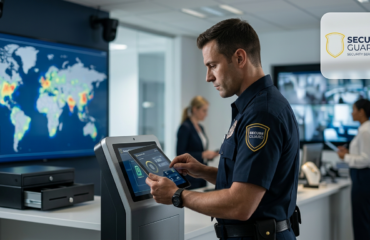
Secure Guard can support cannabis retailers with professional armed and unarmed security officers, access procedures, mobile patrols, video monitoring, incident reporting, and other physical-security services based on the needs of the property.
Operators should always confirm current regulatory requirements directly with the California Department of Cannabis Control and qualified legal or compliance professionals.
Why Cannabis Dispensary Security in California Requires Careful Planning
Dispensaries face a combination of security and compliance responsibilities that differ from many other retail businesses.
A cannabis retailer may need to manage:
- Customer and employee access
- High-value inventory
- Cash handling
- Product storage
- Point-of-sale areas
- After-hours security
- Deliveries and vendors
- Video-surveillance requirements
- Alarm systems
- Regulatory inspections
For that reason, a dispensary security program should begin with the licensed premises, operating hours, customer flow, entrances, storage areas, existing cameras, alarm systems, local regulations, and previous security concerns.
1. Storefront Cannabis Retailers Must Have Onsite Security Personnel
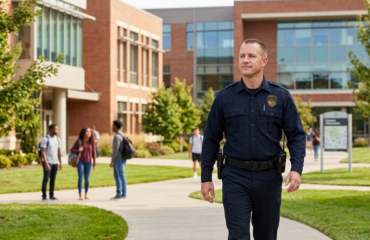
California regulations require licensed retailers and licensed microbusinesses authorized to conduct retail sales to hire or contract for security personnel who are at least 21 years old to provide onsite security during hours of operation.
The security personnel must also be licensed by the California Bureau of Security and Investigative Services.
This requirement applies to storefront retail premises. The DCC regulations provide an exception for licensed non-storefront retailers and microbusinesses that are not engaged in storefront retail sales.
Operators can review the current requirement in California DCC regulations, Section 15045.
Depending on the dispensary, onsite security officers may support:
- Entrance observation
- Customer flow
- Restricted-area procedures
- Visitor and vendor access
- Parking-area observation
- Incident documentation
- Communication with management
- Approved emergency procedures
Security officers should work from clear post orders that define what they are expected to do at the dispensary.
2. California Cannabis Businesses Must Follow Video-Surveillance Requirements
California DCC regulations contain detailed requirements for video surveillance at licensed cannabis premises.
For covered licensed premises, the surveillance system must use digital cameras with a minimum resolution of 1280 × 720 pixels and must clearly record required areas.
Required camera coverage includes areas where cannabis or cannabis products are:
- Weighed
- Packed
- Stored
- Loaded or unloaded
- Prepared
- Moved within the licensed premises
Surveillance must also cover:
- Limited-access areas
- Security rooms
- Surveillance-storage areas
- Entrances and exits
- Point-of-sale areas for storefront retailers
- Areas where cannabis goods are displayed for sale
DCC rules require continuous recording 24 hours per day at a minimum of 15 frames per second. Recordings must generally be retained for at least 90 calendar days.
The system must also clearly display the date and time, protect stored recordings from tampering or theft, and include a failure-notification system.
Review the current DCC premises and video-surveillance guidance before making changes to camera placement.
3. Cannabis Retailers Need a Compliant Alarm System
California cannabis regulations also require covered licensed premises to maintain an alarm system.
The DCC rules require the alarm system to meet the applicable definition in California law and require a licensed alarm company operator or registered alarm agents to install, maintain, monitor, and respond to the system.
For storefront dispensaries, the alarm system becomes especially important after hours.
When a licensed retail premises is not open for business, current DCC regulations require the premises to remain securely locked and require the alarm system to be activated when the retailer or its employees are not present.
Dispensary operators should avoid assuming that every alarm feature—such as panic buttons, glass-break sensors, or specific motion-detector placement—is universally required by the DCC. Some features may be required by local ordinances, insurers, landlords, or the property’s own security plan.
4. Commercial-Grade Locks Are Part of California Cannabis Security
California regulations require commercial-grade, nonresidential door locks on points of entry and exit to covered licensed premises.
Limited-access areas must also be capable of being securely locked.
For dispensary operators, that means physical-security planning should review:
- Main entrances
- Employee entrances
- Rear doors
- Storage rooms
- Limited-access areas
- Delivery access
- Security rooms
Locks should work together with access procedures rather than function as the only security layer.
5. Access Control Should Support the Licensed Premises
Cannabis businesses need clear procedures for determining who may access different parts of the premises.
Depending on the license type and property layout, access procedures may cover:
- Employees
- Customers
- Vendors
- Contractors
- Delivery personnel
- Regulators
- Restricted or limited-access areas
For areas not open to the public, DCC rules include sign-in and sign-out procedures for authorized visitors and require non-employees entering licensed premises to be escorted by an employee where applicable.
Security officers may support these procedures when their duties are clearly defined in the dispensary’s post orders.
6. Customer Age and Identity Verification Remains the Retailer’s Responsibility
California retailers must confirm a customer’s age and identity before completing an adult-use cannabis sale.
Security officers may support entrance procedures or customer flow where appropriate, but the licensed retailer remains responsible for complying with applicable customer-verification requirements.
Therefore, dispensary management should clearly define whether security personnel are expected to assist with entrance screening and how that process fits with the retailer’s sales procedures.
7. Armed vs. Unarmed Security for Cannabis Dispensaries
California’s cannabis regulations require qualifying storefront retailers to use licensed security personnel, but they do not automatically require every dispensary security guard to be armed.
The choice between armed and unarmed security should depend on factors such as:
- Property risk level
- Previous incidents
- Cash-handling practices
- Inventory value
- Location
- Customer interaction
- Local requirements
- Insurance requirements
- Client policies
Many dispensaries may use professional unarmed officers for entrance security, customer flow, access control, patrols, and incident reporting.
Higher-risk properties may consider armed coverage after a documented assessment.
For a broader comparison, read Secure Guard’s guide to armed vs. unarmed security.
California Security Guard Licensing Requirements Still Apply
Cannabis dispensary security personnel must meet applicable California BSIS requirements.
California security guard applicants must meet requirements that include:
- Being at least 18 years old for general guard registration
- Completing a DOJ and FBI criminal-history background check
- Completing required Power to Arrest training
- Completing required security-officer skills training
- Completing annual continuing education
For cannabis storefront security under DCC Section 15045, onsite security personnel must also be at least 21 years old.
Review current requirements through the California BSIS Security Guard Registration Fact Sheet.
If an officer will carry a firearm, separate BSIS Firearms Permit requirements also apply.
8. Parking Areas and Dispensary Perimeters Need Attention
Security planning should extend beyond the sales floor.
Depending on the property, important exterior areas may include:
- Customer parking
- Employee parking
- Rear entrances
- Alleys
- Delivery zones
- Perimeter fencing
- Trash or waste areas
Security officers can patrol exterior areas, document suspicious activity, identify damaged gates or lighting problems, and communicate concerns to dispensary management.
For larger properties, mobile patrol services may provide additional after-hours coverage across parking areas and property perimeters.
9. Video Monitoring Can Support Dispensary Security
DCC-required surveillance and professional monitoring are related but different concepts.
A compliant camera system records required areas according to cannabis regulations.
Professional video monitoring services may add another layer by allowing trained personnel to observe camera feeds, verify activity, document incidents, and follow client-approved escalation procedures.
Monitoring may support areas such as:
- Entrances and exits
- Parking areas
- Retail floors
- Storage areas
- Delivery zones
- After-hours activity
However, dispensary operators should confirm that any monitoring arrangement remains consistent with DCC requirements, privacy considerations, local rules, and access permissions.
10. Incident Reporting Creates Better Security Accountability
Dispensary owners need clear records of security activity.
Professional reporting may include:
- Daily activity reports
- Incident reports
- Patrol checkpoints
- Visitor issues
- Access incidents
- Parking observations
- Photos when appropriate
- Follow-up requirements
Secure Guard uses SecureTrack security reporting and patrol verification to support digital reports, GPS-backed patrol checkpoints, photos, post orders, and other activity records depending on the client’s service configuration.
Clear documentation helps dispensary management identify recurring concerns and review whether procedures or coverage need adjustment.
Track-and-Trace Compliance Is Separate From Physical Security
California cannabis businesses must also comply with DCC track-and-trace requirements.
Licensees are responsible for maintaining accurate records of commercial cannabis activity within the state’s track-and-trace system.
Physical-security personnel should not be presented as a replacement for inventory-management or track-and-trace compliance.
Instead, security procedures can support the broader operation by controlling access, observing storage and loading areas, documenting incidents, and maintaining clear visitor procedures.
Operators can review current requirements through the Department of Cannabis Control regulations.
Do Not Assume Every Security Feature Is a State Requirement
Cannabis businesses often use additional security measures beyond the statewide minimum requirements.
These may include:
- Bollards
- Reinforced storefronts
- Additional exterior lighting
- Panic buttons
- Enhanced access-control systems
- Additional camera analytics
- Secure vestibules
These features may be useful depending on the property, but dispensary operators should distinguish between:
- DCC requirements
- Local city or county requirements
- Insurance requirements
- Landlord requirements
- Optional risk-management measures
This distinction helps avoid treating a recommended security feature as though it were universally required by California law.
Local Cannabis Security Rules May Be Stricter
California’s DCC regulations establish statewide requirements, but cities and counties can impose additional rules on cannabis businesses.
A local jurisdiction may have requirements involving:
- Security plans
- Guard staffing
- Camera placement
- Alarm systems
- Lighting
- Hours of operation
- Parking
- Physical barriers
Dispensary owners should review the requirements of the city or county where the licensed premises is located before finalizing a security plan.
Security Planning for After-Hours Dispensary Operations
California retailers have specific obligations when the licensed premises is closed.
Current DCC regulations require licensed retailers to keep the premises securely locked when not open for retail sales and activate the required alarm system when employees are not present.
After-hours security planning may also include:
- Exterior patrols
- Parking-area checks
- Camera monitoring
- Door and gate inspections
- Incident escalation procedures
The appropriate additional measures depend on the property’s risk profile and local requirements.
Questions to Ask a Cannabis Dispensary Security Company
Before hiring a security provider, ask:
- Are assigned security personnel properly licensed by BSIS?
- Are guards at least 21 years old where DCC rules require it?
- How will officers be trained on our dispensary procedures?
- How will entrance and restricted-area procedures work?
- How are patrol routes established?
- How are incidents documented?
- How are guard call-offs handled?
- How are supervisors involved?
- Can guards work with our existing camera and access-control systems?
- How are serious incidents escalated?
A professional provider should explain how its security program works within the dispensary’s existing compliance and operating procedures.
Secure Guard’s Role in Cannabis Dispensary Security
Secure Guard focuses on physical security services.
Depending on the property, those services may include:
- Licensed security officers
- Armed or unarmed coverage where appropriate
- Entrance and access procedures
- Mobile patrols
- Video monitoring
- Incident reporting
- Field supervision
- SecureTrack patrol verification
Secure Guard does not replace the dispensary’s legal counsel, cannabis compliance consultants, licensed alarm company, inventory-management system, or DCC regulatory responsibilities.
Instead, physical security should work alongside those systems and professionals.
Build a Compliant Security Program Around Your Dispensary
Effective cannabis dispensary security in California requires a combination of regulatory compliance, clear procedures, licensed security personnel, appropriate technology, and active management.
Start with the requirements that apply to the licensed premises. Then evaluate the property’s specific risks, operating hours, customer activity, storage areas, parking, entrances, and local regulations.
Secure Guard Security Services can provide professional security personnel, mobile patrols, video monitoring, supervision, and reporting based on the physical-security needs of the dispensary.
Explore our armed and unarmed security officer services and video monitoring services.
To discuss security coverage for your California dispensary, call 888-908-7818 or request a security consultation with Secure Guard.