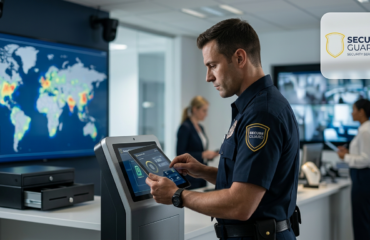
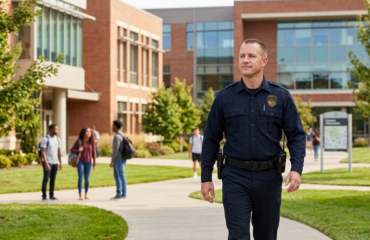
Hospitals are open environments that must balance patient care with controlled access, staff safety, visitor activity, parking operations, emergency response, and the protection of restricted areas.
Because of these demands, effective hospital security services require more than cameras or a guard standing at an entrance. A strong physical security program can combine trained security officers, access procedures, patrols, video monitoring, incident reporting, emergency communication, field supervision, and clear site-specific instructions.
At the same time, hospital security should support clinical operations rather than interfere with them. Security personnel must understand their role, communicate professionally, and follow the facility’s approved procedures.
Therefore, hospital physical security should begin with the facility’s actual layout, patient population, operating conditions, access points, previous incidents, and workplace violence prevention program.
Why Hospitals Have Unique Security Needs
Hospitals operate differently from most commercial properties. They remain active around the clock, receive visitors at different entrances, handle emergency arrivals, and contain areas that require controlled access.
For example, security concerns may involve:
- Unauthorized access
- Workplace violence
- Agitated visitors or patients
- Emergency department disturbances
- Restricted clinical areas
- Pharmacy and medication-storage access
- Parking lots and garages
- Loading and service entrances
- After-hours visitor activity
- Patient elopement or wandering concerns
- Labor and delivery access procedures
- Property damage or theft
As a result, hospitals usually need several security measures working together instead of relying on one solution.
1. Start With a Hospital Security Assessment
First, review how the healthcare facility operates before deciding where officers or patrols should be placed.
A hospital security assessment may review:
- Main public entrances
- Emergency department entrances
- Employee entrances
- Ambulance areas
- Parking lots and structures
- Visitor traffic
- Restricted patient-care areas
- Pharmacy and medication-storage areas
- Behavioral health areas
- Labor and delivery units
- Loading docks
- Existing cameras and alarms
- Previous security incidents
- Workplace violence concerns
From there, administrators can decide where fixed officers, patrols, monitoring, access procedures, or other measures may provide the most useful coverage.
In addition, the assessment should consider how conditions change by shift. Overnight operations, visiting hours, employee shift changes, and emergency department activity can all affect security needs.
2. Manage Entrances and Visitor Access
Hospitals need to remain accessible to patients and legitimate visitors. However, not every entrance or department should provide unrestricted access.
Depending on facility policy, hospital security officers may help:
- Monitor designated entrances
- Direct visitors to check-in locations
- Verify approved visitor information
- Support visitor badge procedures
- Monitor after-hours access
- Verify contractors and vendors
- Report unauthorized entry attempts
- Protect restricted areas
However, security personnel need clear instructions. Hospital administration should determine visitor rules, access levels, restricted areas, and escalation procedures.
Secure Guard provides healthcare facility security services built around patient-facing areas, access points, parking facilities, and facility-approved procedures.
3. Give the Emergency Department Special Attention
Emergency departments often operate under fast-changing conditions. Patients may arrive without appointments, family members may be under stress, and wait times or medical circumstances can create frustration.
Therefore, the emergency department may require dedicated security procedures.
Depending on the facility, security officers may:
- Monitor designated entrances
- Support approved visitor procedures
- Observe waiting areas
- Respond to staff requests for security assistance
- Help protect restricted treatment areas
- Use de-escalation when appropriate
- Contact supervisors or dispatch
- Coordinate with law enforcement when required
- Document security incidents
Most importantly, officers should work within their training and the hospital’s procedures. Clinical decisions remain with qualified healthcare personnel.
4. Support Workplace Violence Prevention
Workplace violence is an important issue in healthcare security.
California’s healthcare-specific workplace violence standard, Title 8 Section 3342, requires covered healthcare employers to maintain a workplace violence prevention program. The regulation addresses areas such as hazard identification, training, reporting, access controls, alarm systems, surveillance, security staffing, and emergency response.
You can review the current requirements through the Cal/OSHA Violence Prevention in Health Care standard.
Importantly, the regulation specifically recognizes dedicated security personnel as one possible work-practice control. It also identifies measures such as electronic access control, CCTV, personal alarms, weapon detection, and controlled entrances where appropriate.
A contracted security company does not replace the hospital’s workplace violence prevention responsibilities. Instead, security personnel can support the facility’s established program.
5. Use De-Escalation and Professional Communication
Hospital security requires strong communication skills.
For example, officers may interact with patients or family members who are frightened, grieving, confused, frustrated, or under significant stress.
Therefore, security personnel should know how to communicate calmly and use de-escalation when appropriate.
Useful practices may include:
- Speaking in a calm tone
- Listening before responding
- Maintaining professional body language
- Keeping appropriate distance
- Explaining facility rules clearly
- Avoiding unnecessary arguments
- Calling for additional assistance when needed
At the same time, officers should understand the limits of their role. A situation involving clinical care, medication, patient treatment, or medical restraint belongs under the hospital’s clinical procedures and qualified healthcare personnel.
6. Protect Restricted Areas
Hospitals contain many spaces that should not be open to every visitor.
Depending on the facility, restricted areas may include:
- Pharmacies
- Medication-storage locations
- Laboratories
- Medical records areas
- Staff-only spaces
- Operating areas
- Equipment rooms
- Information technology rooms
- Loading and supply areas
Security officers can support access procedures by monitoring designated entrances, observing unusual activity, and reporting violations.
However, the hospital should determine which employees or visitors have authorization to enter each area.
7. Support Behavioral Health Security Procedures
Behavioral health environments may require additional planning because patients can have different clinical, behavioral, and safety needs.
Security personnel can support the facility by:
- Monitoring approved access points
- Responding to staff requests for security support
- Using approved de-escalation techniques
- Helping control access to an affected area
- Communicating with clinical staff
- Documenting security-related incidents
However, security officers should not replace trained clinical personnel or independently direct patient treatment.
If security personnel have responsibilities involving aggressive behavior or emergency response, the hospital and security provider should clearly define training, procedures, and the limits of those responsibilities.
8. Support Labor and Delivery Security
Labor and delivery units often use controlled access and specialized hospital procedures.
Depending on the facility, security personnel may help:
- Monitor designated entrances
- Support visitor-access procedures
- Respond to facility security alerts
- Monitor approved camera systems
- Control access during an incident
- Communicate with hospital administration and clinical staff
For example, if the hospital uses an infant-security alert system, officers should follow the facility’s established response procedure rather than creating a separate response process.
9. Protect Parking Lots and Parking Structures
Hospital security does not stop at the building entrance.
Healthcare facilities often operate 24 hours a day. As a result, employees, patients, and visitors may use parking areas early in the morning, late at night, and throughout overnight shifts.
Parking patrols can help monitor:
- Suspicious vehicles
- Unauthorized parking
- Loitering
- Vehicle break-ins
- Lighting problems
- Exterior entrances
- Pedestrian walkways
- Property damage
Depending on facility policy, officers may also provide approved safety escorts to designated parking areas.
For larger medical campuses, mobile patrol services can extend coverage across parking structures, exterior buildings, and other remote areas.
10. Use Video Monitoring to Extend Visibility
Cameras can help hospital security teams observe more of the property than one officer can watch in person.
Depending on facility policy and privacy requirements, approved surveillance coverage may include:
- Public entrances
- Parking areas
- Exterior walkways
- Loading docks
- Public common areas
- Other approved security locations
However, cameras work best when the facility has a clear response process.
For example, a monitoring operator may identify unusual activity, review the situation, notify dispatch, and coordinate with an on-site officer when appropriate.
Secure Guard can combine on-site officers with video monitoring services when a healthcare property needs additional visibility.
11. Prepare for Emergencies Before They Happen
Hospitals need clear emergency procedures before an incident occurs.
Depending on the hospital and the officer’s assigned responsibilities, security procedures may address:
- Fire or smoke
- Security alarms
- Workplace violence
- Major disturbances
- Power outages
- Severe weather
- Evacuations
- Shelter procedures
- Mass-casualty situations
- Other facility emergencies
CMS also maintains emergency preparedness requirements for participating Medicare and Medicaid providers and suppliers. The framework includes risk assessment and emergency planning, policies and procedures, a communication plan, and training and testing.
Hospitals can review the current CMS Emergency Preparedness Rule resources.
Security should support the hospital’s emergency plan rather than create a separate plan that conflicts with facility procedures.
12. Coordinate With Hospital Staff During Incidents
Hospital incidents can involve several teams at once.
For example, a serious event may require coordination between:
- Security personnel
- Nursing staff
- Hospital administration
- Facilities personnel
- Emergency management
- Dispatch
- Law enforcement
- Fire or emergency medical responders
Therefore, officers need to know who has authority to make decisions and who should receive security updates.
Clear roles help reduce confusion when conditions change quickly.
13. Document Security Incidents
Good documentation is an important part of healthcare security.
Depending on the assignment, an incident report may include:
- Date and time
- Location
- What the officer observed
- People involved
- Actions taken
- Staff or supervisors notified
- Law-enforcement involvement
- Property damage
- Photos when permitted and appropriate
- Items requiring follow-up
Reports should remain factual and avoid unnecessary assumptions.
In addition, security personnel should follow hospital privacy and information-handling procedures when documenting sensitive events.
14. Use SecureTrack for Reporting and Accountability
Secure Guard uses SecureTrack to support reporting, patrol verification, and field accountability.
Depending on the service configuration, SecureTrack can help document:
- Officer attendance
- Patrol checkpoints
- Daily Activity Reports
- Incident reports
- Photos when appropriate
- Security observations
- Supervisor activity
As a result, authorized hospital administrators can gain greater visibility into security activity.
In addition, supervisors can use the same information when reviewing officer performance, patrol completion, and recurring concerns.
15. Support Officers With 24/7 Dispatch
Hospitals operate around the clock. Therefore, security officers need operational support during nights, weekends, holidays, and other periods when normal management staffing may be limited.
Secure Guard field personnel are supported through a 24/7 Dispatch and Operations Center.
Depending on the situation, dispatch can help:
- Receive officer updates
- Contact field supervisors
- Notify approved hospital contacts
- Coordinate additional personnel
- Support incident escalation
- Document important communications
This keeps the officer connected to a larger security operation instead of working independently.
16. Use Field Supervision to Maintain Service Standards
Healthcare security requires consistent professionalism.
Field supervisors can review:
- Officer attendance
- Professional appearance
- Post-order compliance
- Patrol completion
- Reporting quality
- Communication
- Training needs
- Client concerns
In addition, supervisor visits give operations teams an opportunity to identify problems and make corrections.
Joint Commission Workplace Violence Standards
Hospitals accredited by The Joint Commission should also review the organization’s current accreditation standards and performance goals.
Effective in 2026, The Joint Commission’s National Performance Goals include workplace violence prevention as part of its safety framework. The requirements address leadership oversight, policies, reporting, incident analysis, follow-up, and staff education.
Hospitals can review the current Joint Commission workplace violence prevention resource.
Again, contract security can support these programs. However, accreditation and compliance responsibilities remain with the healthcare organization.
Security Should Support Patient Privacy
Security personnel may work around sensitive patient information and private clinical environments.
Therefore, officers should follow the healthcare facility’s confidentiality and privacy procedures.
For example, security personnel should understand:
- Which areas are restricted
- Who may receive security information
- How incident information should be handled
- When photographs are permitted
- How visitor information should be protected
- When hospital staff should handle sensitive patient matters
The security provider should train officers on the facility’s procedures before they begin the assignment.
Armed or Unarmed Hospital Security?
There is no single answer for every hospital.
Many healthcare environments use professional unarmed officers for:
- Access control
- Visitor procedures
- De-escalation
- Patrols
- Parking coverage
- Incident reporting
- Customer service
On the other hand, some higher-risk properties may evaluate armed coverage for certain posts after reviewing their risk assessment, policies, operating environment, legal requirements, and coordination with local law enforcement.
Therefore, officer type should come from the hospital’s security planning process rather than a generic recommendation.
Secure Guard provides armed and unarmed security officers based on each facility’s requirements.
What to Look for in a Hospital Security Company
Healthcare security requires more than general guard experience.
Before selecting a provider, ask:
- Will you complete a site assessment?
- How do you select officers for healthcare environments?
- What de-escalation training do officers receive?
- How do you train officers on facility post orders?
- How are guards supervised?
- How do you handle officer call-offs?
- How are patrols verified?
- What reports will hospital management receive?
- Is dispatch available 24/7?
- How do officers coordinate with hospital staff?
- Can you support parking and exterior patrols?
- Can you provide video monitoring?
- How are privacy and confidentiality procedures addressed?
The provider should explain how the entire operation works, not simply quote an hourly guard rate.
How Secure Guard Supports Healthcare Facilities
Secure Guard Security Services has provided professional security services since 2005. Our healthcare programs are built around the facility’s layout, patient-facing areas, entrances, parking operations, visiting procedures, previous incidents, and identified security concerns.
Depending on the facility, coverage may include:
- Healthcare security officers
- Entrance and lobby coverage
- Visitor-management support
- Restricted-area monitoring
- Emergency department security
- Foot patrols
- Parking-area patrols
- Mobile patrol
- Video monitoring
- Incident reporting
- SecureTrack reporting
- 24/7 dispatch support
- Field supervision
- Site-specific post orders
Most importantly, the security program should support hospital operations and facility procedures rather than interfere with patient care.
Explore Secure Guard healthcare security services or request a healthcare security assessment to discuss your facility.
Frequently Asked Questions About Hospital Security Services
What do hospital security guards do?
Hospital security guards may monitor entrances, support visitor procedures, patrol designated areas, respond to staff security requests, monitor parking areas, document incidents, use de-escalation, and follow approved emergency procedures.
Why do hospitals need specialized security?
Hospitals operate around the clock and include patients, visitors, employees, restricted areas, emergency departments, parking facilities, and people experiencing stressful situations. These conditions can require a more specialized security approach than many other properties.
Can hospital security guards respond to aggressive patients?
Security personnel can support the hospital’s approved response procedures when aggressive or threatening behavior creates a security concern. However, officers should work within their training and coordinate with clinical personnel rather than independently directing patient treatment.
Can security guards monitor hospital parking areas?
Yes. Hospital security programs can include parking lots, parking structures, exterior walkways, employee entrances, and other designated areas.
Can hospital security guards manage visitors?
Yes, when visitor management forms part of the facility’s procedures. Officers may direct visitors, support check-in, monitor approved entrances, verify access information, and restrict entry to designated areas according to hospital policy.
Can hospital security work with video monitoring?
Yes. Video monitoring can provide additional visibility across approved security areas, while on-site officers can provide a physical response according to the facility’s procedures.
Does hospital security replace a workplace violence prevention program?
No. Security personnel can support a hospital’s workplace violence prevention program, but the healthcare employer remains responsible for establishing and maintaining the program required by applicable law.
What is SecureTrack?
SecureTrack is Secure Guard’s guard-management and reporting system. Depending on the service configuration, it can support officer activity reports, incident reports, patrol checkpoints, photos, attendance records, and management visibility.