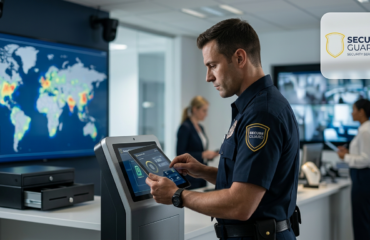
Retail security mistakes can leave stores, shopping centers, employees, customers, merchandise, parking areas, and loading zones more exposed than property managers realize.
Retail security involves more than installing cameras or assigning one officer near the entrance. Stores often have multiple access points, deliveries, employee entrances, customer traffic, parking areas, high-value merchandise, closing procedures, vendors, and after-hours activity that all require clear security procedures.
California’s Department of Justice identifies organized retail crime as a serious issue involving coordinated theft, burglary, robbery, and resale of stolen merchandise. Retailers can review the California Department of Justice organized retail crime resources for additional information.
Here are eight common retail security mistakes businesses should review.
1. Using a Generic Security Plan
One of the most common retail security mistakes is assuming that the same security plan works for every store.
A small storefront may have very different needs from a large shopping center, high-end retailer, grocery store, pharmacy, electronics store, or multi-tenant commercial property.
Before selecting security coverage, review:
- Store layout
- Operating hours
- Customer traffic
- Employee entrances
- Parking areas
- Loading and delivery zones
- High-value merchandise
- Previous incidents
- Existing cameras and alarms
- Opening and closing procedures
A site-specific assessment makes it easier to decide where officers, cameras, patrols, access procedures, or other security measures may provide useful coverage.
Secure Guard provides shopping center security services that can be customized around each property’s layout and operating needs.
2. Focusing Only on the Main Entrance
The front entrance may receive the most attention, but many retail properties have other vulnerable access points.
These may include:
- Employee entrances
- Rear doors
- Loading docks
- Emergency exits
- Stockroom doors
- Parking-garage entrances
- Vendor access points
Property managers should identify every entrance and determine who uses it, when it should remain open, and what access procedures apply.
Professional armed and unarmed security officers can support visitor procedures, entrance coverage, patrols, rule enforcement, and incident documentation depending on the property’s needs.
3. Ignoring Parking Lots and Garages
Retail security does not stop at the store entrance.
Parking areas may include customers, employees, delivery drivers, ride-share vehicles, vendors, and pedestrians moving throughout the property.
Security planning should review:
- Lighting
- Camera coverage
- Pedestrian entrances
- Garage stairwells
- Vehicle access
- Closing-time activity
- Areas hidden by structures or landscaping
For larger shopping centers and retail properties, mobile patrol services can provide scheduled or randomized checks across parking lots, garages, entrances, and perimeter areas.
Patrol officers can also document lighting failures, damaged property, suspicious activity, or other conditions that require management follow-up.
4. Relying on Cameras Without a Response Plan
Security cameras can provide valuable visibility and recorded documentation. However, cameras alone do not automatically create an effective security program.
Businesses should ask:
- Who reviews camera footage?
- Who receives alerts?
- What happens when suspicious activity is identified?
- Are there blind spots?
- Are cameras working correctly?
- Is footage stored long enough for business needs?
Secure Guard’s video monitoring services can support camera observation, activity verification, documentation, communication, and client-approved escalation procedures.
For best results, camera systems should work alongside clear procedures and trained personnel.
5. Overlooking Employee, Vendor, and Contractor Access
Retail properties often focus heavily on customer activity while giving less attention to employee, vendor, contractor, and delivery access.
Yet these groups may regularly enter stockrooms, loading areas, employee-only zones, offices, or other restricted spaces.
Retailers should establish procedures for:
- Employee credentials
- Vendor check-in
- Contractor access
- Delivery verification
- Temporary badges
- Restricted-area access
- Key or access-card management
Clear access procedures create accountability and help staff understand who should be in restricted areas.
6. Treating Loss Prevention as a Separate Function
Retail loss prevention works best when it connects with the broader security program.
Shoplifting, internal theft, fraudulent returns, suspicious behavior, and organized retail crime may involve different people and different parts of the property.
For some retailers, discreet security may be useful when a highly visible officer would change customer behavior or make observation more difficult.
Secure Guard’s plain clothes security officers can support discreet observation, pattern identification, documentation, and coordination with store management.
Retailers should define:
- Who observes suspicious behavior
- Who makes management notifications
- How incidents are documented
- When law enforcement should be contacted
- What actions security personnel are authorized to take
Security personnel should follow approved policies rather than improvise during a theft or confrontation.
7. Having Weak Opening and Closing Procedures
Retail properties may be especially vulnerable during opening and closing periods when fewer employees are present and cash, merchandise, or doors are being handled differently than during normal business hours.
Closing procedures may include:
- Checking entrances and exits
- Verifying restricted areas
- Inspecting parking areas
- Confirming alarm activation
- Checking stockrooms
- Employee escort procedures
- Documenting unusual activity
Opening procedures should also define who enters first, which areas require inspection, and how employees report signs of forced entry, damaged doors, or suspicious activity.
Businesses that operate late or have large parking areas may benefit from officer escorts or mobile patrol coverage during these periods.
8. Failing to Document and Review Security Activity
A business may have security personnel on-site but still lack useful information about what officers actually observe or do.
Professional reporting may include:
- Daily activity reports
- Incident reports
- Patrol records
- Parking observations
- Access issues
- Photos when appropriate
- Property-condition concerns
- Follow-up requirements
Secure Guard uses SecureTrack security reporting and patrol verification to support digital activity records, GPS-backed patrol checkpoints, incident reports, photographs, and post orders depending on the client’s service configuration.
Over time, consistent reporting can help management identify repeat problems and adjust patrol routes, staffing schedules, access procedures, or other security measures.
Retail Security Should Include Employees, Not Just Guards
Security personnel cannot observe every part of a store at all times.
Employees should also understand how to identify and report concerns.
Retail staff may need clear procedures for:
- Suspicious activity
- Unauthorized access
- Disruptive customers
- Emergency situations
- Lost keys or credentials
- Damaged doors or locks
- Security-camera problems
Employees should know whom to contact and should not be expected to take unnecessary personal risks during serious incidents.
Organized Retail Crime Requires Coordination
Organized retail crime can involve coordinated groups that target stores, specific merchandise, or multiple retail locations.
The California Department of Justice describes organized retail crime as coordinated criminal activity involving theft and resale of merchandise. DOJ works with law enforcement, retailers, and online marketplaces to address these networks.
Businesses can review current information through the California DOJ Organized Retail Crime resource.
The California Highway Patrol also operates an Organized Retail Theft Program that coordinates with local and state agencies on qualifying organized retail theft investigations.
Retail businesses should report serious crimes to the appropriate law-enforcement agency rather than relying on private security as a substitute for police.
Security Guard Training and Licensing Matter
California regulates security guards through the Bureau of Security and Investigative Services.
BSIS requires security guard applicants to complete applicable registration, background-check, and training requirements.
Property managers can review current requirements through the California BSIS Security Guard Registration Fact Sheet.
The U.S. Bureau of Labor Statistics also identifies retail security duties such as protecting people, merchandise, money, and equipment, monitoring surveillance, controlling access, and patrolling parking areas.
Retailers can review the BLS security guard occupational profile for additional information.
Retail Security Should Be Layered
A stronger retail security program usually relies on more than one measure.
Depending on the property, a layered program may include:
- Uniformed security officers
- Plain-clothes officers
- Mobile patrols
- Video monitoring
- Access-control procedures
- Lighting
- Alarm systems
- Incident reporting
- Employee procedures
The right mix depends on the store’s layout, merchandise, operating hours, parking, customer traffic, previous incidents, and management priorities.
Questions Retailers Should Ask During a Security Review
Property managers and retail operators can use these questions to identify possible gaps:
- Do we know every entrance and exit?
- Are employee and vendor procedures clear?
- Are parking areas adequately covered?
- Do cameras have blind spots?
- Who responds when suspicious activity appears on camera?
- Are opening and closing procedures documented?
- Do employees know how to report security concerns?
- Are patrols documented?
- Are repeat incidents being reviewed?
- Does our current security program match how the property operates today?
The answers can help determine whether staffing, patrols, cameras, access procedures, lighting, or other security measures need adjustment.
Build a Retail Security Program Around Your Business
Avoiding common retail security mistakes starts with understanding the specific risks of the property.
Secure Guard Security Services can support retail and shopping-center properties with professional security officers, plain-clothes officers, mobile patrols, video monitoring, field supervision, post orders, and SecureTrack reporting.
Explore our shopping center security services and plain clothes security officers.
To discuss retail security for your business, call 888-908-7818 or request a security consultation with Secure Guard.