Not every property needs a security officer standing at one fixed post throughout the entire shift. Some businesses need security personnel who can move between parking areas, buildings, gates, loading zones, perimeters, and other high-priority locations.
That is where mobile security patrols can provide value.
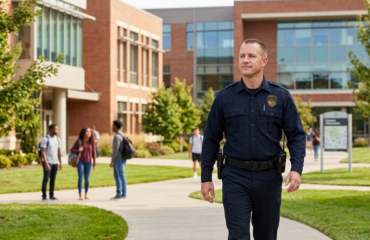
Mobile patrol officers provide a visible security presence while conducting scheduled or randomized property inspections. Depending on the security plan, they can check access points, monitor parking areas, inspect perimeters, respond to alarms, document property conditions, and coordinate with dispatch when an incident occurs.
Most importantly, mobile patrol should match the property’s actual risks and operating needs. It can work as a standalone service or as part of a larger program that includes standing officers, video monitoring, dispatch, and digital reporting.
What Are Mobile Security Patrols?
Mobile security patrols use trained security officers who move throughout a property or between designated locations instead of remaining at one fixed post.
Depending on the assignment, officers may patrol by marked security vehicle or conduct a combination of vehicle and foot patrols.
Common patrol locations include:
- Parking lots
- Parking structures
- Building entrances
- Loading docks
- Property perimeters
- Gates and fence lines
- Storage yards
- Equipment areas
- Vacant buildings
- Remote areas of larger properties
As a result, mobile patrol can extend security coverage beyond the areas visible from a lobby, gatehouse, or other fixed post.
1. Mobile Patrol Provides a Visible Security Presence
One of the main benefits of mobile patrol is visibility.
Marked security vehicles and uniformed officers show employees, tenants, residents, visitors, and other people on the property that security personnel are actively checking the site.
For example, regular patrol activity may help discourage:
- Trespassing
- Vandalism
- Unauthorized parking
- Loitering
- Vehicle break-ins
- Property theft
- Unauthorized after-hours activity
However, no security measure can guarantee that an incident will never occur. The purpose of visible patrol is to reduce opportunity, identify concerns, and support a faster organized response when something does happen.
2. Patrol Officers Can Cover More of a Property
A standing officer provides continuous coverage at one designated location. That can be essential for a lobby, gate, entrance, or other critical post.
Mobile patrol serves a different purpose.
Because patrol officers move throughout the property, they can inspect areas that a fixed officer may not be able to monitor continuously.
For example, one patrol route may include:
- The main building
- A rear parking area
- Loading docks
- Secondary buildings
- Perimeter fencing
- Storage areas
- Remote entrances
Therefore, mobile patrol can be especially useful for large properties and multi-building sites.
3. Scheduled and Randomized Patrols Add Flexibility
Mobile patrol does not have to follow the same schedule at every property.
Some clients need officers to arrive at specific times. For example, a property may require:
- Opening checks
- Closing checks
- Gate inspections
- Shift-change patrols
- After-hours lockups
- Employee arrival or departure coverage
Other properties may benefit from randomized visits.
Random patrol times make security activity less predictable. As a result, someone observing the property has a harder time anticipating when an officer will arrive.
Many properties use a combination of scheduled and randomized patrols.
4. Mobile Patrol Can Monitor Parking Areas and Perimeters
Parking areas and exterior sections of a property can be difficult to monitor from inside a building.
Therefore, they are often important parts of a mobile patrol route.
Officers may inspect:
- Parking lots
- Parking structures
- Exterior walkways
- Fence lines
- Vehicle gates
- Loading areas
- Storage yards
- Building perimeters
During these checks, officers can look for suspicious activity, damaged property, open gates, lighting problems, unauthorized vehicles, or other conditions that require attention.
This type of coverage can be useful for warehouses, apartment communities, shopping centers, office buildings, construction sites, and industrial properties.
5. Officers Can Check Gates, Doors, and Access Points
An unlocked door or open gate can create a security concern even when no crime has occurred.
For that reason, mobile patrol programs can include routine access-point checks.
Depending on the site, officers may inspect:
- Exterior doors
- Vehicle gates
- Pedestrian gates
- Loading dock doors
- Emergency exits
- Fence lines
- Storage areas
- Restricted entrances
If an officer finds an unsecured door, damaged lock, broken fence, or other problem, the officer can document the condition and follow the site’s notification procedures.
6. Mobile Patrol Can Support Alarm Response
Some mobile patrol programs also include response to designated alarm activations.
When an officer arrives, the officer can inspect the property for visible signs of:
- Forced entry
- Broken windows
- Open doors
- Property damage
- Suspicious activity
- Other unusual conditions
Then, the officer can communicate findings to dispatch and follow the client’s approved procedures.
Depending on the situation, this may include contacting property management, requesting a supervisor, or coordinating with law enforcement.
Mobile patrol officers should not assume that every alarm represents an active crime. Instead, they should observe conditions and follow established response procedures.
7. Mobile Patrol Creates Documented Security Activity
A property manager should know what happened during each patrol.
Therefore, professional mobile patrol should include clear documentation.
Depending on the assignment, patrol records may include:
- Arrival time
- Departure time
- Areas inspected
- Checkpoint activity
- Gate and door checks
- Parking-area observations
- Photos
- Property-condition concerns
- Incident reports
- Items requiring follow-up
This gives management more than a vehicle driving through the property. Instead, the client receives a record of the security work completed during the visit.
8. Mobile Patrol Can Be More Flexible Than Fixed Coverage
Mobile patrol works well when a property needs regular security checks but does not require an officer to remain on-site continuously.
For example, a client may need:
- Three patrols overnight
- A closing inspection
- A late-night parking check
- Randomized weekend visits
- Alarm-response coverage
- Checks across several nearby properties
As a result, the client can build coverage around specific risks and operating hours.
However, mobile patrol is not always the right replacement for a standing officer. Properties that need constant gate control, lobby coverage, visitor screening, or immediate on-site response may still require dedicated personnel.
Mobile Patrol vs. Standing Security Guards
Mobile patrol and standing security officers perform different roles. Therefore, one service is not automatically better than the other.
When a Standing Security Officer May Be Better
A standing officer may be the better choice when the property needs:
- Continuous gate coverage
- Lobby security
- Visitor screening
- Employee verification
- Constant access control
- Immediate on-site response
- Continuous monitoring of one high-risk area
When Mobile Patrol May Be Better
Mobile patrol may be a better fit when the property needs:
- Periodic property inspections
- Parking-area patrols
- Perimeter checks
- Lock and unlock services
- Alarm response
- Randomized after-hours checks
- Coverage across multiple buildings
- Coverage across several nearby properties
When Both Services Work Together
Many properties benefit from combining both services.
For example, a standing officer may protect the main entrance while a mobile patrol officer checks parking areas, loading docks, secondary buildings, and the property perimeter.
As a result, each officer can focus on different security priorities.
Which Properties Benefit From Mobile Patrol?
Mobile patrol can work across many property types.
Warehouses and Logistics Facilities
Patrols can check gates, loading areas, trailers, parking lots, fence lines, and exterior warehouse areas.
Construction Sites
Officers can inspect equipment yards, perimeter fencing, storage containers, temporary buildings, and after-hours access points.
Apartment Communities and HOAs
Mobile patrol can cover parking areas, common areas, entrances, pools, clubhouses, and recurring problem locations.
Shopping Centers
Patrol officers can monitor parking lots, exterior storefronts, loading areas, service corridors, and property perimeters.
Office Buildings
Officers can perform after-hours exterior inspections, parking checks, access-point checks, and lock or unlock services.
Vacant Properties
Vacant sites may use periodic patrols to identify trespassing, vandalism, open doors, damaged windows, or changing property conditions.
Industrial Properties
Large industrial sites may use patrol vehicles to cover equipment areas, remote buildings, yards, gates, and perimeter zones.
How SecureTrack Supports Mobile Patrol
Secure Guard uses SecureTrack to support mobile patrol reporting and accountability.
Depending on the service configuration, officers can document:
- Patrol timestamps
- GPS-supported activity
- Security checkpoints
- Photos
- Daily Activity Reports
- Incident reports
- Property observations
As a result, clients receive greater visibility into what happens during patrol visits.
SecureTrack also gives supervisors information they can use when reviewing patrol performance and site activity.
24/7 Dispatch Adds Operational Support
Mobile patrol officers may work at night, on weekends, and during hours when property management is not on site.
Therefore, they need a clear communication structure.
Secure Guard’s Mobile Patrol Officers are supported by a 24/7 Dispatch and Operations Center.
When an officer identifies a concern, dispatch can help coordinate:
- Client notifications
- Supervisor support
- Additional security personnel
- Incident escalation
- Approved emergency notifications
This allows patrol officers to remain connected to the larger security operation instead of working independently.
Mobile Patrol Can Work With Video Monitoring
Mobile patrol can become even more useful when paired with video monitoring.
For example, a monitoring operator may identify suspicious activity around a parking area or perimeter. After reviewing the event, the operator can follow the property’s approved procedure and coordinate with dispatch.
A mobile patrol officer can then inspect the location when appropriate.
Therefore, video monitoring provides additional visibility while the patrol officer provides the physical response.
Learn more about Secure Guard’s video monitoring services.
How a Mobile Patrol Program Should Be Built
Effective mobile patrol involves more than sending a vehicle through a parking lot.
First, the security company should review the property.
The assessment may include:
- Operating hours
- Previous incidents
- Parking areas
- Entrances
- Loading docks
- Gates
- Perimeters
- Storage areas
- Equipment yards
- Existing cameras
- Recurring security concerns
Next, the provider can identify which locations officers need to inspect and how frequently patrols should occur.
Finally, written post orders should explain what officers need to check, what they should document, and who they should contact when they identify a problem.
Questions to Ask Before Hiring a Mobile Patrol Company
Before selecting a provider, ask how the patrol program actually works.
- Will you inspect the property before service begins?
- Can patrols be scheduled and randomized?
- How do you verify that patrols occur?
- Can officers scan checkpoints?
- Will we receive patrol reports?
- Can officers submit photos?
- Can patrol officers respond to alarms?
- Can officers perform lock and unlock services?
- Is dispatch available 24/7?
- How are incidents escalated?
- Do field supervisors review patrol performance?
- Can patrol frequency change when our needs change?
The provider should clearly explain the operation behind the patrol vehicle.
How Secure Guard Provides Mobile Patrol Security
Secure Guard Security Services builds mobile patrol programs around the property, operating schedule, access points, previous incidents, and security priorities.
Depending on the assignment, our mobile patrol programs can include:
- Marked patrol vehicles
- Uniformed security officers
- Scheduled patrols
- Randomized patrols
- Parking-area inspections
- Perimeter checks
- Gate and door checks
- Alarm response
- Lock and unlock services
- SecureTrack reporting
- 24/7 dispatch support
- Field supervision
- Site-specific patrol instructions
Mobile patrol can operate as a standalone service or alongside standing security officers, video monitoring, and other security services.
Explore Secure Guard Mobile Patrol Security or request a mobile patrol security assessment for your property.
Frequently Asked Questions About Mobile Security Patrols
What is a mobile security patrol?
A mobile security patrol uses security officers who move through designated areas or between properties rather than remaining at one fixed post. Patrols may include parking areas, gates, perimeters, buildings, loading zones, and other priority locations.
What do mobile patrol security officers do?
Mobile patrol officers can inspect property conditions, check gates and doors, monitor parking areas, patrol perimeters, respond to approved alarms, document incidents, and report concerns according to site-specific instructions.
Are mobile patrols better than standing security guards?
Not necessarily. The services address different needs. Standing officers provide continuous coverage at one location, while mobile patrol provides periodic coverage across wider areas. Many properties benefit from using both.
Can mobile patrol officers respond to alarms?
Yes, when alarm response forms part of the client’s service plan. Officers can inspect the property, document visible conditions, communicate with dispatch, and follow the approved escalation procedure.
Can mobile patrol officers check doors and gates?
Yes. Patrol programs can include checks of gates, exterior doors, loading docks, emergency exits, fencing, and other designated access points.
Can mobile patrols cover parking lots?
Yes. Parking lots and parking structures are common mobile patrol areas because they can be difficult to monitor continuously from a fixed post.
How often should a mobile security patrol visit a property?
The frequency depends on the property’s size, operating hours, previous incidents, risks, budget, and response requirements. Some clients use scheduled visits, while others combine scheduled and randomized patrols.
Can clients verify that patrols occurred?
Yes. Secure Guard can use SecureTrack checkpoints, GPS-supported activity, time-stamped reports, photos, and other documentation to provide visibility into patrol activity depending on the service configuration.