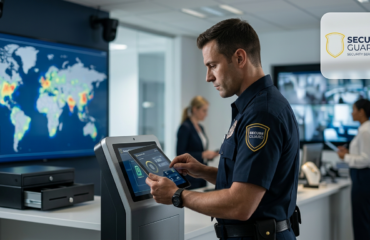
Hiring private security guards is a significant business decision. Security coverage adds an ongoing operating cost, requires coordination with a security provider, and may involve giving officers access to parts of your property, procedures, and daily operations.
So, are private security guards worth it?
For many businesses, the answer can be yes when the property has clear security needs that trained personnel can address. However, a security guard should not be treated as a guaranteed solution to every risk.
The value depends on your property, operating hours, previous incidents, visitor activity, assets, parking areas, access points, and the type of security coverage you choose.
This guide explains when private security guards make sense, what they can realistically do, and how to decide whether on-site officers, mobile patrols, video monitoring, or a combination of services is right for your business.
What Do Private Security Guards Actually Do?
Private security officers help protect assigned people and property while following the procedures established for their specific post.
Depending on the property, security guard responsibilities may include:
- Monitoring entrances and exits
- Managing visitor access
- Conducting security patrols
- Checking doors, gates, and restricted areas
- Monitoring parking areas
- Observing suspicious activity
- Responding to alarms and incidents
- Writing Daily Activity Reports
- Preparing incident reports
- Monitoring approved camera systems
- Communicating with dispatch and supervisors
- Supporting established emergency procedures
- Helping employees, tenants, visitors, or residents
Most importantly, officer duties should match the property. A warehouse guard, office lobby officer, construction-site guard, and residential security officer should not all receive the same instructions.
1. Security Guards Provide a Visible Security Presence
One of the clearest benefits of on-site security is visibility.
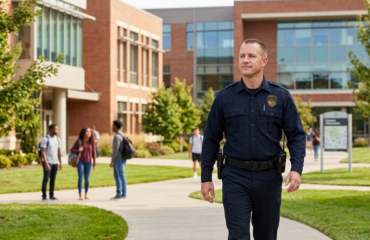
A uniformed officer at an entrance, gate, lobby, parking area, or other high-priority location shows that the property has active security personnel.
For example, a visible security presence may help discourage:
- Trespassing
- Unauthorized access
- Vandalism
- Loitering
- Some opportunistic theft
- Other unwanted activity
However, no guard company can guarantee that crime or security incidents will never occur.
Instead, a professional officer adds another layer of observation, communication, response, and accountability to the property.
2. Guards Can Control Access to Your Property
Many businesses need to know who is entering the property.
Therefore, access control is one of the most common reasons businesses hire private security guards.
Depending on the site, an officer may:
- Verify employee credentials
- Check visitor appointments
- Review approved access lists
- Maintain visitor logs
- Verify contractors and vendors
- Monitor vehicle entrances
- Direct deliveries
- Protect restricted areas
This can be especially useful at warehouses, offices, residential communities, industrial facilities, construction projects, and properties with controlled entrances.
3. Security Guards Can Patrol Areas Staff Cannot Continuously Watch
Employees have their own jobs to perform. They usually cannot spend the day checking parking lots, fence lines, gates, loading areas, and exterior sections of the property.
Security officers can include these locations in scheduled patrol routes.
For example, patrols may cover:
- Parking lots
- Parking structures
- Building perimeters
- Loading docks
- Equipment areas
- Storage locations
- Emergency exits
- Restricted areas
- Gates and fencing
During these patrols, officers can document open doors, damaged locks, suspicious activity, lighting problems, property damage, or other concerns.
4. Security Officers Give Businesses an On-Site Response Option
Cameras and alarms provide information. However, they cannot physically inspect a suspicious condition.
An on-site security officer can assess what is happening and follow the property’s approved response procedures.
Depending on the incident, the officer may:
- Observe the situation
- Contact dispatch
- Notify management
- Restrict access to an affected area when safe
- Request a supervisor
- Contact police, fire, or medical services when required
- Document what occurred
Security officers should act within their training, company policies, post orders, and applicable law rather than unnecessarily escalating a situation.
5. Guards Can Help Businesses Document Security Activity
Security is easier to manage when activity is documented.
Depending on the assignment, officers may prepare:
- Daily Activity Reports
- Incident reports
- Patrol records
- Visitor logs
- Vehicle logs
- Checkpoint records
- Photos
- Property-condition observations
- Items requiring follow-up
As a result, managers gain a clearer view of what happens during security shifts instead of relying only on verbal updates.
6. Professional Security Can Support Employees and Visitors
Security officers often interact directly with employees, customers, tenants, visitors, vendors, and contractors.
Therefore, customer service can be an important part of the job.
Depending on the property, officers may:
- Give directions
- Help visitors find the correct entrance
- Explain access procedures
- Direct delivery drivers
- Assist employees with security concerns
- Help management communicate property rules
A professional officer should be approachable while still following the property’s security procedures.
7. Guards Can Support De-Escalation
Not every problem requires physical intervention.
In many situations, calm communication can help prevent a disagreement from becoming more serious.
Professional security officers may use techniques such as:
- Speaking calmly
- Listening before responding
- Maintaining professional body language
- Clearly explaining property rules
- Keeping appropriate distance
- Avoiding unnecessary arguments
- Requesting additional assistance when needed
Most importantly, officers should recognize when the situation requires management, a supervisor, law enforcement, or emergency medical personnel.
8. Security Guards Can Support Emergency Procedures
Businesses should establish emergency procedures before something happens.
Depending on the site and the officer’s training, security personnel may support procedures involving:
- Fire alarms
- Medical emergencies
- Power outages
- Security alarms
- Building evacuations
- Severe weather
- Major disturbances
- Suspicious persons
For example, an officer may notify dispatch, communicate with management, help keep an emergency entrance clear, or direct responding personnel to the correct location.
However, security personnel do not replace firefighters, police officers, emergency medical professionals, or the client’s legal safety responsibilities.
When Are Private Security Guards Most Worthwhile?
Private security becomes more valuable when a property has specific conditions that require regular human observation or response.
For example, businesses may benefit from guards when they have:
- High-value inventory or equipment
- Controlled entrances
- Frequent visitors or contractors
- Large parking areas
- After-hours operations
- Repeated trespassing concerns
- Restricted areas
- Large or complex properties
- Previous security incidents
- Customer-facing environments
- Delivery or truck-gate operations
- 24-hour facilities
On the other hand, a smaller property with limited activity may not need a full-time standing officer.
When Mobile Patrol May Be a Better Option
Some properties need security checks but do not require an officer on-site continuously.
In that case, mobile patrol security may be a better fit.
Mobile patrol can provide:
- Scheduled inspections
- Randomized patrols
- Parking-area checks
- Perimeter inspections
- Gate and door checks
- Alarm response
- Lock and unlock services
- Documented patrol activity
For example, a business may need three overnight patrols rather than an officer standing at the property for eight hours.
Therefore, the right question is not always whether you need security. Instead, ask which type of security provides the most appropriate coverage.
When Video Monitoring May Be a Better Option
Video monitoring can also provide useful coverage when a property needs visibility across entrances, parking areas, perimeters, equipment areas, or other approved locations.
A monitoring program can help identify unusual activity and follow established escalation procedures.
However, video monitoring and security officers perform different roles.
Cameras provide visibility. Security officers provide human judgment and physical response.
For that reason, many properties combine video monitoring services with on-site officers or mobile patrol.
When Standing Guards and Mobile Patrol Work Together
Larger properties may benefit from a blended security program.
For example:
- A standing officer manages the main gate.
- A mobile patrol officer checks the parking lot and perimeter.
- Video monitoring covers remote areas.
- Dispatch coordinates communication.
- SecureTrack records patrol and incident activity.
As a result, each part of the security program addresses a different part of the property’s risk.
Armed or Unarmed Security Guards?
Not every property needs armed security.
Many commercial properties can use professional unarmed officers for:
- Access control
- Visitor management
- Patrols
- Incident reporting
- Parking-area security
- Customer service
- De-escalation
Higher-risk properties may consider armed personnel based on their threat exposure, assets, operating environment, client requirements, and applicable regulations.
Secure Guard provides armed and unarmed security officers and builds staffing around the property’s actual risk profile.
Private Security Guards Must Meet California Requirements
Businesses should verify that the security company and assigned officers meet applicable licensing requirements.
In California, the Bureau of Security and Investigative Services regulates private security guards and Private Patrol Operators.
Security Guard Registration requirements include background checks and required training. Additional permits apply to armed officers.
You can review current requirements through the California BSIS Security Guard Registration Fact Sheet.
Before hiring a security company, ask how it verifies officer licenses and maintains required credentials.
What Makes Security Guards a Bad Investment?
Security guards can provide value, but poor security management can waste money.
For example, problems can occur when:
- The company never completes a site assessment.
- Officers receive no site-specific post orders.
- Guards receive little supervision.
- The client cannot verify patrol activity.
- Incident reports are incomplete.
- Replacement officers do not know the property.
- Dispatch support is unavailable.
- The security plan never changes as the property changes.
In other words, the officer at the property is only one part of the service.
Recruiting, training, supervision, dispatch, reporting, scheduling, and management all affect whether the security program delivers value.
How SecureTrack Helps Verify Security Service
One common concern when hiring private security is accountability.
How do you know whether officers arrived, completed patrols, documented incidents, or followed assigned procedures?
Secure Guard uses SecureTrack to support field reporting and accountability.
Depending on the service configuration, SecureTrack can document:
- Officer attendance
- Patrol checkpoints
- GPS-supported patrol activity
- Daily Activity Reports
- Incident reports
- Photos
- Supervisor activity
- Property observations
Therefore, clients receive greater visibility into the service instead of relying only on the physical presence of an officer.
Why Supervision Matters
Even a qualified security officer needs management support.
Field supervisors can review:
- Officer appearance
- Professional conduct
- Post-order compliance
- Patrol completion
- Reporting quality
- Attendance
- Training needs
- Client concerns
Regular supervision also gives the security provider an opportunity to identify performance problems and correct them.
Why 24/7 Dispatch Matters
Security personnel often work at night, on weekends, and during holidays.
Therefore, officers need access to operational support when something unexpected happens.
A dispatch operation can help:
- Receive officer updates
- Contact field supervisors
- Notify approved client contacts
- Coordinate additional security personnel
- Support incident escalation
- Document important communications
Secure Guard field personnel are supported through a 24/7 Dispatch and Operations Center.
How Much Security Does Your Business Actually Need?
More security is not automatically better security.
Before deciding on coverage, review:
- Property size
- Operating hours
- Number of entrances
- Parking areas
- Visitor activity
- Previous incidents
- Existing cameras
- Valuable assets
- Restricted areas
- Required response time
Then determine whether your property needs:
- A full-time standing officer
- Several security officers
- Overnight coverage
- Mobile patrol
- Video monitoring
- A blended program
A site assessment can help identify the most practical option.
Questions to Ask Before Hiring Private Security Guards
Before signing a security agreement, ask the provider:
- Are you properly licensed?
- Will you inspect my property before recommending coverage?
- How do you select officers?
- Will you create site-specific post orders?
- How are officers supervised?
- What happens when an officer calls off?
- How do you verify attendance?
- How do you verify patrols?
- What reports will I receive?
- Is dispatch available 24/7?
- Can you provide mobile patrol?
- Can you provide video monitoring?
- Can the security plan change as my needs change?
The provider should be able to explain the operation behind the guard, not simply provide an hourly rate.
So, Are Private Security Guards Worth It?
Private security guards can be worthwhile when a business has clear security needs that require human observation, access control, patrols, communication, reporting, or on-site response.
However, the value depends heavily on how the security program is managed.
A guard without clear instructions, supervision, reporting, or operational support may provide limited value. On the other hand, a trained officer working under site-specific post orders, supported by supervisors, dispatch, and verified reporting can become an important part of a broader security program.
Therefore, businesses should focus less on simply hiring “a guard” and more on building the right security operation around the property.
How Secure Guard Builds Private Security Programs
Secure Guard Security Services has provided professional security services since 2005.
Depending on the property, our programs can include:
- Armed security officers
- Unarmed security officers
- Access control
- Foot patrols
- Mobile patrol
- Parking-area security
- Video monitoring
- Incident reporting
- SecureTrack reporting
- 24/7 dispatch support
- Field supervision
- Site-specific post orders
Our approach starts with understanding the property, operating hours, access points, previous incidents, and security priorities before recommending coverage.
Explore Secure Guard security services or request a security assessment to discuss whether standing guards, mobile patrol, video monitoring, or a combined security program fits your property.
Frequently Asked Questions About Private Security Guards
Are private security guards worth the cost?
They can be when a property has specific security needs such as access control, patrols, parking coverage, visitor management, incident response, or after-hours security. The value depends on the property’s risks and how well the security program is managed.
What do private security guards do?
Private security guards may control access, manage visitors, conduct patrols, monitor parking areas, observe suspicious activity, document incidents, support emergency procedures, and communicate with supervisors or dispatch.
Can security guards prevent every crime?
No. No security service can guarantee that crime or other incidents will never occur. Guards can provide visibility, observation, access control, documentation, and organized response as part of a broader security plan.
Should I hire a standing guard or mobile patrol?
A standing officer is usually better when continuous coverage is required at a gate, lobby, entrance, or high-priority area. Mobile patrol may be better when a property needs periodic inspections across parking areas, perimeters, buildings, or several nearby locations.
Are armed guards better than unarmed guards?
Not automatically. The right officer type depends on the property’s risk level, assets, public interaction, previous incidents, client policies, and applicable requirements.
Can security guards work with cameras?
Yes. On-site officers can work alongside approved surveillance systems, while remote video monitoring can provide additional visibility and coordinate with officers or mobile patrol when appropriate.
How can I verify that security guards are doing their patrols?
Security management systems can document checkpoints, GPS-supported patrol activity, reports, photos, attendance, and other field activity. Secure Guard uses SecureTrack for these functions depending on the client’s service configuration.
What should I look for in a security guard company?
Look for proper licensing, insurance, relevant experience, qualified officers, site assessments, written post orders, supervision, replacement staffing, reporting, patrol verification, 24/7 support, and clear contract terms.