Healthcare facilities are different from most commercial properties. Hospitals, clinics, treatment centers, and other medical environments operate around patients, visitors, healthcare professionals, sensitive areas, valuable equipment, and activity that can change quickly throughout the day.
That is why effective healthcare security services should do more than place a guard at the front door. A well-managed security program can support access control, visitor management, staff safety, de-escalation, incident response, parking-area security, and communication across the facility.
For healthcare administrators, security can become an important part of maintaining a safer and more organized operating environment.
Why Healthcare Facilities Have Unique Security Needs
Healthcare facilities are often designed to remain accessible to patients and visitors, but that accessibility can also create security challenges.
Hospitals and medical facilities may need to manage:
- High volumes of patients, visitors, employees, vendors, and contractors
- Emergency departments operating around the clock
- Restricted clinical, pharmaceutical, and administrative areas
- Patients or visitors experiencing distress, confusion, or agitation
- Parking structures and exterior areas used during overnight hours
- Workplace violence concerns
- Unauthorized access
- Suspicious activity or theft
- Emergency and evacuation procedures
Because every healthcare property operates differently, security coverage should be based on the facility’s layout, operating hours, patient population, visitor activity, previous incidents, and identified risks.
How Healthcare Security Services Support Daily Operations
1. Access Control and Visitor Management
Healthcare facilities may contain areas that should only be accessible to authorized employees, patients, or approved visitors.
Security officers can support established access procedures by monitoring entrances, checking credentials, directing visitors, maintaining visitor logs, and observing activity around restricted areas.
This can be particularly important around emergency departments, administrative areas, employee entrances, pharmacies, equipment rooms, and other sensitive locations.
Learn more about our healthcare facility security services.
2. Workplace Violence Prevention Support
Workplace violence is an important safety concern in healthcare environments. Federal OSHA identifies healthcare workers as facing significant workplace violence risks and recommends comprehensive prevention programs that include hazard assessment, training, reporting, environmental controls, and security measures.
California healthcare employers covered by Title 8, Section 3342 must also maintain workplace violence prevention procedures appropriate to their facilities.
Security personnel can support a healthcare organization’s established prevention plan by providing visible coverage, responding to calls for assistance, documenting incidents, monitoring designated areas, and following facility-specific escalation procedures.
Healthcare organizations can review California requirements through the Cal/OSHA Violence Prevention in Health Care standard.
3. De-Escalation and Professional Communication
Healthcare security requires a different approach from security at many industrial or commercial properties.
Patients and family members may be experiencing stress, fear, pain, long wait times, or emotionally difficult situations. Security officers assigned to healthcare environments should understand how to communicate professionally and follow appropriate de-escalation procedures before a situation becomes more serious.
The goal is not simply enforcement. Officers should support the healthcare environment while maintaining clear boundaries and responding appropriately when safety becomes a concern.
4. Emergency Department Security
Emergency departments can present some of the most complex security conditions within a healthcare facility because patients and visitors may arrive without appointments and under stressful circumstances.
Depending on the facility’s security plan, officers may help monitor entrances, support visitor procedures, observe waiting areas, respond to staff requests, maintain access restrictions, and communicate incidents to supervisors or emergency personnel.
OSHA identifies factors such as long wait times, overcrowding, unrestricted public movement, inadequate security, poor lighting, and insufficient workplace violence training as potential risks within healthcare environments.
5. Parking Areas and Exterior Patrols
Healthcare security does not stop at the building entrance.
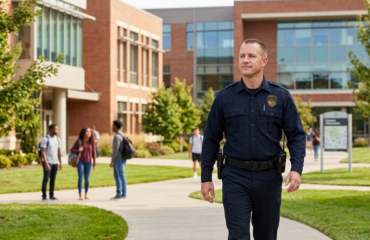
Parking lots, garages, loading areas, employee walkways, ambulance entrances, and exterior areas may require coverage during both daytime and overnight operations.
Security officers can conduct documented patrols, observe suspicious activity, check designated areas, respond to service requests, and provide a visible presence throughout the property.
Facilities with larger campuses may also use mobile patrol services to supplement fixed security posts.
6. Video Monitoring and Security Technology
Security officers can be more effective when supported by properly designed technology.
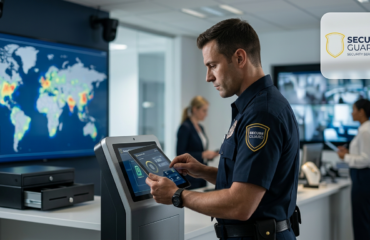
Video surveillance can help security teams observe entrances, parking areas, corridors, perimeters, and other approved areas. When an unusual event is detected, personnel can follow established procedures for investigation or escalation.
Secure Guard can also integrate on-site officers with video monitoring services when a facility requires additional visibility.
7. Incident Documentation and Communication
Clear documentation allows healthcare administrators to understand what happened during a security shift and identify recurring concerns.
Security teams should document activities and incidents according to the client’s established procedures. Reports may include patrol activity, access issues, disturbances, unauthorized persons, safety concerns, or other events requiring follow-up.
Consistent reporting can also help facility management review patterns and determine whether security procedures need to be adjusted.
Security Should Be Built Around the Healthcare Facility
A small outpatient clinic does not have the same security requirements as a large hospital, behavioral health facility, skilled nursing facility, or multi-building medical campus.
Before establishing coverage, the security provider should understand factors such as:
- Facility operating hours
- Public and employee entrances
- Emergency department activity
- Visitor procedures
- Restricted areas
- Parking lots and garages
- Previous security incidents
- Areas with higher staff exposure
- Existing cameras and access-control systems
- Emergency communication procedures
- Required patrol routes
- Facility-specific workplace violence procedures
That information can then be used to develop site-specific post orders and determine where officers, patrols, monitoring, or other security resources should be positioned.
Should Healthcare Facilities Use Armed or Unarmed Security Officers?
There is no single answer for every healthcare property.
Many healthcare environments use professional unarmed officers because customer service, access management, observation, communication, and de-escalation are central to the assignment.
Facilities with documented higher-risk conditions may evaluate armed coverage for specific posts or areas based on their security assessment, policies, liability considerations, and applicable regulations.
Secure Guard provides both armed and unarmed security officer services and can help clients evaluate the appropriate coverage model for their property.
Healthcare Security and California Workplace Violence Prevention
California has specific workplace violence prevention requirements for covered healthcare operations under Title 8, Section 3342.
The regulation addresses areas such as workplace violence prevention planning, hazard identification, incident procedures, training, recordkeeping, security systems, alarms, access controls, surveillance, and the availability of personnel who can respond to incidents.
A contracted security company does not replace the healthcare employer’s responsibility to comply with applicable regulations. However, a properly coordinated security program can support the facility’s broader workplace violence prevention strategy.
Security procedures should therefore be developed in coordination with facility leadership and aligned with the property’s established safety policies.
How Secure Guard Supports Healthcare Facilities
Secure Guard Security Services develops security programs around the operating conditions of each property rather than using the same coverage plan for every site.
Depending on the facility, services may include:
- Healthcare security officers
- Entrance and lobby coverage
- Visitor management support
- Restricted-area monitoring
- Foot and vehicle patrols
- Parking-area security
- Incident documentation
- Video monitoring
- 24/7 dispatch support
- Field supervision
- Site-specific post orders
Our goal is to provide security coverage that works alongside your facility’s staff, policies, and daily operations.
Build a Security Plan Around Your Healthcare Facility
Healthcare security should reflect the actual risks and operating environment of the property. The right plan may combine security officers, patrols, access procedures, video monitoring, reporting, and clear escalation protocols.
Secure Guard Security Services can review your facility, operating hours, access points, parking areas, existing procedures, and security concerns to help develop an appropriate coverage plan.
Request a healthcare security assessment to discuss your facility’s security requirements.
Frequently Asked Questions About Healthcare Security Services
What do healthcare security guards do?
Healthcare security guards may support access control, visitor management, patrols, restricted areas, staff safety, incident response, documentation, parking-area security, and other duties established in the facility’s post orders.
Why do hospitals need specialized security?
Hospitals operate around patients, visitors, employees, sensitive areas, emergency activity, valuable equipment, and locations that may remain accessible around the clock. These conditions create security needs that differ from many other commercial properties.
Can healthcare security guards help with workplace violence prevention?
Security personnel can support a healthcare facility’s workplace violence prevention program through visible presence, response procedures, observation, access control, incident documentation, and other assigned duties. Responsibility for regulatory compliance remains with the employer.
Should hospitals use armed or unarmed security officers?
The appropriate officer type depends on the facility’s risk assessment, operating environment, previous incidents, policies, and specific post requirements. Some facilities use unarmed personnel throughout the property, while others may use a combination of armed and unarmed officers.
Can security officers monitor hospital parking areas?
Yes. Security programs may include foot or vehicle patrols of parking lots, garages, exterior walkways, employee entrances, and other designated areas.
Can security officers work with video surveillance systems?
Yes. When permitted by facility policy, security personnel can monitor or coordinate with video surveillance systems and follow established procedures when suspicious activity or an incident is observed.