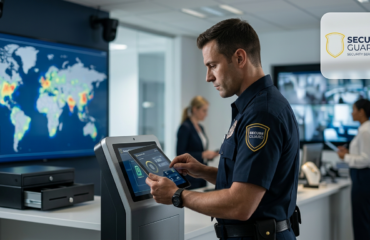
Professional security guard services should provide more than a uniformed officer at a property. A well-managed security program combines trained personnel, clear post orders, active supervision, reporting, communication, and technology that supports accountability.
Every property operates differently. An office building may need lobby access control, while a warehouse may focus on gate activity, vehicle access, loading areas, and overnight patrols. Residential communities, construction sites, hotels, healthcare facilities, and events can require completely different procedures.
For that reason, businesses should evaluate the complete security program rather than choosing a provider based only on hourly price.
Here is what property managers and business owners should expect from a professional security company.
1. A Security Plan Built Around the Property
Professional security should begin with an understanding of the property.
Before assigning officers, the security provider should review factors such as:
- Property layout
- Entrances and exits
- Operating hours
- Employee activity
- Visitor and vendor access
- Parking areas
- Loading zones
- Previous security concerns
- Existing cameras and access-control systems
- Reporting requirements
This information helps the provider determine which services and responsibilities make sense for the assignment.
Secure Guard’s current service model focuses on property-specific security planning rather than using one generic plan for every site.
Explore Secure Guard’s professional security services to review the available coverage options.
2. Clear Post Orders for Security Officers
Security officers need written instructions that explain what they are expected to do.
These instructions are commonly called post orders.
Depending on the property, post orders may include:
- Assigned security posts
- Access-control procedures
- Visitor procedures
- Patrol routes
- Gate and door checks
- Emergency contacts
- Incident-reporting requirements
- Management notification procedures
- Opening and closing responsibilities
- Escalation instructions
Post orders should reflect the actual property rather than use instructions copied from another assignment.
They should also be updated when operating hours, access points, tenants, construction activity, or other important property conditions change.
3. Officers Matched to the Assignment
Not every property needs the same type of security officer.
Some assignments require strong customer-service skills because officers interact with visitors, residents, or employees throughout the day.
Other properties may need officers experienced with gates, warehouses, construction sites, parking facilities, or overnight security.
The security provider should consider the property’s environment when assigning personnel.
Armed and Unarmed Security Officers
The choice between armed and unarmed security should also reflect the duties, risk profile, client policies, and applicable requirements.
Unarmed officers may support access control, patrols, visitor management, observation, and reporting.
Armed assignments involve additional licensing, training, qualification, and operational considerations.
Secure Guard provides armed and unarmed security officer services based on the requirements of each property.
4. Active Field Supervision
A professional security officer should not operate without management support.
Field supervisors can provide another level of oversight by reviewing officer performance, checking post-order compliance, addressing concerns, and communicating with clients.
Supervisory responsibilities may include:
- Site inspections
- Officer performance reviews
- Post-order checks
- Incident follow-up
- Staffing support
- Training reinforcement
- Client communication
For example, if a property manager reports that an assigned patrol was missed, the supervisor should review the issue and determine what follow-up is needed.
Strong supervision helps connect the officer working the post with the larger security operation.
For more detail, read our guide to the qualities of a security guard supervisor.
5. Mobile Patrol Options
Some properties need regular security inspections but do not require an officer to remain at one location continuously.
Mobile patrols can support these properties through scheduled or randomized inspections.
Depending on the assignment, patrol officers may:
- Check gates and doors
- Inspect parking areas
- Review building exteriors
- Check perimeter fencing
- Inspect loading areas
- Document property conditions
- Respond to alarms when included in the service plan
Patrol routes should be built around the property rather than use the same checklist everywhere.
Secure Guard’s mobile patrol services can include customized routes, scheduled or randomized inspections, and patrol documentation.
6. Useful Incident and Activity Reporting
Professional security services should provide clients with useful information about security activity.
Depending on the assignment, documentation may include:
- Daily activity reports
- Incident reports
- Patrol records
- Checkpoint activity
- Photographs
- Access records
- Management notifications
- Follow-up information
Reports should describe observable facts.
For example, instead of writing that someone appeared “suspicious,” the officer should describe the specific behavior, location, time, and circumstances that created concern.
A useful report should also explain what action the officer took and who received the notification.
7. Technology That Supports Accountability
Security technology can help officers, supervisors, and clients document daily activity.
Depending on the service configuration, technology may support:
- GPS patrol verification
- Electronic checkpoints
- Digital incident reports
- Photographs and video documentation
- Guard scheduling
- Timekeeping
- Digital post orders
- Client reporting
Secure Guard uses SecureTrack to support digital reporting, patrol documentation, GPS checkpoints, incident reports, post orders, and other operational records.
Technology should improve visibility and accountability. However, it does not replace trained officers, supervision, or good security procedures.
8. Video Monitoring When It Fits the Property
Cameras can provide valuable visibility over entrances, parking areas, loading zones, construction sites, warehouses, and other approved locations.
However, video recording and active monitoring are different services.
A recording system stores footage for later review. Active monitoring assigns trained personnel to review designated cameras or alerts during agreed coverage periods.
Before adding monitoring, property managers should define:
- Which areas need camera coverage
- Which cameras require active monitoring
- Monitoring hours
- Alert procedures
- Who receives notifications
- What response occurs after a verified concern
Secure Guard provides professional video monitoring services that can complement on-site officers and mobile patrols when appropriate.
9. Reliable Communication With the Client
Professional security service depends on communication between officers, supervisors, dispatch personnel, and property management.
Before service begins, clients should know:
- Who manages the account
- Who supervises the officers
- Who handles after-hours concerns
- How urgent incidents are communicated
- How routine issues are reported
- How post-order changes are approved
For example, if a property changes its visitor procedures, management should have a clear way to communicate that change to the security team.
Secure Guard currently lists 24/7 dispatch and operations support as part of its professional security operations.
10. A Clear Plan for Staffing Problems
Unexpected staffing issues can occur in any security operation.
The important question is how the security company handles them.
Clients should understand what happens if an officer:
- Calls off
- Arrives late
- Cannot complete a shift
- Needs supervisor support
- Needs to be replaced
The security provider should have a defined process for communicating the issue and arranging appropriate follow-up.
Properties that require continuous coverage should also discuss relief coverage and shift-handover procedures before service begins.
11. Regular Reviews of the Security Program
Security needs can change over time.
A property may add a new entrance, change operating hours, begin construction, add tenants, install new cameras, or experience different security concerns.
For that reason, the security company and client should periodically review whether the current program still matches the property.
A service review may include:
- Officer performance
- Incident patterns
- Patrol activity
- Reporting quality
- Access procedures
- Post orders
- Technology
- Staffing schedules
- Client feedback
If the property changes, the security plan may need to change as well.
What Types of Properties Use Professional Security Guard Services?
Professional security services can support many different environments.
Commercial Properties
Office buildings may require lobby security, visitor management, parking-area patrols, and after-hours coverage.
Warehouses and Logistics Facilities
Security duties may include gate control, vehicle access, loading areas, perimeter checks, and overnight patrols.
Construction Sites
Construction properties may need gate monitoring, after-hours patrols, equipment-area checks, and perimeter security.
Residential Communities
HOAs and apartment properties may need gate procedures, visitor management, parking-area patrols, and common-area coverage.
Hotels and Healthcare Properties
These environments may place greater emphasis on professional communication, visitor access, lobby activity, parking areas, and incident reporting.
Events
Temporary events may require entrance management, credential checks, crowd flow, restricted areas, parking support, and event-specific reporting.
Where Does Secure Guard Provide Security Services?
Secure Guard’s current service-area directory lists professional security coverage in California, Arizona, and Virginia.
California coverage includes multiple Southern California, Central California, Northern California, and Bay Area markets, including Oakland.
Secure Guard also has offices in California and Virginia.
Service availability can vary by location, assignment, and requested coverage. Therefore, clients should confirm availability for the specific property and service they need.
View Secure Guard’s current locations and service areas for more information.
How to Compare Security Guard Companies
Do not compare security companies using hourly price alone.
Instead, compare providers using the same coverage requirements.
Review:
- Officer qualifications
- Coverage hours
- Assigned responsibilities
- Supervision
- Reporting
- Technology
- Dispatch support
- Staffing procedures
- Client communication
- Post-order development
A lower price may represent a different level of service, supervision, or reporting.
Ask each provider to explain exactly what is included in the proposal.
Frequently Asked Questions About Professional Security Guard Services
What Do Professional Security Guards Do?
Security officers can support access control, patrols, visitor management, parking-area observation, incident reporting, gate security, and other duties defined in the property’s post orders.
Can Security Guards Work Overnight?
Yes. Security coverage can include overnight and around-the-clock assignments depending on staffing availability, location, and service requirements.
Can Security Guards Patrol Large Properties?
Yes. On-site officers or mobile patrol personnel can inspect designated areas according to the property’s patrol plan.
Can Security Services Include Video Monitoring?
Yes. Physical security personnel can work alongside professional video monitoring when the property benefits from both services.
How Are Security Patrols Documented?
Depending on the service configuration, patrol activity can be documented through digital reports, GPS checkpoints, timestamps, photographs, and other operational records.
Can a Security Company Create Custom Post Orders?
Yes. A professional security provider can develop post orders around the property’s layout, access points, hours, reporting expectations, and assigned responsibilities.
Does Secure Guard Provide Nationwide Security?
Secure Guard’s current published service areas include California, Arizona, and Virginia. Clients should confirm current availability for their specific location before requesting coverage.
Build Security Around the Property, Not a Generic Package
Professional security guard services should begin with the property itself.
Review the layout, access points, operating hours, visitors, parking areas, patrol needs, previous incidents, technology, and reporting expectations.
Then build the staffing, post orders, supervision, communication, and technology around those requirements.
Secure Guard Security Services provides on-site officers, mobile patrols, video monitoring, event security, surveillance towers, SecureTrack reporting, and other security solutions across its confirmed service areas.
Contact Secure Guard Security Services to discuss your property, location, operating hours, and security requirements.