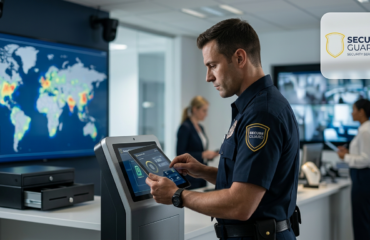
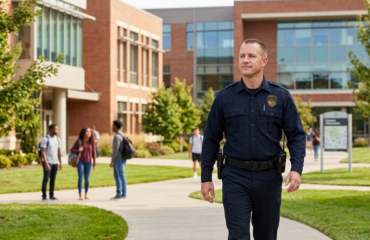
The benefits of armed security services can be significant for properties that face documented higher-risk conditions, protect valuable assets, manage sensitive operations, or require a stronger physical-security presence.
However, armed security is not automatically the right choice for every property. Offices, apartment communities, hotels, healthcare facilities, retail properties, warehouses, industrial sites, and events may all require different levels of security depending on their operating environment and risk profile.
Professional armed security should therefore be selected through a site-specific assessment rather than simply because a firearm appears to provide more protection.
Secure Guard provides both armed and unarmed security officers, allowing clients to choose coverage based on actual site conditions, access needs, assets, operating hours, and previous incidents.
Here are seven practical benefits of armed security services for properties where armed coverage is appropriate.
1. Armed Security Provides a Strong Visible Security Presence
One of the most noticeable benefits of armed security services is the visible presence of a trained security officer assigned to the property.
Depending on the assignment, armed officers may be positioned at:
- Main entrances
- Security gates
- Restricted facilities
- High-value storage areas
- Industrial properties
- Corporate facilities
- Special events
A visible security presence may support deterrence, but businesses should avoid claiming that armed guards guarantee that theft, violence, trespassing, or other incidents will never occur.
The U.S. Bureau of Labor Statistics identifies common guard duties such as patrolling property, controlling access, monitoring alarms and video systems, conducting security checks, responding to emergencies, and preparing reports.
You can review the U.S. Bureau of Labor Statistics security guard profile for additional information.
2. Armed Officers Can Support Access Control at Higher-Risk Properties
Access control is one of the most common responsibilities assigned to professional security personnel.
At higher-risk locations, armed officers may support procedures involving:
- Employee credentials
- Visitor registration
- Vendor verification
- Contractor access
- Vehicle-entry procedures
- Restricted areas
- After-hours access
The armed officer should still follow the same core principle as any professional security officer: access rules come from the client and the site’s post orders.
Officers should not independently create entry requirements or make decisions outside their assigned authority.
Clear access procedures are especially useful for industrial facilities, high-value commercial properties, sensitive operations, warehouses, and other sites where unauthorized access may create greater risk.
3. Armed Security Can Add Protection for High-Value Assets
Some businesses protect assets that justify a stronger security posture.
Examples may include:
- High-value inventory
- Sensitive equipment
- Cash-handling operations
- Restricted industrial areas
- Specialized commercial facilities
- High-value storage areas
Armed security can be one layer within a broader plan that may also include access control, cameras, lighting, patrols, barriers, alarms, and incident reporting.
CISA recommends using layered physical-security measures rather than relying on a single protective measure. Its security-planning guidance explains that guards, surveillance, barriers, access controls, procedures, and other measures can work together as part of a security-in-depth strategy.
Businesses can review the CISA Security Planning Workbook for additional guidance.
4. Armed Officers Can Physically Verify Security Concerns
Cameras and alarms can provide alerts or visibility, but some incidents require a person to physically inspect the area.
An armed officer may be able to verify issues involving:
- Suspicious activity
- Unauthorized access
- Alarm events
- Open or damaged gates
- Restricted-area activity
- Unusual vehicle activity
The officer should then follow the property’s approved escalation procedures.
For large sites that do not require a permanently staffed officer at every location, mobile patrol services may provide additional physical verification across parking areas, perimeters, warehouses, industrial yards, or multiple buildings.
5. Armed Security Can Support Incident and Emergency Procedures
Security officers may be among the first people on a property to observe an alarm, disturbance, security breach, or other serious event.
Depending on the site’s post orders, an armed officer may:
- Notify property management
- Contact emergency services
- Secure an affected area
- Direct people away from restricted areas
- Maintain access routes for first responders
- Communicate with supervisors
- Document what occurred
Security guards do not replace police officers, firefighters, paramedics, or other first responders.
Their duties should remain within the officer’s training, licensing, post orders, and assignment.
Likewise, businesses should not assume that every armed officer automatically holds CPR, first-aid, medical-response, or specialized crisis-management certifications unless the security provider confirms those qualifications.
6. Armed Officers Can Work Alongside Security Technology
Armed personnel do not need to operate as a standalone security measure.
A layered security program may combine:
- Armed officers
- Unarmed officers
- Mobile patrols
- Security cameras
- Video monitoring
- Access-control systems
- Alarm systems
- Digital reporting
Secure Guard’s video monitoring services can support camera observation, activity verification, communication, documentation, and client-approved escalation procedures.
For example, monitoring personnel may identify suspicious after-hours activity through a camera. An on-site officer or patrol officer can then physically check the area according to the approved response plan.
This combination can provide broader visibility than either cameras or personnel may provide on their own.
7. Professional Armed Security Adds Reporting and Accountability
One of the most useful benefits of armed security services is the documentation that should accompany professional coverage.
Security reporting may include:
- Daily activity reports
- Incident reports
- Patrol checkpoints
- Access-control incidents
- Photographs
- Vehicle information
- Alarm events
- Follow-up requirements
Secure Guard uses SecureTrack security reporting and patrol verification to support GPS-backed patrol records, incident reports, photographs, checkpoints, post orders, and other documentation depending on the client’s service configuration.
This gives property managers greater visibility into what occurred during the shift and whether the security program needs adjustment.
California Armed Security Guards Have Additional Licensing Requirements
California armed security officers have additional licensing requirements beyond a standard Guard Card.
California’s Bureau of Security and Investigative Services issues Firearms Permits to eligible applicants who meet applicable requirements.
Current initial Firearms Permit requirements include:
- Being at least 21 years old
- Being legally eligible to possess a firearm
- Holding an eligible BSIS registration or license
- Completing a DOJ and FBI background check
- Completing required firearms training
- Passing required examinations and qualifications
- Completing the firearms assessment when applicable
Review the BSIS Firearms Permit Fact Sheet for current requirements.
BSIS also requires applicable security guard registrants seeking an initial Firearms Permit to complete an assessment designed to evaluate judgment, restraint, and self-control for carrying and using a firearm while performing armed security duties.
More information is available through the BSIS Firearms Assessment guidance.
Armed Security Does Not Mean Aggressive Security
An important benefit of professional armed security is not the ability to use force. It is having personnel who understand when restraint, communication, observation, and escalation procedures are appropriate.
Most armed security duties involve normal security work such as:
- Checking access
- Conducting patrols
- Monitoring restricted areas
- Speaking with visitors or employees
- Documenting incidents
- Communicating with supervisors
The firearm creates an additional responsibility for the officer. It should not change routine situations into unnecessarily confrontational encounters.
When Might Armed Security Be Appropriate?
Armed security may be worth evaluating when a property has documented higher-risk conditions.
Examples may include:
- High-value assets
- Significant cash handling
- Documented threats
- Previous serious security incidents
- Sensitive operations
- Restricted facilities
- Specific contractual requirements
None of these factors automatically means armed officers are required.
The decision should follow a property assessment that considers the site, operating environment, assets, public interaction, existing safeguards, and client requirements.
For a detailed statewide guide, read Armed Security Guards in California: When Are They Needed?.
When Is Unarmed Security the Better Choice?
Many properties do not need armed officers.
Unarmed security may be more appropriate when the primary needs involve:
- Lobby coverage
- Visitor management
- Access control
- Routine patrols
- Parking-area observation
- Customer service
- Incident reporting
Unarmed officers are commonly used in offices, apartment communities, hotels, retail properties, healthcare facilities, and other customer-facing environments.
For additional information, review our guide to the benefits of unarmed security guard services.
Armed vs. Unarmed Security
The right officer type should match the property’s actual risk.
| Factor | Unarmed Security | Armed Security |
|---|---|---|
| Firearm | No firearm carried | Requires applicable BSIS Firearms Permit |
| Typical Focus | Access control, patrols, reporting, customer interaction | Higher-risk assignments plus standard security duties |
| Common Environment | Low-to-moderate-risk or customer-facing properties | Properties with documented elevated risks |
| Selection | Based on duties and site conditions | Based on elevated risk and operational need |
For a broader comparison, read Secure Guard’s guide to armed vs. unarmed security.
Armed Security Should Be Part of a Layered Security Program
An armed officer should not be expected to compensate for poor lighting, broken gates, missing cameras, weak access procedures, or unclear post orders.
A stronger program may combine:
- Armed or unarmed officers
- Mobile patrols
- Video monitoring
- Access-control systems
- Physical barriers
- Lighting
- Alarm systems
- Digital reporting
CISA describes layered physical security as the use of multiple interdependent security measures, including barriers, surveillance, guards, access controls, procedures, and training. No single measure is expected to provide complete protection. Review the CISA Security Planning Workbook for additional guidance.
Properties That May Consider Armed Security
Depending on the risk assessment, armed security may be considered for:
Commercial Properties
Some commercial properties may use armed officers when documented threats, high-value assets, or sensitive operations justify stronger coverage.
Warehouses and Industrial Facilities
Facilities containing high-value inventory, specialized equipment, or restricted operations may consider armed security as one layer within a larger security program.
Cash-Intensive Businesses
Businesses that regularly handle significant cash volumes may evaluate armed coverage alongside access control, cameras, procedures, and other safeguards.
Executive Protection Assignments
Some protective assignments may require armed personnel based on documented threats, public visibility, travel, or other risk factors.
Secure Guard provides executive protection services for assignments requiring specialized protective planning.
Higher-Risk Events
Some events may consider armed coverage when documented threats, sensitive attendees, valuable assets, or venue requirements justify it.
However, many events are adequately served by professional event security officers focused on access, credentials, restricted areas, guest flow, and incident documentation.
Questions to Ask Before Hiring Armed Security Services
Before selecting a provider, ask:
- Are the assigned guards properly registered?
- Do armed officers hold current BSIS Firearms Permits?
- How does the company verify licenses and permits?
- What site-specific training will officers receive?
- How are officers supervised?
- How are patrols documented?
- What reports will management receive?
- How are call-offs handled?
- How are serious incidents escalated?
- Can officers work with existing security systems?
A professional provider should clearly explain the security program before service begins.
Build the Right Armed Security Program for Your Property
The strongest benefits of armed security services come from using qualified personnel in environments where the property’s actual risk profile supports armed coverage.
Professional armed security should combine appropriate licensing, post orders, supervision, reporting, communication, and integration with the property’s other security measures.
Secure Guard Security Services develops security programs using armed and unarmed officers, mobile patrols, video monitoring, field supervision, site-specific post orders, and SecureTrack reporting.
Explore our armed and unarmed security officer services, mobile patrol services, and full range of professional security services.
To discuss security coverage for your property, call 888-908-7818 or request a security consultation with Secure Guard.