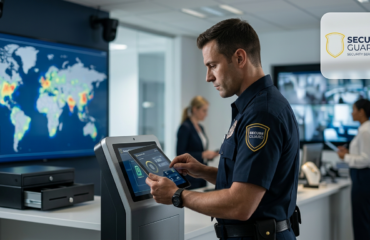
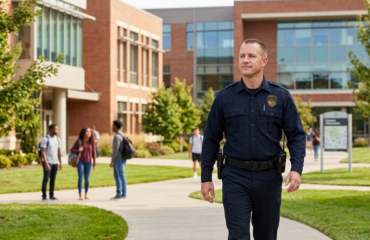
Armed security jobs in California can involve protecting commercial properties, warehouses, industrial facilities, events, high-value assets, and other locations where an armed security presence has been determined appropriate.
However, armed security work involves additional responsibilities beyond a standard unarmed assignment. Officers must meet California licensing requirements, complete required firearms training, maintain the appropriate permits, and understand the limits of their authority.
For people considering this career path, it is important to understand the qualifications, daily duties, schedules, work environments, and professional expectations before applying.
This guide explains what to expect from an armed security career in California.
What Is an Armed Security Officer?
An armed security officer is a security professional who is authorized to carry a firearm while performing approved security duties.
Depending on the assignment, armed officers may be responsible for:
- Access control
- Gate security
- Property patrols
- Perimeter observation
- Protection of designated high-value areas
- Employee or asset escorts
- Incident reporting
- Emergency communication
- Monitoring restricted locations
The exact duties depend on the employer, client property, post orders, and applicable regulations.
An armed officer should not assume that carrying a firearm changes every aspect of the job. Observation, communication, reporting, professionalism, and good judgment remain essential parts of the assignment.
California Requirements for Armed Security Jobs
California regulates private security through the Bureau of Security and Investigative Services, commonly known as BSIS.
Security guards generally need an active California Security Guard Registration for regulated private-security work. Armed duties require additional authorization through a BSIS Firearms Permit associated with the qualifying security license or registration.
Applicants should always verify current requirements directly with the California Bureau of Security and Investigative Services firearms permit guidance.
California Firearms Permit Requirements
BSIS currently requires applicants for an initial firearms permit to meet requirements that include:
- Meeting the minimum age requirement
- Holding or qualifying for an eligible BSIS license or registration
- Completing the required criminal-history background check
- Completing approved firearms training
- Passing required written and range qualifications
- Meeting firearm-possession eligibility requirements
- Completing the required assessment when applicable
Security guard registrants applying for an initial BSIS Firearms Permit must also complete the required assessment before submitting the firearms permit application.
Because requirements, forms, fees, and procedures can change, applicants should rely on current BSIS instructions rather than older articles or third-party summaries.
Armed Security vs. Unarmed Security Jobs
Armed and unarmed officers share many basic security responsibilities.
Both may perform duties such as:
- Access control
- Patrols
- Observation
- Incident reporting
- Visitor management
- Property inspections
- Communication with supervisors
The major difference is that armed assignments involve additional firearm-related licensing, training, qualification, and responsibility.
An armed assignment is not automatically a better career choice for every security professional. The right path depends on the officer’s qualifications, judgment, interests, training, and preferred work environment.
Learn more about armed and unarmed security officer services and how the two assignment types differ.
What Do Armed Security Officers Do During a Shift?
Daily responsibilities vary by property.
However, a typical armed security shift may include several of the following tasks.
Review Post Orders
At the beginning of the shift, the officer should review the property’s instructions, recent incidents, access changes, and other important information.
Monitor Access Points
Depending on the assignment, the officer may monitor gates, employee entrances, loading areas, restricted locations, or other designated access points.
Conduct Patrols
Officers may inspect parking areas, building exteriors, perimeter fencing, storage areas, or other locations included in the patrol plan.
Document Incidents
When an incident or unusual condition occurs, the officer should document observable facts and follow the property’s reporting procedures.
Communicate With Supervisors
Officers should contact supervisors when they need clarification, additional support, or management involvement.
Carrying a firearm does not replace these basic security responsibilities.
Where Do Armed Security Officers Work?
Armed security officers can work in several types of environments depending on the employer and assignment.
Industrial Properties
Industrial sites may use armed officers for designated entrances, perimeter areas, restricted facilities, or other security posts identified through the site’s security plan.
Warehouses and Logistics Facilities
Some facilities with valuable inventory or sensitive operations may consider armed security for specific gates, posts, or high-risk areas.
High-Value Properties
Properties that handle valuable assets or sensitive operations may use armed personnel when a security assessment determines that the assignment is appropriate.
Events
Some events may require armed security based on the venue, organizer policies, responsibilities, and risk assessment.
Commercial Facilities
Armed officers may also work at selected commercial properties where the client and security provider determine that armed coverage fits the assignment.
Not every property in these categories requires an armed officer. Staffing decisions should follow the property’s actual needs.
Skills Needed for Armed Security Work
A firearms permit alone does not make someone an effective armed security officer.
Strong candidates also need professional skills that support sound decision-making.
Good Judgment
Armed officers need to remain calm and make responsible decisions under pressure.
Communication
Officers may interact with employees, clients, visitors, supervisors, emergency responders, and members of the public.
Observation
Security work requires attention to changes in the environment, access points, property conditions, and unusual activity.
Professionalism
An armed officer should maintain a professional presence and follow the employer’s policies and post orders.
Accurate Reporting
Security reports should explain what happened, where it occurred, what the officer observed, and what action was taken.
For more information, read our guide to the qualities strong security personnel should possess.
Armed Security Training and Qualification
California armed security work requires additional firearms-related training and qualification.
BSIS requires applicants to complete firearms instruction through an approved training provider and meet the applicable written and range qualification requirements.
Officers must also qualify with the firearm caliber they are authorized to carry while on duty.
Training requirements are not a one-time reason to stop learning.
Professional armed officers should continue developing skills such as:
- Communication
- De-escalation
- Report writing
- Property-specific procedures
- Emergency communication
- Access control
- Professional judgment
Always confirm current firearms permit and requalification requirements directly with BSIS.
What Work Schedules Are Common?
Security work often operates outside traditional office hours.
Armed security positions may include:
- Day shifts
- Evening shifts
- Overnight shifts
- Weekend schedules
- Holiday coverage
- Full-time positions
- Part-time assignments
- Special-event work
The U.S. Bureau of Labor Statistics notes that security guards commonly work shifts and that overnight work is common because many properties operate around the clock. Review the current BLS security guard occupational profile for national career information.
Before accepting a position, applicants should confirm the expected schedule, assigned property, responsibilities, and overtime expectations.
Technology Used in Armed Security Jobs
Modern armed security work can involve technology as well as physical security duties.
Depending on the assignment, officers may use:
- Digital incident reporting
- GPS patrol verification
- Electronic checkpoints
- Access-control systems
- Video surveillance
- Mobile communication tools
- Digital post orders
Secure Guard uses SecureTrack to support reporting, patrol documentation, checkpoints, scheduling, communication, and operational visibility when those features are included in the assignment.
Comfort with security technology can help officers work more efficiently and provide better documentation.
Can Armed Security Officers Advance Their Careers?
Security officers may have opportunities to take on more responsibility as they gain experience and demonstrate strong performance.
Possible career paths may include:
- Lead security officer
- Site supervisor
- Field supervisor
- Patrol supervisor
- Account manager
- Operations coordinator
- Security operations manager
Career advancement depends on factors such as performance, reliability, leadership skills, communication, experience, additional training, and available positions.
For officers interested in leadership, read our article on the qualities of a security guard supervisor.
What Employers Look for in Armed Security Candidates
Hiring standards vary by company and assignment.
However, employers may look for candidates who demonstrate:
- Current required credentials
- Professional conduct
- Reliable attendance
- Good communication
- Sound judgment
- Attention to detail
- Accurate report writing
- Ability to follow post orders
- Ability to work independently
- Willingness to learn site-specific procedures
Previous security, military, law-enforcement, customer-service, or related experience may be useful for some assignments. However, requirements vary by employer.
How to Prepare for an Armed Security Job Interview
Before the interview, review the job description carefully.
Be prepared to discuss:
- Your current security registration
- Your firearms permit status
- Your work availability
- Your previous security experience
- Your report-writing ability
- Your customer-service experience
- Your understanding of post orders
- Your ability to remain calm under pressure
- Your experience working independently
Do not exaggerate experience or credentials.
Employers should be able to verify required licensing and permits before assigning armed duties.
Questions to Ask Before Accepting an Armed Security Position
Candidates should also evaluate the employer and assignment.
Consider asking:
- What type of property will I be assigned to?
- What are the expected duties?
- What shift will I work?
- Who supervises the assignment?
- What training is provided for the site?
- What reporting system is used?
- What equipment is provided?
- How are incidents escalated?
- How are call-offs and relief handled?
- Are there opportunities for advancement?
A clear job description can help candidates understand the expectations before accepting the position.
Frequently Asked Questions About Armed Security Jobs
How Old Do You Have to Be for Armed Security Work in California?
BSIS currently requires applicants for a California Firearms Permit to be at least 21 years old. Applicants must also meet the other eligibility and licensing requirements that apply to the permit.
Do Armed Security Guards Need a Firearms Permit?
Yes. California security personnel who carry an exposed firearm while performing armed security duties must have the appropriate BSIS authorization associated with the qualifying security license or registration.
Does a Guard Card Allow You to Work Armed?
No. A standard Security Guard Registration does not by itself authorize an officer to carry a firearm while performing armed security duties. Additional firearms authorization is required.
Do Armed Security Officers Work Overnight?
Yes. Armed security positions may include evening, overnight, weekend, and holiday shifts depending on the property and employer.
Are Armed Security Jobs More Dangerous?
The conditions vary greatly by assignment. Candidates should review the property, duties, post orders, training, supervision, and employer expectations before accepting a position.
Can Armed Security Officers Become Supervisors?
Yes. Experienced officers may have opportunities to move into lead, supervisory, account-management, or operational roles depending on their performance and the employer’s available positions.
Start Building an Armed Security Career
Armed security work carries additional responsibility and should be approached professionally.
Start by confirming California’s current licensing and firearms permit requirements. Then continue developing the communication, observation, judgment, reporting, and reliability skills required for professional security work.
As you gain experience, you may also have opportunities to take on more complex assignments or move into supervisory and operational roles.
If you are interested in joining Secure Guard Security Services, visit the Secure Guard careers page to review employment opportunities and application information.