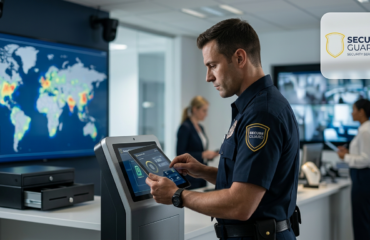
Onsite security guards in Los Angeles can support access control, visitor management, patrols, parking-area observation, incident reporting, and other physical-security duties at commercial, residential, industrial, healthcare, construction, retail, and hospitality properties.
However, hiring an onsite officer should begin with the property itself. A downtown office tower has different needs from a warehouse, apartment community, construction site, hotel, or retail center.
Therefore, property managers should evaluate operating hours, entrances, parking areas, visitor activity, previous incidents, existing cameras, and reporting requirements before deciding what type of security coverage to use.
The Cybersecurity and Infrastructure Security Agency recommends reviewing existing security measures and vulnerabilities before selecting physical-security improvements. Businesses can review the CISA Security Assessment at First Entry program for additional planning guidance.
Here are the main factors Los Angeles businesses should consider before hiring professional onsite security guards.
1. Start With a Site-Specific Security Assessment
Before assigning an officer, review how the property actually operates.
A security assessment may consider:
- Main and secondary entrances
- Operating hours
- Employee shift changes
- Visitor traffic
- Vendor and delivery schedules
- Parking lots and garages
- Loading areas
- Restricted areas
- Previous incidents
- Existing cameras and alarms
For example, a commercial office may need lobby coverage and visitor management. Meanwhile, a warehouse may need gate control, truck verification, perimeter patrols, and after-hours coverage.
Secure Guard’s Los Angeles County security services page provides broader information about available security options across commercial, residential, industrial, healthcare, construction, and other properties.
2. Define What the Onsite Security Officer Will Actually Do
One of the most important steps is defining the officer’s responsibilities before service begins.
Depending on the property, onsite officers may support:
- Lobby and reception security
- Visitor check-in
- Employee credential verification
- Gate procedures
- Vendor access
- Foot patrols
- Parking-area observation
- Restricted-area control
- Incident documentation
- Emergency communication
The U.S. Bureau of Labor Statistics identifies common security guard duties such as controlling access, patrolling property, monitoring alarms and surveillance systems, conducting security checks, responding to emergencies, and preparing reports.
Review the U.S. Bureau of Labor Statistics security guard profile for additional information.
Clear duties should appear in site-specific post orders so officers, supervisors, and property management understand what the assignment requires.
3. Decide Whether You Need Armed or Unarmed Officers
Not every Los Angeles property requires armed security.
Unarmed officers may be appropriate when the main responsibilities involve:
- Lobby coverage
- Visitor management
- Access control
- Routine patrols
- Parking observation
- Customer interaction
- Incident reporting
Armed coverage may be considered when a documented risk assessment identifies higher-risk conditions, valuable assets, sensitive operations, serious prior incidents, or specific contractual requirements.
The decision should reflect the actual site rather than a general assumption that one officer type is always better.
Secure Guard provides armed and unarmed security officer services based on the property’s risk profile and operating environment.
4. Verify California Licensing and Training
California regulates security guards through the Bureau of Security and Investigative Services.
Before hiring a provider, confirm that assigned officers meet applicable BSIS requirements.
Current guard-registration requirements include:
- Being at least 18 years old
- Completing California DOJ and FBI criminal-history background checks
- Completing required Power to Arrest training
- Completing 32 hours of security-officer skills training within the required period
- Completing annual continuing training
Businesses can review the California BSIS Security Guard Registration requirements for current information.
In addition, verify that the security company itself holds the appropriate California Private Patrol Operator license.
Do not rely only on a license number printed on a proposal. Use the state’s license-verification system when conducting due diligence.
5. Ask How Officers Are Selected for Your Property
A Guard Card alone does not determine whether an officer is a good fit for a specific assignment.
Ask the provider how it selects officers based on:
- Property type
- Required duties
- Public interaction
- Shift schedule
- Relevant experience
- Communication skills
- Additional permits when required
For example, a customer-facing corporate lobby may benefit from an officer with strong visitor-management and communication skills. By contrast, a large warehouse may require experience with truck gates, industrial environments, and perimeter patrols.
Site-specific orientation should also explain entrances, patrol areas, emergency contacts, reporting procedures, and client expectations.
6. Evaluate Supervision and Replacement Staffing
Professional onsite security requires more than placing a guard at the property.
Property managers should understand who supervises the officer and what happens when staffing issues occur.
Ask:
- Who supervises the assigned officers?
- How often do supervisors visit the site?
- How does the company verify attendance?
- How are missed patrols identified?
- What happens when an officer calls off?
- Who handles client concerns?
- How are performance problems addressed?
Secure Guard’s guide on how professional security companies supervise guards provides additional questions property managers can use when comparing providers.
7. Review Reporting and Patrol Accountability
Property managers should be able to see what happened during each security shift.
Professional reporting may include:
- Daily activity reports
- Incident reports
- Patrol checkpoints
- Photographs
- Visitor or vehicle records
- Property-condition concerns
- Follow-up requirements
Secure Guard uses SecureTrack security reporting and patrol verification to support digital activity records, GPS-backed checkpoints, incident reports, photographs, and post orders depending on the client’s service configuration.
Consistent reporting can also help management identify repeat concerns and adjust patrol routes, access procedures, or staffing schedules.
8. Decide Whether a Fixed Post or Mobile Patrol Fits Better
Some properties need an officer continuously stationed at one location. Others need broader periodic coverage across parking areas, multiple buildings, or large perimeters.
A standing onsite officer may be appropriate for:
- Corporate lobbies
- Reception areas
- Gates
- High-traffic entrances
- Restricted locations
By contrast, mobile patrol may work well for:
- Parking lots
- Industrial properties
- Warehouses
- Construction sites
- Apartment communities
- Multi-building campuses
Secure Guard’s mobile patrol security services provide scheduled or randomized property checks across designated areas.
Some properties may benefit from combining both models. For example, an onsite officer can cover the primary entrance while mobile patrol officers check parking areas, secondary buildings, loading zones, and perimeter gates.
9. Make Sure Officers Can Work With Existing Security Technology
Onsite officers often work alongside cameras, alarms, access-control systems, and other physical-security tools.
Before hiring, ask:
- Can officers use our existing access-control procedures?
- Can they review approved camera feeds?
- How are alarms handled?
- Who responds when monitoring identifies suspicious activity?
- How are technology-related incidents documented?
Secure Guard’s video monitoring services can support camera observation, activity verification, communication, documentation, and client-approved escalation procedures.
Technology should support the officer rather than replace clear procedures and accountability.
10. Create Clear After-Hours and Emergency Procedures
Many Los Angeles properties operate differently after normal business hours.
Security procedures may need to address:
- Which entrances remain open
- Who can authorize late access
- After-hours vendors
- Parking patrols
- Alarm notifications
- Management contacts
- Emergency communication
Security officers should know who to contact and what actions the client expects when an incident occurs.
However, private security officers do not replace police officers, firefighters, paramedics, or other public first responders.
Instead, officers should follow their post orders, contact the appropriate personnel, support established procedures, and document the incident.
Common Los Angeles Properties That Use Onsite Security Guards
Onsite security guards in Los Angeles may work across many property types.
Commercial Offices and High-Rises
Officers may support lobby security, visitor access, employee credentials, parking areas, and after-hours entry.
Warehouses and Logistics Facilities
Security may focus on gate procedures, truck access, loading areas, perimeter patrols, and overnight operations.
Construction Sites
Officers may support contractor access, equipment areas, material storage, gates, and after-hours property checks.
Retail Centers
Retail security may involve entrances, customer-facing areas, parking, employee access, incident reporting, and loss-prevention support.
Apartment Communities and HOAs
Residential security may include guest access, parking patrols, common areas, gates, and property-management reporting.
Hotels and Hospitality Properties
Hotel security may support entrances, guest areas, parking, staff access, events, and incident communication.
For broader local coverage information, visit Secure Guard’s Los Angeles County security guard services page.
How Much Do Onsite Security Guards Cost in Los Angeles?
There is no single hourly rate that applies to every Los Angeles security assignment.
Pricing may vary based on:
- Armed or unarmed coverage
- Hours of service
- Number of officers
- Property location
- Required duties
- Risk level
- Supervisor requirements
- Holiday or overtime coverage
- Technology and reporting requirements
Therefore, property managers should compare the complete scope rather than choose a provider solely by hourly rate.
Ask whether the proposal includes supervision, replacement staffing, reporting, technology, and other services that affect the overall program.
Questions to Ask Before Hiring Onsite Security Guards in Los Angeles
Use this checklist when comparing providers:
- Is your California security-company license current?
- Are assigned officers properly registered?
- How will you assess our property?
- What duties will officers perform?
- Who creates the post orders?
- Who supervises the officers?
- How are call-offs handled?
- What reports will management receive?
- Can management verify patrol activity?
- Can officers work with our existing cameras and access systems?
- How are serious incidents escalated?
For additional provider-selection guidance, review Secure Guard’s article on evaluating security company reputation.
Build Onsite Security Around Your Los Angeles Property
Effective onsite security guards in Los Angeles should be selected and managed according to the property’s actual operating environment.
Secure Guard Security Services develops security programs using armed and unarmed officers, mobile patrols, video monitoring, site-specific post orders, field supervision, dispatch support, and SecureTrack reporting.
Explore our Los Angeles County security services or our armed and unarmed security officer services.
To discuss onsite coverage for your Los Angeles property, call 888-908-7818 or request a security assessment with Secure Guard.