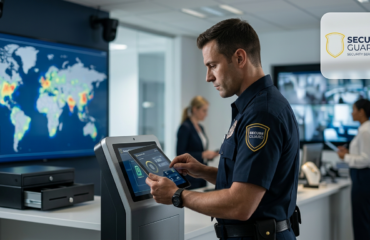
Protecting a commercial property in Los Angeles often requires more than one security measure. A standing guard may provide strong coverage at an entrance, but that officer cannot continuously watch every parking area, perimeter, loading zone, camera, and secondary access point at the same time.
That is why many properties benefit from integrated security solutions in Los Angeles. Instead of treating guards, patrols, cameras, dispatch, and reporting as separate services, an integrated security program connects them through clear procedures and coordinated response.
For example, a video operator may identify suspicious activity, dispatch may notify a mobile patrol officer, the officer can inspect the location, and the entire incident can then be documented for management review.
As a result, security becomes a coordinated operation rather than a collection of disconnected services.
What Are Integrated Security Solutions?
An integrated security solution combines several security layers into one coordinated program.
Depending on the property, those layers may include:
- On-site security officers
- Mobile patrol
- Video monitoring
- Surveillance cameras
- Mobile surveillance towers
- Access-control procedures
- 24/7 dispatch support
- Incident reporting
- Patrol verification
- Field supervision
- SecureTrack reporting
The goal is not to add every available security service. Instead, the goal is to select the right combination for the property’s actual risks, operating hours, layout, and activity.
Why Los Angeles Properties Benefit From Layered Security
Los Angeles includes many different types of commercial properties. Office buildings, shopping centers, warehouses, construction sites, apartment communities, healthcare facilities, hotels, manufacturing properties, and entertainment locations all operate differently.
Therefore, each property may face different security concerns.
Common concerns can include:
- Unauthorized access
- Trespassing
- Theft
- Vandalism
- Vehicle break-ins
- After-hours activity
- Loading-area security
- Parking-area incidents
- Access-control problems
- Large or difficult-to-monitor perimeters
- Employee and visitor safety concerns
A layered approach allows property managers to address several areas at once instead of relying on one security measure to solve every problem.
CISA also recommends a layered physical security approach in which measures such as guards, surveillance, access controls, barriers, procedures, and training work together. No single security measure can address every risk.
Property managers can review additional guidance through CISA’s physical security resources.
1. On-Site Security Officers Provide the Human Response
Technology can provide valuable information. However, people still need to evaluate situations, communicate with visitors, enforce property procedures, inspect suspicious activity, and respond when conditions change.
Depending on the assignment, on-site officers may:
- Monitor entrances
- Verify visitors and vendors
- Control vehicle access
- Conduct foot patrols
- Monitor designated cameras
- Document incidents
- Respond to tenant or employee concerns
- Check doors, gates, and restricted areas
- Follow emergency procedures
- Communicate with dispatch and supervisors
Secure Guard provides armed and unarmed security officers based on the property’s risk level, operating environment, and service requirements.
2. Mobile Patrol Extends Coverage Across Larger Properties
A fixed security officer cannot always cover a large property efficiently.
For example, a commercial complex may include several buildings, parking lots, loading areas, perimeter gates, and secondary entrances. In those situations, mobile patrol can add another layer of coverage.
Mobile patrol officers can perform scheduled or randomized checks of:
- Parking areas
- Property perimeters
- Building entrances
- Loading docks
- Equipment yards
- Gates
- Vacant areas
- Remote sections of a property
In addition, patrol personnel can respond when dispatch or monitoring personnel identify an issue that requires an on-site check.
Learn more about mobile patrol security services.
3. Video Monitoring Adds Continuous Visibility
Cameras can help extend visibility beyond what an officer can observe from a fixed position.
However, cameras are most useful when the security program includes clear procedures for reviewing activity and responding when something unusual occurs.
Secure Guard’s video monitoring services can support properties by reviewing triggered activity and following site-specific escalation procedures.
For example, the process may include:
- A camera or sensor detects activity.
- A monitoring operator reviews the event.
- The operator determines whether the activity requires attention.
- Dispatch coordinates a mobile patrol or on-site officer response when appropriate.
- Law enforcement can be contacted according to the approved procedure when needed.
- The incident is documented for review.
As a result, video becomes part of an active security workflow instead of serving only as recorded footage after an incident.
4. Mobile Surveillance Towers Can Cover Temporary or Remote Areas
Some properties need camera coverage without permanent infrastructure.
Construction projects, equipment yards, vacant properties, parking areas, temporary sites, and changing work zones may benefit from mobile surveillance equipment.
Surveillance towers can provide an additional security layer when a property needs temporary or flexible monitoring.
In addition, they can complement standing guards or patrol services when the property has a large perimeter or limited visibility.
Learn more about Secure Guard’s mobile surveillance tower solutions.
5. Access Control Helps Manage Who Enters the Property
Many security problems begin at an entrance.
Therefore, an integrated security plan should clearly define how employees, visitors, contractors, vendors, delivery drivers, and vehicles enter the property.
Depending on the site, officers may work with existing access-control systems and client procedures to:
- Verify employee credentials
- Check visitor lists
- Maintain visitor logs
- Verify contractors
- Monitor vehicle entrances
- Manage temporary access
- Protect restricted areas
- Report access violations
Most importantly, officers need clear post orders explaining who may enter, which areas are restricted, and when management approval is required.
6. 24/7 Dispatch Connects the Different Security Layers
Security services become more effective when officers and monitoring personnel have a clear communication center.
Secure Guard’s 24/7 Dispatch and Operations Center supports field personnel and helps coordinate communication when an issue develops.
Depending on the situation, dispatch may help:
- Receive officer updates
- Coordinate mobile patrol response
- Contact field supervisors
- Escalate incidents
- Communicate with client contacts
- Support officers during unusual situations
- Coordinate approved emergency notifications
Therefore, an officer working overnight does not have to operate without operational support.
7. SecureTrack Connects Reporting and Accountability
An integrated security program also needs reliable information.
Secure Guard uses SecureTrack to support reporting, patrol verification, and operational visibility.
Depending on the service configuration, SecureTrack can help document:
- Officer attendance
- Daily Activity Reports
- Incident reports
- Patrol checkpoints
- Photos
- Security observations
- Supervisor activity
- Follow-up items
As a result, property managers do not have to rely only on verbal updates to understand what happened during a security shift.
How an Integrated Security Response Can Work
Consider a commercial property where suspicious activity occurs near a rear parking area after normal business hours.
An integrated response may work like this:
- Detection: A camera or monitoring system identifies activity in the area.
- Verification: A monitoring operator reviews the live feed.
- Communication: Dispatch receives the information and follows the property’s approved procedures.
- Physical response: An on-site officer or mobile patrol unit checks the location when appropriate.
- Escalation: If the situation requires additional assistance, dispatch can follow the approved notification process.
- Documentation: The security team records the incident and relevant actions.
- Review: Supervisors and management can review what occurred and decide whether procedures need to change.
In this example, no single security measure operates by itself. Instead, technology, officers, dispatch, and reporting support the same response process.
Integrated Security Should Begin With a Site Assessment
Adding more security does not automatically create better security.
First, the provider should understand the property.
A site assessment may review:
- Property layout
- Operating hours
- Entrances and exits
- Parking areas
- Loading zones
- Employee activity
- Visitor and vendor activity
- Previous incidents
- Existing cameras
- Existing access procedures
- Remote or low-visibility areas
- Current reporting requirements
Then, the security provider can decide where standing officers, patrols, monitoring, or other measures may provide the most value.
Different Los Angeles Properties Need Different Security Programs
Commercial Office Buildings
Office properties may need lobby security, visitor management, parking patrols, after-hours access control, and incident reporting.
Warehouses and Logistics Facilities
Warehouses may require gate control, truck and driver procedures, perimeter patrols, loading-area monitoring, and after-hours protection.
Construction Sites
Construction properties may need perimeter monitoring, equipment protection, mobile patrol, surveillance towers, and documented after-hours checks.
Retail and Shopping Centers
Retail properties may combine uniformed officers, plain-clothes security, parking patrol, video monitoring, and incident reporting.
Apartment Communities and HOAs
Residential properties may focus on visitor management, gate access, parking areas, patrols, cameras, and resident support.
Healthcare Facilities
Healthcare security may require access management, de-escalation, parking coverage, visitor procedures, incident response, and staff support.
Because these properties operate differently, an integrated program should never use the same staffing and technology mix at every location.
Integrated Security Can Help Reduce Blind Spots
One of the biggest advantages of a layered program is broader visibility.
For example, an officer may focus on a lobby while cameras monitor exterior areas. At the same time, mobile patrol can inspect parking structures and remote sections of the property.
Dispatch can then coordinate the different parts of the operation when a problem develops.
This approach can be especially useful for:
- Large properties
- Multi-building sites
- 24-hour operations
- Facilities with several entrances
- Properties with large parking areas
- Sites with both public and restricted spaces
Integrated Security Can Improve Accountability
A security program should not depend only on whether someone says a patrol or inspection happened.
Instead, digital reporting and supervision can create a record of activity.
For example, management may review:
- Checkpoint activity
- Incident reports
- Daily security logs
- Photos
- Officer attendance
- Supervisor reports
- Recurring security concerns
Over time, this information can also help identify patterns. Therefore, management can adjust patrol schedules, officer placement, post orders, or monitoring procedures when conditions change.
Integrated Security Does Not Mean More Guards Everywhere
A common mistake is assuming that stronger security always requires more standing officers.
In reality, integration may allow a property to use each resource more effectively.
For example, a property may use:
- A fixed officer at the primary entrance
- Video monitoring around the perimeter
- Mobile patrol checks overnight
- SecureTrack for reporting and verification
- 24/7 dispatch for communication and escalation
Another property may need several standing officers and less remote monitoring.
Therefore, the correct mix should come from the site’s actual risk and operating requirements.
What to Look for in an Integrated Security Provider
Before choosing a security company, ask how the provider manages the entire operation.
Useful questions include:
- Do you complete a site assessment before recommending coverage?
- How do standing officers communicate with dispatch?
- Can video monitoring coordinate with field personnel?
- Can mobile patrol respond to approved monitoring alerts?
- How are patrols verified?
- How are incidents documented?
- Do supervisors perform field inspections?
- Can clients review security reports?
- How are post orders created and updated?
- Can the security program scale when our operating needs change?
The answers should explain how the different security services actually work together.
Secure Guard’s Integrated Security Approach in Los Angeles
Secure Guard Security Services builds property-specific security programs throughout Los Angeles County.
Depending on the site, an integrated program can include:
- Armed security officers
- Unarmed security officers
- Mobile patrol
- Video monitoring
- Mobile surveillance towers
- Access-control support
- SecureTrack reporting
- 24/7 dispatch
- Field supervision
- Site-specific post orders
- Incident and patrol documentation
Most importantly, these services can work together under one security plan instead of operating as separate pieces.
Learn more about security guard services in Los Angeles County.
Build an Integrated Security Plan for Your Los Angeles Property
The right security program should match the way your property actually operates.
Secure Guard can review your entrances, parking areas, operating hours, visitor activity, previous incidents, existing security systems, reporting requirements, and known concerns before recommending coverage.
From there, the program can combine personnel, patrols, monitoring, dispatch, and reporting around the property’s specific needs.
Request a security assessment to discuss an integrated security solution for your Los Angeles property.
Frequently Asked Questions About Integrated Security Solutions
What is an integrated security solution?
An integrated security solution combines several security measures under one coordinated plan. Depending on the property, this may include guards, patrols, video monitoring, access procedures, dispatch, supervision, and digital reporting.
Why combine security guards with video monitoring?
Video monitoring can provide broader visibility, while security officers provide an on-site human response. When the two services communicate through clear procedures, monitoring personnel can alert field personnel when an issue requires physical inspection.
Can mobile patrol work with video monitoring?
Yes. Depending on the security program, monitoring personnel can notify dispatch when suspicious activity is verified, and dispatch can coordinate a mobile patrol response according to the client’s approved procedures.
What is SecureTrack?
SecureTrack is Secure Guard’s guard management and reporting platform. It supports functions such as patrol verification, activity reporting, incident documentation, checkpoints, and operational visibility depending on the service configuration.
Do integrated security solutions require armed guards?
No. Officer type should depend on the property’s risk level and operating environment. Many integrated programs use unarmed officers, while higher-risk properties may use armed personnel or a combination of both.
Are integrated security solutions only for large properties?
No. A smaller property may combine one security officer with video monitoring and reporting, while a large campus may use several officers, mobile patrols, cameras, dispatch, and supervision.
Can Secure Guard provide integrated security in Los Angeles County?
Yes. Secure Guard provides security programs throughout Los Angeles County that can combine armed or unarmed officers, mobile patrol, video monitoring, access-control support, SecureTrack reporting, dispatch, supervision, and other site-specific security services.