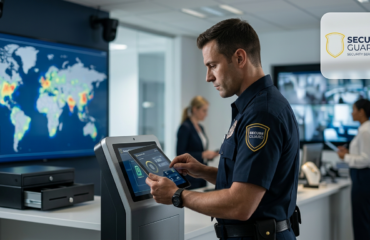
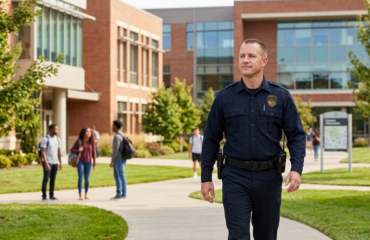
Armed security is not the right choice for every San Francisco property. In many offices, apartment buildings, hotels, retail locations, and customer-facing environments, professional unarmed officers can provide effective access control, patrols, reporting, and de-escalation.
However, some properties face higher-risk conditions that may justify an armed security presence. Valuable assets, documented threats, repeated serious incidents, sensitive operations, cash-handling activities, or other site-specific risks can change the security requirements.
For that reason, choosing armed security guards in San Francisco should begin with a professional risk assessment rather than a general assumption that armed officers always provide better protection.
This guide explains when armed coverage may be appropriate, when unarmed security may be the better choice, and what San Francisco property managers should review before hiring an armed security provider.
What Is an Armed Security Guard?
An armed security guard is a properly licensed security professional who holds the permits required to carry an exposed firearm while performing qualifying security duties.
Depending on the assignment, an armed officer may still perform many of the same core responsibilities as an unarmed officer, including:
- Access control
- Gate security
- Foot patrols
- Parking-area patrols
- Restricted-area monitoring
- Visitor verification
- Incident reporting
- Suspicious-activity observation
- Communication with dispatch
- Emergency coordination
Most importantly, carrying a firearm does not replace good judgment, communication, observation, or de-escalation.
When Might Armed Security Be Appropriate?
Armed coverage should be based on the actual conditions of the property.
For example, a security assessment may identify a need for armed personnel when a site has:
- Documented threats
- Repeated serious security incidents
- High-value inventory or assets
- Significant cash-handling operations
- Sensitive industrial or commercial operations
- Higher-risk access points
- Critical equipment or infrastructure
- Executive or VIP protection requirements
- Other documented risk factors
However, none of these factors automatically means a property needs armed guards. The provider should review the entire operating environment before making a recommendation.
1. Start With a San Francisco Property Risk Assessment
First, review how the property operates.
A security assessment may consider:
- Property type
- Operating hours
- Number of entrances
- Visitor activity
- Employee activity
- Parking facilities
- Loading areas
- Restricted locations
- Value of protected assets
- Previous incidents
- Existing cameras and alarms
- Public exposure
- Required response time
As a result, the security company can determine whether armed, unarmed, or blended coverage is the better fit.
For example, a public-facing office lobby may be best served by a professional unarmed officer. Meanwhile, a higher-risk industrial or high-value facility may require a different staffing model.
2. Consider How Much Public Interaction the Property Has
Public interaction is an important factor when selecting officer type.
San Francisco properties such as office towers, mixed-use buildings, hotels, retail locations, and residential communities may involve frequent interaction with tenants, residents, customers, visitors, delivery drivers, and contractors.
In those environments, officers often need strong skills in:
- Customer service
- Visitor management
- Professional communication
- De-escalation
- Access control
- Conflict management
Therefore, an armed officer should not be selected simply because the property wants a stronger visual presence.
The officer type should match the actual risk and the way security personnel interact with the public.
3. Review the Value and Sensitivity of the Assets
Some properties protect assets that create additional security concerns.
Depending on the site, these may include:
- High-value inventory
- Specialized equipment
- Sensitive materials
- Cash-handling areas
- Restricted records or operations
- Critical business infrastructure
In these cases, management should review both the likelihood of an incident and the potential consequences.
However, higher asset value alone does not automatically require an armed officer. Access controls, surveillance, mobile patrol, secure storage, and other measures may also form part of the security plan.
4. Review Previous Incidents and Documented Threats
Past incidents can help reveal whether a property’s existing security model needs to change.
For example, management may review:
- Forced-entry attempts
- Serious threats
- Repeated trespassing
- Violent incidents
- Robbery concerns
- High-value theft
- Threats against employees or executives
Still, the goal should not be to react emotionally to one incident.
Instead, management should review the pattern, severity, operating conditions, and existing controls before deciding whether armed coverage is appropriate.
5. Compare Armed and Unarmed Security
Armed and unarmed officers perform many of the same basic security duties. However, they are suited to different environments.
Unarmed Security May Be Appropriate When:
- Customer service is important
- Visitor management is a primary responsibility
- The property has low-to-moderate documented risk
- Officers primarily conduct access control and patrols
- The environment includes frequent public interaction
- De-escalation is central to the assignment
Armed Security May Be Considered When:
- The property has documented higher-risk conditions
- Valuable assets require additional protection
- Previous serious incidents have occurred
- The client has sensitive operations
- The security assessment supports armed coverage
In many cases, a blended model may also make sense.
For example, an unarmed officer can manage a public-facing lobby while properly licensed armed personnel protect a higher-risk access point or sensitive area.
Learn more about armed and unarmed security officer services.
6. California Armed Guards Need Additional Licensing
A California Guard Card alone does not authorize someone to work while armed.
Security personnel assigned to armed duties must also hold the appropriate BSIS Firearms Permit.
For an initial Firearms Permit, California BSIS currently requires applicants to meet requirements that include:
- Being at least 21 years old
- Holding or qualifying under an eligible BSIS license or registration
- Being legally eligible to possess a firearm
- Completing required background checks
- Completing required firearms training
- Passing required examinations and range qualifications
- Completing the firearms assessment when applicable
Property managers can review the current requirements through the BSIS Firearms Permit Fact Sheet.
Therefore, clients should verify both the security company’s licensing and the individual officer’s current credentials before armed service begins.
7. The BSIS Firearms Permit Has Specific Limits
A Firearms Permit does not give a security officer unrestricted authority to carry any firearm for any security job.
BSIS specifies that the permit applies to the qualifying license or registration associated with it.
In addition, the officer may carry only the exposed firearm caliber or calibers listed on the permit while performing qualifying duties.
For this reason, a professional security company should verify permits, qualifying licenses, and current firearm qualifications before assigning an officer to an armed post.
8. California Armed Guards Must Complete the Firearms Assessment When Required
Security Guard registrants seeking an initial BSIS Firearms Permit must complete the applicable firearms assessment before submitting their initial permit application.
The assessment evaluates whether the applicant demonstrates appropriate judgment, restraint, and self-control for armed security duties.
Therefore, armed security involves an additional screening process beyond the standard California Security Guard Registration.
Current information is available through the BSIS Firearms Assessment page.
9. De-Escalation Still Matters in Armed Security
Professional armed security should not treat every disagreement as a physical threat.
Instead, officers should rely on communication and de-escalation when circumstances allow.
Useful skills include:
- Remaining calm
- Listening before responding
- Maintaining professional body language
- Keeping appropriate distance
- Explaining property rules clearly
- Avoiding unnecessary arguments
- Requesting additional assistance when needed
Most importantly, armed officers need sound judgment because their actions can carry greater consequences.
Secure Guard’s current armed-security model emphasizes restraint, communication, and de-escalation as part of higher-risk security assignments.
10. Use Site-Specific Post Orders
Armed officers need clear instructions about their responsibilities at the property.
Post orders may define:
- Officer duties
- Patrol routes
- Access procedures
- Restricted areas
- Emergency contacts
- Incident escalation
- Client notification procedures
- Reporting requirements
- Coordination with law enforcement
Without clear post orders, different officers may handle similar situations differently.
Therefore, property-specific procedures should be established before deployment.
11. Armed Security Should Include Active Supervision
A professional armed-security program should not rely only on the officer assigned to the property.
Field supervisors can review:
- Officer attendance
- Professional appearance
- Post-order compliance
- Patrol completion
- Reporting quality
- Training requirements
- Client concerns
In addition, supervisor visits allow the security company to identify performance concerns and correct them.
12. 24/7 Dispatch Gives Armed Officers Operational Support
Security incidents may occur at any hour.
For that reason, armed officers should have access to an established support structure.
Secure Guard field personnel are supported through a 24/7 Dispatch and Operations Center.
Depending on the situation, dispatch can help:
- Receive officer updates
- Contact supervisors
- Notify approved client contacts
- Coordinate additional personnel
- Support incident escalation
- Document important communications
As a result, one armed officer does not have to manage an unusual event without operational support.
13. Require Clear Incident Reporting
Armed-security activity should be well documented.
Depending on the event, incident reports may include:
- Date and time
- Location
- People involved
- What the officer observed
- Actions taken
- Client notifications
- Supervisor involvement
- Law-enforcement involvement
- Property damage
- Relevant follow-up information
Reports should remain factual and separate observations from assumptions.
In addition, armed officers must comply with applicable BSIS incident-reporting requirements when an event falls within those rules.
14. Use SecureTrack for Accountability
Secure Guard uses SecureTrack to support field reporting, patrol verification, and operational visibility.
Depending on the service configuration, SecureTrack can support:
- Officer attendance
- GPS-supported patrol activity
- Security checkpoints
- Daily Activity Reports
- Incident reports
- Photos and supporting documentation
- Post-order access
- Supervisor visibility
Therefore, authorized clients can gain greater visibility into the security activity taking place at their property.
15. Armed Security Can Work With Mobile Patrol
Some San Francisco properties need security coverage across parking areas, secondary buildings, or remote access points.
In those cases, armed or unarmed standing officers may work alongside mobile patrol services.
For example:
- An officer remains at the primary entrance.
- A mobile patrol unit checks parking areas.
- Patrol personnel inspect remote doors and perimeters.
- Dispatch coordinates both teams during an incident.
As a result, the property can extend coverage without placing an armed officer at every location.
16. Armed Security Can Work With Video Monitoring
Video monitoring can provide additional visibility across locations that security officers cannot continuously observe.
Depending on the site, cameras may cover:
- Entrances
- Parking facilities
- Perimeters
- Loading areas
- Restricted zones
- Other approved locations
When monitoring personnel identify unusual activity, they can follow the property’s approved response procedure.
For example, dispatch may contact an armed or unarmed officer to inspect the location when appropriate.
Learn more about video monitoring services.
17. Executive Protection Is Different From General Armed Guard Coverage
Some organizations need personal protection for executives, speakers, public figures, or other high-profile individuals.
Although some executive-protection assignments may involve armed specialists, executive protection is a broader discipline.
It can include:
- Threat assessment
- Advance planning
- Route planning
- Secure transportation
- Venue reviews
- Close protection
- Travel security
- Emergency planning
Therefore, a company should not treat an ordinary armed guard assignment as a substitute for professional executive protection.
Learn more about executive protection services.
Armed Security for San Francisco Property Types
Different properties require different security decisions.
High-Rise and Commercial Buildings
Many high-rise and office properties are well suited to professional unarmed officers focused on lobby access, visitors, parking, patrols, and tenant service. Armed coverage may be considered only when the property’s documented risk supports it.
Warehouses and Industrial Facilities
Properties with high-value inventory, restricted operations, overnight activity, or documented serious incidents may evaluate armed gate or patrol coverage.
Retail Properties
Retail locations often benefit from professional unarmed personnel because customer service, observation, de-escalation, and public interaction are important parts of the assignment. Higher-risk circumstances should be evaluated separately.
Construction Sites
Construction projects may use unarmed guards, mobile patrol, video monitoring, or other measures. Armed coverage should follow a site-specific assessment rather than be treated as the default.
Parking Facilities
Parking garages may benefit from foot patrol, mobile patrol, cameras, and clear response procedures. Armed personnel may be considered only when the documented risk justifies that level of coverage.
Executive and VIP Assignments
Higher-profile protection should be handled through a dedicated executive-protection plan that considers the principal’s threat profile, schedule, travel, and public exposure.
Questions to Ask an Armed Security Company in San Francisco
Before hiring a provider, ask how the armed-security program will actually operate.
- Will you complete a site risk assessment?
- Why are you recommending armed rather than unarmed coverage?
- How do you verify Guard Cards and Firearms Permits?
- How do you select officers for armed assignments?
- What de-escalation training do officers receive?
- Will you create site-specific post orders?
- How are officers supervised?
- How are patrols verified?
- What reports will management receive?
- Is dispatch available 24/7?
- How are officer call-offs handled?
- Can armed coverage be combined with unarmed personnel?
- Can you add mobile patrol or video monitoring?
The provider should explain why armed coverage is appropriate instead of relying on claims about being the “top” or “best” armed guard company.
How Secure Guard Provides Armed Security in San Francisco
Secure Guard Security Services provides armed and unarmed security programs throughout San Francisco County.
Our approach begins with the property, operating environment, previous incidents, asset exposure, public interaction, and client requirements.
Depending on the site, coverage may include:
- Licensed armed security officers
- Professional unarmed officers
- Gate and access-control coverage
- Foot patrols
- Parking-area security
- Mobile patrol
- Video monitoring
- Executive protection
- SecureTrack reporting
- 24/7 dispatch support
- Field supervision
- Site-specific post orders
Most importantly, armed officers are not assigned simply because a client wants the strongest-looking option. The security model should match the real conditions of the property.
Learn more about Secure Guard security services in San Francisco County or request an armed and unarmed security assessment.
Frequently Asked Questions About Armed Security in San Francisco
Do all San Francisco properties need armed security guards?
No. Many offices, apartment communities, hotels, retail properties, and other customer-facing locations can be effectively served by professional unarmed officers. Armed coverage should be based on a property-specific risk assessment.
What licenses do armed security guards need in California?
An armed security guard generally needs the appropriate California Security Guard Registration and a current BSIS Firearms Permit associated with that registration. Additional requirements may apply to specific assignments.
How old do you have to be to obtain a California Firearms Permit?
BSIS requires applicants for an initial Firearms Permit to be at least 21 years old.
Can a Guard Card holder automatically work armed?
No. A California Guard Card alone does not authorize an officer to carry a firearm while performing security duties. The officer must also hold the appropriate BSIS Firearms Permit.
Are armed guards always better than unarmed guards?
No. Armed and unarmed officers serve different security needs. Public-facing and lower-risk environments may be better suited to professional unarmed personnel, while higher-risk sites may justify armed coverage.
Can armed security guards work with mobile patrol?
Yes. A property may use an armed or unarmed officer at a fixed post while mobile patrol covers parking areas, secondary buildings, gates, and other designated locations.
Can armed security work with video monitoring?
Yes. Video monitoring can provide additional visibility, while properly assigned security personnel can respond according to the property’s approved procedures.
Does Secure Guard provide armed security in San Francisco?
Yes. Secure Guard provides armed and unarmed security services throughout San Francisco County based on each property’s risk profile, operating environment, access points, assets, and security requirements.