Modesto businesses operate across retail, healthcare, hospitality, manufacturing, distribution, agriculture, professional services, and other industries. Each property can have different operating hours, access points, parking areas, visitors, deliveries, employees, and security concerns.
For that reason, effective security guard services in Modesto should begin with the property itself. A retail center may need visible officers and parking patrols, while a warehouse may need gate security, truck access procedures, and after-hours perimeter checks.
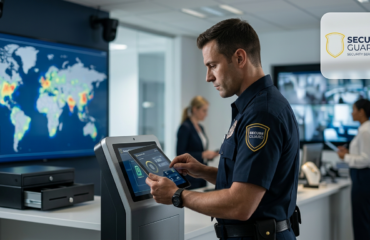
Professional security can combine on-site officers, mobile patrol, access control, video monitoring, incident reporting, SecureTrack, field supervision, and 24/7 dispatch support.
Most importantly, the security plan should support normal business operations while addressing the risks and activity specific to the property.
Why Modesto Businesses Need Site-Specific Security
Modesto has a diverse business economy. Local industries include healthcare, hospitality, retail, food processing, manufacturing, distribution, agriculture, commercial services, and other professional operations.
Because these businesses operate differently, their security priorities can also vary.
Depending on the property, common concerns may include:
- Unauthorized access
- After-hours trespassing
- Retail theft
- Vehicle break-ins
- Equipment or inventory theft
- Vandalism
- Parking-area concerns
- Loading-dock activity
- Visitor-management problems
- Restricted-area access
- Gate and perimeter concerns
Therefore, the security provider should review the individual site before recommending staffing, patrols, monitoring, or other services.
1. Start With a Property Security Assessment
Before assigning officers, the security company should understand how the property operates.
A security assessment may review:
- Property size and layout
- Operating hours
- Main entrances and exits
- Employee entrances
- Vehicle gates
- Parking areas
- Loading docks
- Visitor activity
- Vendor and contractor access
- Delivery schedules
- Restricted areas
- Existing cameras and alarms
- Previous incidents
- After-hours activity
As a result, the provider can recommend security based on actual conditions instead of using the same plan for every business.
2. Use On-Site Security Officers Where Continuous Coverage Is Needed
Some Modesto businesses need an officer present throughout the shift.
Depending on the assignment, an on-site security officer may:
- Monitor entrances
- Verify visitors
- Manage employee access
- Monitor vehicle gates
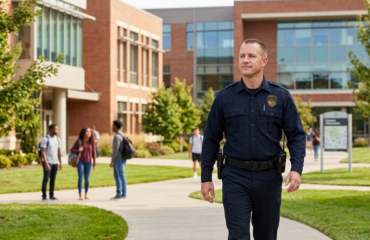
- Conduct foot patrols
- Observe unusual activity
- Monitor restricted areas
- Document incidents
- Assist employees or visitors
- Communicate with dispatch
Standing officers can be especially useful at lobbies, gates, reception areas, truck entrances, and other locations that require continuous attention.
Learn more about armed and unarmed security officers.
3. Control Employee, Visitor, and Vendor Access
Many businesses need to know who is entering the property.
Depending on client procedures, security officers may help:
- Verify employee credentials
- Confirm visitor appointments
- Review approved access lists
- Maintain visitor logs
- Verify vendors and contractors
- Monitor vehicle entrances
- Direct deliveries
- Protect restricted areas
However, guards should follow the client’s approved access rules rather than create their own procedures.
Clear instructions also help different officers apply the same standards throughout the property.
4. Add Mobile Patrol for Larger Properties
One fixed officer cannot continuously observe every part of a large commercial property.
For that reason, mobile patrol services can extend security coverage to:
- Parking lots
- Parking structures
- Building perimeters
- Loading docks
- Equipment yards
- Storage areas
- Secondary entrances
- Remote buildings
Patrols may be scheduled at specific times or randomized based on the property’s operating hours and security concerns.
For example, a warehouse may keep an officer at the main truck entrance while a patrol unit checks the parking lot and perimeter.
5. Protect Parking Areas
Parking lots and garages can be difficult to monitor from inside a building.
Security patrols may review:
- Vehicle entrances
- Employee parking
- Customer parking
- Exterior walkways
- Lighting
- Emergency exits
- Remote corners
- Restricted parking areas
During patrols, officers can report suspicious activity, unauthorized vehicles, damaged lighting, property damage, or other conditions that require attention.
6. Support Retail Stores and Shopping Properties
Retail security can involve high customer traffic, deliveries, parking areas, public entrances, and activity that changes throughout the day.
Depending on the property, security personnel may support:
- Visible officer coverage
- Entrance observation
- Parking patrols
- Customer assistance
- Suspicious-activity observation
- Crowd management
- Incident reporting
- After-hours security
Security officers should focus on observable behavior and follow the retailer’s approved procedures.
For larger retail properties, learn more about shopping center security services.
7. Secure Warehouses and Distribution Facilities
Distribution, manufacturing, and food-processing operations are important parts of Modesto’s business economy.
These properties may include large inventories, trucks, loading docks, employee parking, storage areas, and operations that continue outside normal business hours.
Warehouse security may include:
- Truck and driver verification
- Gate security
- Loading-dock monitoring
- Employee access
- Vendor logs
- Parking patrols
- Inventory-area patrols
- Perimeter checks
- Incident documentation
In addition, higher-value storage locations may require more frequent patrols or camera coverage.
8. Support Manufacturing and Industrial Properties
Manufacturing facilities can have equipment, materials, employee entrances, loading areas, contractors, and restricted operational zones.
Security coverage may include:
- Gate access control
- Employee credential procedures
- Contractor verification
- Exterior patrols
- Parking-area security
- Loading-area observation
- Restricted-area monitoring
- After-hours checks
Site-specific post orders should explain which areas require additional attention and how officers should report unusual conditions.
9. Protect Commercial Offices
Office security usually requires a professional, customer-facing approach.
Depending on the property, officers may support:
- Lobby coverage
- Visitor management
- Employee access
- Parking-area patrols
- Contractor access
- After-hours entry
- Incident reporting
Officers may also help visitors with directions while continuing to follow approved building-access procedures.
10. Support Healthcare and Medical Properties
Modesto’s healthcare sector includes hospitals, medical offices, clinics, and other patient-facing facilities.
Healthcare environments can require a different approach because officers may interact with patients, visitors, employees, vendors, and people under stress.
Depending on the facility, security may include:
- Entrance coverage
- Visitor procedures
- Parking patrols
- Restricted-area monitoring
- De-escalation
- Incident reporting
- Staff security support
Learn more about healthcare facility security services.
11. Protect Construction Sites
Construction projects can contain tools, materials, equipment, temporary offices, storage containers, and changing access points.
For that reason, construction security may include:
- Gate access control
- Worker and contractor verification
- Equipment-area checks
- Material-storage patrols
- Perimeter inspections
- After-hours security
- Video monitoring
- Incident reporting
Because construction sites change over time, the security plan should also change as the project progresses.
Learn more about construction site security services.
12. Support Hotels, Restaurants, and Entertainment Properties
Hospitality properties often need security that remains professional and approachable around guests.
Depending on the property, security personnel may help with:
- Entrance monitoring
- Parking areas
- Guest concerns
- Event areas
- After-hours activity
- Disturbances
- Incident reporting
Hotels and entertainment properties may also need temporary event personnel during conferences, celebrations, or high-attendance gatherings.
13. Use Video Monitoring for Wider Visibility
Cameras can help security teams observe areas that officers cannot continuously watch in person.
Depending on the property, approved camera coverage may include:
- Entrances
- Parking areas
- Loading docks
- Equipment yards
- Perimeters
- Storage areas
However, cameras are most useful when the property has a clear response procedure.
For example, monitoring personnel may review unusual activity, notify dispatch, and coordinate with an on-site officer or mobile patrol unit when appropriate.
Learn more about video monitoring services.
14. Use Site-Specific Post Orders
Security officers need clear written instructions before working independently.
Post orders may define:
- Officer duties
- Patrol routes
- Patrol frequency
- Access procedures
- Restricted areas
- Emergency contacts
- Incident-reporting standards
- Client notification procedures
Without clear post orders, officers may handle similar situations differently.
Therefore, the provider should create procedures around the property and update them when operations change.
15. Require Daily and Incident Reporting
Business owners and property managers should know what happened during security coverage.
Depending on the assignment, officers may document:
- Daily Activity Reports
- Incident reports
- Patrol activity
- Visitor logs
- Vehicle activity
- Photos
- Property-condition concerns
- Items requiring follow-up
Good reporting gives management a record of security activity instead of relying only on verbal updates.
16. Use SecureTrack for Accountability
Secure Guard uses SecureTrack to support reporting, patrol verification, and field accountability.
Depending on the service configuration, SecureTrack can support:
- Officer attendance
- GPS-supported patrol activity
- Security checkpoints
- Daily Activity Reports
- Incident reports
- Photos
- Post-order access
- Supervisor visibility
As a result, authorized clients can gain greater visibility into when and where security activity takes place.
17. Support Officers With 24/7 Dispatch
Security concerns can occur outside normal business hours.
Therefore, field officers need access to operational support.
Secure Guard personnel are supported through a 24/7 Dispatch and Operations Center.
Depending on the situation, dispatch can help:
- Receive officer updates
- Contact field supervisors
- Notify approved client contacts
- Coordinate additional personnel
- Support incident escalation
- Document important communications
This keeps officers connected to the broader security operation.
18. Use Active Field Supervision
Digital reporting can improve accountability. However, professional security still requires human supervision.
Field supervisors may review:
- Officer attendance
- Professional appearance
- Post-order compliance
- Patrol completion
- Reporting quality
- Training needs
- Client concerns
In addition, supervisor visits give the operations team an opportunity to correct problems before they become recurring service issues.
Armed or Unarmed Security in Modesto?
Not every Modesto business needs armed security.
For many properties, professional unarmed officers can provide:
- Access control
- Visitor management
- Patrols
- Parking coverage
- Customer service
- Incident reporting
- De-escalation
However, some higher-risk properties may evaluate armed coverage based on documented threats, valuable assets, previous serious incidents, operating conditions, and client requirements.
The appropriate officer type should come from the property’s risk assessment rather than a general assumption that armed security is always better.
California Security Guard Requirements
Businesses should verify that assigned security personnel meet California requirements.
The Bureau of Security and Investigative Services regulates Security Guard Registrations in California.
Current basic requirements include:
- Being at least 18 years old
- Completing required Power to Arrest training
- Completing DOJ and FBI criminal-history background checks
- Completing required security-officer skills training
- Completing annual continuing training
Current information is available through the California BSIS Security Guard Registration Fact Sheet.
Therefore, ask the provider how officer registrations and required training are verified before deployment.
What to Ask a Modesto Security Company
Before choosing a provider, ask how the security operation will be managed.
- Will you inspect our property before service begins?
- How do you select officers for our business type?
- Will you create site-specific post orders?
- How are officers trained on our property?
- How are guards supervised?
- How do you verify patrols?
- What reports will management receive?
- What happens when an officer calls off?
- Is dispatch available 24/7?
- Can you provide mobile patrol?
- Can you provide video monitoring?
- Can coverage change if our business changes?
The provider should explain the operation behind the officer rather than simply quote an hourly guard rate.
How Secure Guard Supports Modesto Businesses
Secure Guard Security Services has provided professional security services since 2005 and serves businesses and properties throughout California, including Modesto.
Depending on the property, coverage can include:
- Armed security officers
- Unarmed security officers
- Access control
- Foot patrols
- Mobile patrol
- Parking-area security
- Construction security
- Healthcare security
- Retail security
- Event security
- Video monitoring
- SecureTrack reporting
- 24/7 dispatch support
- Field supervision
- Site-specific post orders
Most importantly, each security program should reflect the property’s layout, schedule, access points, visitors, assets, and identified security concerns.
View Secure Guard security service areas across California.
Request a Modesto security assessment to discuss your business and coverage requirements.
Frequently Asked Questions About Security Guard Services in Modesto
What do security guards in Modesto do?
Security guards may monitor entrances, manage visitors, conduct patrols, observe parking areas, protect restricted locations, document incidents, and follow property-specific security procedures.
Can security guards patrol Modesto parking lots?
Yes. Security programs can include parking lots, parking structures, vehicle entrances, exterior walkways, loading areas, and other designated parts of the property.
Can Modesto businesses use mobile patrol instead of a standing guard?
Sometimes. Businesses that mainly need periodic parking, perimeter, gate, or after-hours checks may use mobile patrol. Properties requiring continuous access control or immediate on-site presence may still need a standing officer.
Should a Modesto business use armed or unarmed security?
The appropriate officer type depends on the property’s risk assessment, operating environment, public interaction, valuable assets, previous incidents, client policies, and applicable requirements. Many businesses use professional unarmed officers.
Can security guards work with cameras?
Yes. Video monitoring can provide additional visibility, while on-site officers or mobile patrol personnel can provide a physical response according to the property’s procedures.
How can clients verify security patrols?
Depending on the service configuration, SecureTrack can document GPS-supported patrol activity, checkpoints, timestamps, reports, photos, and other field activity.
Does Secure Guard provide security services in Modesto?
Yes. Secure Guard provides security services for businesses and properties in Modesto, with coverage options that may include standing officers, mobile patrol, access control, monitoring, reporting, dispatch, and supervision.
How do I choose a Modesto security company?
Review licensing, experience, site assessments, officer selection, post orders, supervision, replacement staffing, reporting, patrol verification, dispatch support, pricing, and the provider’s ability to adapt coverage as your property changes.