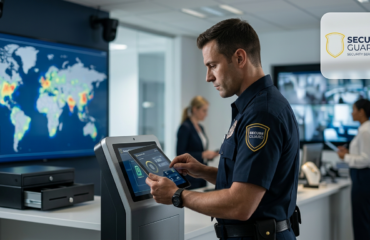
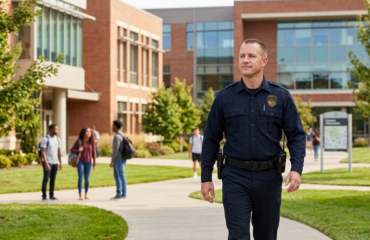
Security officer careers in California can offer flexible schedules, varied work environments, and opportunities to build experience in access control, patrols, reporting, event security, mobile patrol, and other areas of private security.
Security officers work in many different environments, including commercial buildings, healthcare facilities, residential communities, retail properties, warehouses, hotels, schools, and event venues.
The U.S. Bureau of Labor Statistics reports that security guards commonly patrol property, control building access, monitor alarms and video systems, respond to emergencies, conduct security checks, and prepare reports.
BLS currently projects about 1% employment growth for security guards and gambling surveillance officers from 2025 to 2035. Even with limited overall growth, the agency projects about 157,200 openings each year, on average, largely because workers leave the occupation or move into other roles.
Review the U.S. Bureau of Labor Statistics security guard career profile for current occupational data.
If you are considering a security career in California, here is what you should know about licensing, training, job duties, schedules, and advancement opportunities.
What Does a Security Officer Do?
Security officer responsibilities vary by employer and assignment.
Common duties may include:
- Controlling building access
- Checking employee and visitor credentials
- Conducting foot or vehicle patrols
- Monitoring alarms and cameras
- Inspecting parking areas and property perimeters
- Enforcing property rules
- Documenting incidents
- Supporting emergency communication
- Writing daily activity reports
A security officer working at an apartment community may have different responsibilities from an officer assigned to a warehouse, hospital, hotel, corporate office, or construction site.
Secure Guard’s armed and unarmed security officers work across a range of property types and assignments.
California Security Guard Requirements
California security guards are regulated by the Bureau of Security and Investigative Services, commonly known as BSIS.
To qualify for a California Security Guard Registration, an applicant generally must:
- Be at least 18 years old
- Complete a California DOJ and FBI criminal-history background check
- Complete the required Power to Arrest training
BSIS also requires 32 hours of security-officer skills training within the first six months of registration and 8 hours of continuing training each year.
Review the California BSIS Security Guard Registration requirements for current information.
What Is a California Guard Card?
A Guard Card is the common name for a California BSIS Security Guard Registration.
It allows a person to work in qualifying security-guard roles when they meet the requirements of the employer and assignment.
However, receiving a Guard Card does not mean all training is complete.
After registration, guards must still complete required security-officer skills training within the BSIS deadlines and maintain annual continuing training.
If you already have your registration, read Secure Guard’s guide on what to do after getting your California Guard Card.
Do Security Officer Jobs Require a High School Diploma?
The U.S. Bureau of Labor Statistics states that security guards typically need a high school diploma or equivalent, although requirements may vary by employer and assignment.
Employers may also consider:
- Communication skills
- Report-writing ability
- Availability
- Driving record
- Relevant security experience
- Customer-service experience
- Professional appearance
- Ability to follow post orders
Some positions may require additional certifications, permits, or experience.
What Skills Make a Good Security Officer?
Strong security officers need more than a license.
Important skills include:
- Observation
- Clear verbal communication
- Professional report writing
- Good judgment
- Reliability
- Customer-service awareness
- Professionalism
- Ability to follow procedures
- Calm communication during stressful situations
Security officers often interact with employees, residents, visitors, vendors, customers, and property managers. Professional communication can therefore be just as important as patrol skills.
Common Security Officer Work Schedules
Security is often a 24-hour operation, so positions may be available across several shifts.
Common schedules can include:
- Day shifts
- Swing shifts
- Overnight shifts
- Weekend shifts
- Part-time schedules
- Full-time schedules
- Temporary or event assignments
BLS notes that night shifts and rotating schedules are common in the security industry because many properties operate around the clock.
This schedule variety can make security work appealing to people who need options outside a traditional daytime work schedule.
Where Do Security Officers Work?
Security professionals can work in many industries.
Commercial Properties
Officers may support lobby security, visitor management, employee access, parking patrols, and after-hours procedures.
Healthcare Facilities
Healthcare security may involve visitor access, parking areas, patrols, de-escalation procedures, and emergency communication.
Residential Communities
Apartment and HOA security officers may support guest access, parking patrols, amenities, gates, and incident reporting.
Retail Properties
Retail security may involve entrance observation, parking patrols, customer assistance, loss-prevention support, and incident documentation.
Warehouses and Logistics Facilities
Warehouse security may involve gates, truck access, perimeter patrols, loading areas, and after-hours operations.
Events
Event officers may support entry procedures, credential checks, guest flow, restricted areas, and incident coordination.
Secure Guard provides event security officers for temporary and scheduled events.
Security Officer Pay and Job Outlook
Pay varies by location, employer, assignment, schedule, officer type, experience, and additional qualifications.
The U.S. Bureau of Labor Statistics reported a national median annual wage of approximately $38,020 for security guards in May 2025.
However, actual wages can vary significantly by market and type of assignment.
BLS projects approximately 157,200 annual openings for security guards and gambling surveillance officers from 2025 to 2035, even though overall employment growth is expected to remain modest.
Job seekers should review the current wage and employment information for their region rather than relying on a single national figure.
How to Find Security Officer Jobs
Start by identifying employers that operate in the geographic area and type of security work that interests you.
Look for companies that provide:
- Clear onboarding
- Professional uniforms and equipment
- Site-specific training
- Written post orders
- Field supervision
- Reliable scheduling
- Opportunities for advancement
Secure Guard’s current Careers & Employment page lists opportunities for security professionals and provides information about compensation, benefit options, scheduling, training, and advancement.
Job seekers can also review the Secure Guard employment application for current application requirements.
What to Include on a Security Officer Resume
A security resume should make it easy for an employer to understand your qualifications and availability.
Include relevant information such as:
- California Guard Card status
- Expiration date
- Security experience
- Customer-service experience
- Patrol experience
- Report-writing experience
- Relevant permits or certifications
- Driving qualifications when applicable
- Shift availability
Do not claim licenses, permits, or certifications that are expired or that you do not hold.
How to Prepare for a Security Officer Interview
Security employers may ask questions about reliability, communication, availability, and judgment.
Be prepared to discuss:
- Why you want to work in security
- Your availability
- Your Guard Card status
- Your previous experience
- How you handle stressful situations
- How you communicate with visitors or customers
- How you would report an incident
- Your ability to follow post orders
Employers may also ask situational questions to understand how you think through security problems.
A strong answer should show professionalism, communication, good judgment, and willingness to follow established procedures.
Armed Security Career Requirements
Security officers who want to work armed need additional qualifications.
In California, carrying an exposed firearm while performing armed security duties requires an applicable BSIS Firearms Permit.
Current BSIS eligibility requirements include:
- Being at least 21 years old
- Meeting applicable legal-status requirements
- Being legally eligible to possess a firearm
- Holding an eligible BSIS license or registration
- Completing the required background check
- Completing firearms training
- Passing required written and range qualifications
- Completing the applicable firearms assessment
Review the BSIS Firearms Permit requirements before pursuing armed assignments.
You can also read Secure Guard’s guide to armed vs. unarmed security for a broader comparison of the two roles.
Career Growth for Security Officers
A security career does not have to remain at an entry-level post.
Experienced and reliable officers may pursue roles such as:
- Mobile patrol officer
- Lead officer
- Shift supervisor
- Site supervisor
- Armed security officer
- Event-security specialist
- Executive-protection professional
- Account management
- Operations management
Advancement often depends on reliability, attendance, training, judgment, communication, report writing, and the ability to manage greater responsibility.
Mobile Patrol Can Be a Career Step
Some guards move from fixed-post assignments into mobile patrol work as they gain experience.
Mobile patrol officers may be responsible for visiting several properties during one shift, completing checkpoints, documenting conditions, inspecting gates or doors, and responding according to client procedures.
Learn more about Secure Guard’s mobile patrol services to understand how patrol assignments operate.
Security Careers Require Continuing Training
Security professionals should continue learning after they receive their initial registration.
California requires registered guards to complete annual continuing training.
Additional training may also help officers improve skills in areas such as:
- Report writing
- Customer service
- De-escalation
- Patrol procedures
- Access control
- Emergency communication
Some specialized assignments may require additional permits or employer-specific training.
Security Officer Careers Are Different From Cybersecurity Careers
Physical security and cybersecurity are separate career fields.
A security officer may use cameras, radios, access-control systems, or digital reporting tools, but that does not make the position a cybersecurity role.
Cybersecurity careers typically require different technical skills, education, and certifications.
Security officers who want to move into cybersecurity should treat it as a separate professional path rather than assuming that experience in physical security automatically qualifies them for cyber roles.
Security Careers and Law Enforcement Are Different Paths
Some security officers later pursue careers in law enforcement, corrections, emergency services, or other public-safety fields.
However, private security work does not automatically qualify someone for those roles.
Police departments, federal agencies, and other government employers maintain their own education, background, training, testing, and hiring requirements.
Security experience may provide useful exposure to communication, observation, report writing, and working with the public, but each career path has separate requirements.
Questions to Ask Before Accepting a Security Job
Before accepting a position, ask the employer:
- What type of property will I work at?
- What shift will I work?
- What are the post duties?
- Will I receive site orientation?
- How are patrols documented?
- Who supervises the site?
- How are call-offs handled?
- What uniforms and equipment are provided?
- What training is required?
- Are advancement opportunities available?
Understanding the assignment before accepting it can help you decide whether the position matches your schedule, experience, and career goals.
Start Your Security Career With Secure Guard
Security officer careers in California can provide opportunities to develop professional skills, work across different property types, and advance into specialized or supervisory roles.
Secure Guard Security Services has served clients since 2005 and currently invites dedicated, ethical, and professional security officers to explore employment opportunities through its Careers page.
Visit the Secure Guard Careers & Employment page to review current opportunities and employment information.
You can also submit an application through the Secure Guard employment application.