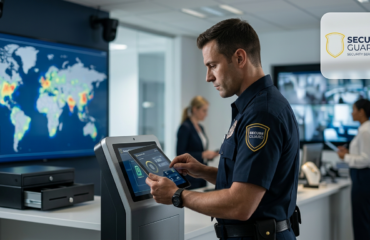
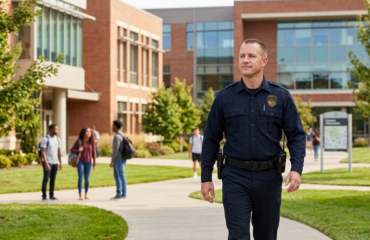
Office buildings in Los Angeles and the San Francisco Bay Area operate in two of California’s busiest commercial markets. Both regions include high-rise offices, corporate campuses, mixed-use properties, parking structures, loading areas, public-facing lobbies, and buildings that remain active well beyond normal business hours.
However, effective office building security strategies should not rely on one standard plan. A downtown Los Angeles tower may have different access, parking, visitor, and event conditions than a corporate office in San Francisco, Oakland, or Silicon Valley.
For that reason, professional office security should begin with the property itself. Building layout, operating hours, tenants, entrances, parking, deliveries, visitors, previous incidents, and after-hours activity should all influence the security program.
This guide explains practical security strategies for office buildings in Los Angeles and the Bay Area without forcing every property into the same coverage model.
What Should an Office Building Security Program Include?
Depending on the building, a professional office security program may combine:
- Lobby security officers
- Visitor management
- Employee access control
- Foot patrols
- Parking-garage patrols
- Mobile patrol
- Loading-area security
- After-hours access procedures
- Video monitoring
- Incident reporting
- Patrol verification
- Site-specific post orders
- 24/7 dispatch support
- Field supervision
Most importantly, these services should work together under one clear operating plan.
1. Start With a Building Security Assessment
Before recommending officers, cameras, or patrols, the security provider should understand how the building operates.
An office-building security assessment may review:
- Property size and layout
- Number of tenants
- Operating hours
- Main lobby entrances
- Employee entrances
- Parking garages
- Loading docks
- Visitor activity
- Vendor and contractor access
- Restricted floors or rooms
- Existing cameras and alarms
- Previous security incidents
- After-hours activity
From there, property management can identify which areas need continuous coverage and which may be better served by patrol or monitoring.
2. Build Security Around the Building’s Daily Workflow
Office-building activity changes throughout the day.
For example, the highest traffic may occur during:
- Morning employee arrival
- Lunch periods
- Visitor-heavy meeting times
- Delivery windows
- Employee departure
- Evening cleaning shifts
- After-hours tenant access
Therefore, the security plan should account for when people actually use the property.
A building may need strong lobby coverage during business hours but rely more heavily on patrols, access control, and monitoring overnight.
3. Use Professional Lobby Security
The lobby is often the most visible security point in an office building.
Depending on building procedures, lobby officers may:
- Greet visitors
- Confirm appointments
- Review approved visitor lists
- Issue temporary credentials
- Maintain visitor logs
- Direct guests to the correct tenant
- Monitor employee entrances
- Report unauthorized-access attempts
At the same time, office security should remain professional and customer-friendly. The lobby officer may be one of the first people a visitor encounters when entering the property.
4. Strengthen Visitor Management
Office buildings can receive clients, vendors, job candidates, contractors, delivery personnel, guests, and service providers throughout the day.
For that reason, visitor procedures should be clear and consistent.
The process may include:
- Advance visitor registration
- Appointment confirmation
- Temporary badges
- Visitor logs
- Tenant notification
- Escort requirements for restricted areas
- After-hours visitor approval
Security personnel should follow the building’s approved procedures rather than create new rules during a shift.
5. Address Tailgating and Unauthorized Access
Electronic access systems can control credentials, but human behavior can still create security gaps.
For example, someone may attempt to follow an authorized employee through a secured entrance without presenting a valid credential.
Security personnel can support existing access systems by:
- Monitoring controlled entrances
- Checking credentials when required
- Watching doors that should remain secured
- Following visitor procedures
- Reporting damaged access equipment
- Documenting repeated access problems
Therefore, access-control technology and professional security personnel often work best together.
6. Protect Parking Garages and Parking Lots
Parking facilities can be among the most difficult parts of an office property to monitor.
Garages may include multiple levels, elevators, stairwells, pillars, blind spots, pedestrian routes, and vehicle entrances.
Security patrols may review:
- Vehicle entrances
- Parking levels
- Stairwells
- Elevator areas
- Pedestrian access points
- Lighting
- Emergency exits
- Restricted parking areas
During patrols, officers can report suspicious activity, unauthorized vehicles, lighting failures, property damage, or other conditions requiring attention.
For larger office properties, mobile patrol services can extend coverage across parking garages, exterior lots, and multiple buildings.
7. Give Loading Docks and Service Entrances Dedicated Procedures
Loading areas often operate differently from the public lobby.
These locations may receive:
- Delivery trucks
- Maintenance vendors
- Cleaning crews
- Construction contractors
- Tenant shipments
- Waste-removal services
Depending on the building, security personnel may verify scheduled activity, maintain vendor logs, monitor loading areas, and report unauthorized access.
Clear procedures help prevent the service entrance from becoming an uncontrolled secondary access point.
8. Plan for After-Hours Access
Office buildings can operate very differently after normal business hours.
Some tenants may work late. Cleaning crews may enter after employees leave. Contractors may perform maintenance overnight.
After-hours procedures may include:
- Reduced public entrances
- Employee credential checks
- Contractor verification
- Parking patrols
- Door checks
- Exterior inspections
- Alarm procedures
- Randomized patrols
Management should also make sure officers know which employees and vendors are expected to remain on the property.
9. Use Foot Patrols Beyond the Lobby
A lobby officer cannot continuously observe an entire office property.
Therefore, patrol routes may include:
- Parking garages
- Loading areas
- Exterior doors
- Stairwells
- Tenant common areas
- Mechanical areas
- Building perimeters
- Rooftops when appropriate
- Secondary entrances
During these patrols, officers can identify doors left open, lighting problems, unusual activity, property damage, or other conditions that need management attention.
10. Use Mobile Patrol for Larger Campuses and Multi-Building Properties
Corporate campuses and larger office properties may cover more ground than one standing officer can reasonably inspect.
Mobile patrol can provide scheduled or randomized checks of:
- Parking areas
- Multiple buildings
- Exterior perimeters
- Secondary entrances
- Loading zones
- Remote locations
For example, a standing officer can manage the main lobby while a mobile patrol officer checks garages and perimeter doors.
As a result, each officer can focus on a different security responsibility.
11. Use Video Monitoring to Extend Visibility
Video systems can provide additional visibility across areas that officers cannot continuously watch in person.
Depending on the office property, approved camera coverage may include:
- Main entrances
- Parking facilities
- Loading areas
- Exterior walkways
- Elevator lobbies
- Other high-priority locations
However, cameras are most useful when the building has a clear response procedure.
For example, monitoring personnel may identify unusual activity, notify dispatch, and coordinate with an on-site officer or mobile patrol unit when appropriate.
Learn more about video monitoring services.
12. Protect Sensitive Office Areas
Some office buildings contain areas that require more controlled access.
These may include:
- Executive floors
- Server rooms
- Records rooms
- Finance departments
- Research areas
- Legal departments
- Storage rooms
- Mechanical and utility spaces
Security personnel can support physical access procedures around these locations.
However, cybersecurity, network permissions, digital access, encryption, and information-security policy remain separate responsibilities for the organization’s IT and cybersecurity teams.
13. Manage Packages, Mailrooms, and Deliveries
Large office buildings can receive significant volumes of packages and deliveries.
Property procedures may address:
- Delivery entrances
- Package rooms
- Courier access
- Tenant notification
- After-hours deliveries
- Oversized deliveries
- Restricted delivery areas
Security personnel can help maintain consistent access procedures around these areas when that responsibility is part of the assignment.
14. Prepare for Workplace Violence Concerns
California employers subject to Labor Code section 6401.9 must maintain an effective written Workplace Violence Prevention Plan.
The requirements include procedures related to workplace violence hazards, employee communication, emergency response, training, incident documentation, and post-incident review.
Office security can support the employer’s plan through:
- Access control
- Observation and reporting
- Clear incident escalation
- Communication with management
- Support for approved emergency procedures
- Documentation of security-related events
Employers can review current requirements through the Cal/OSHA Workplace Violence Prevention guidance.
However, a contract security company does not replace the employer’s responsibility to establish and maintain its required workplace violence prevention program.
15. Use Professional De-Escalation
Office security personnel may encounter frustrated visitors, former employees, access disputes, tenant disagreements, or other difficult interactions.
Professional officers should use calm communication when circumstances allow.
Useful practices may include:
- Speaking calmly
- Listening before responding
- Maintaining professional body language
- Keeping appropriate distance
- Explaining building procedures clearly
- Avoiding unnecessary arguments
- Requesting supervisor assistance when needed
Most importantly, officers should know when a situation requires management, law enforcement, emergency medical personnel, or another responsible authority.
16. Prepare for Earthquakes and Other Emergencies
Both Los Angeles and the Bay Area operate in earthquake-prone regions.
Office-building emergency procedures should also consider:
- Fire alarms
- Medical emergencies
- Earthquakes
- Power outages
- Security alarms
- Evacuation
- Shelter procedures
- Major disturbances
Security officers should understand their assigned role before an emergency occurs.
Depending on the building, officers may help contact dispatch, notify management, control access, direct emergency responders, or support approved evacuation procedures.
However, security officers do not replace police, firefighters, emergency medical personnel, engineers, or the building’s emergency-management responsibilities.
17. Create Site-Specific Post Orders
Office security officers need clear written instructions.
Post orders may define:
- Lobby responsibilities
- Visitor procedures
- Patrol routes
- Patrol frequency
- Parking responsibilities
- Restricted areas
- Vendor procedures
- Emergency contacts
- Incident-reporting standards
- Client notification procedures
Without clear post orders, officers may handle similar situations differently.
Therefore, post orders should reflect the actual building and remain current as tenant operations change.
18. Require Clear Incident Reporting
Property managers should know what happened during security coverage.
Depending on the assignment, officers may document:
- Daily Activity Reports
- Incident reports
- Patrol activity
- Visitor concerns
- Access violations
- Parking observations
- Vendor activity
- Property-condition issues
- Photos when appropriate
- Items requiring follow-up
Good reporting gives management a record of security activity rather than relying only on verbal updates.
19. Use SecureTrack for Patrol Accountability
Secure Guard uses SecureTrack to support reporting, patrol verification, and field accountability.
Depending on the service configuration, SecureTrack can support:
- Officer attendance
- GPS-supported patrol activity
- Security checkpoints
- Daily Activity Reports
- Incident reports
- Photos
- Post-order access
- Supervisor visibility
As a result, authorized property managers can gain greater visibility into when and where security activity occurs.
20. Support Officers With 24/7 Dispatch
Office properties may remain active during evenings, overnight hours, weekends, and holidays.
Therefore, field officers need access to operational support when building management may not be present.
Secure Guard personnel are supported through a 24/7 Dispatch and Operations Center.
Depending on the situation, dispatch can help:
- Receive officer updates
- Contact field supervisors
- Notify approved client contacts
- Coordinate additional personnel
- Support incident escalation
- Document important communications
This keeps field personnel connected to the larger security operation.
21. Use Active Field Supervision
Technology can improve accountability. However, professional office security still requires human supervision.
Field supervisors may review:
- Officer attendance
- Professional appearance
- Post-order compliance
- Patrol completion
- Lobby procedures
- Reporting quality
- Training needs
- Client concerns
In addition, supervisor visits give the operations team an opportunity to correct service problems before they become recurring issues.
Los Angeles Office Building Security Priorities
Los Angeles office properties can range from downtown towers and business parks to entertainment offices, corporate campuses, mixed-use developments, and suburban commercial buildings.
Depending on the location, Los Angeles property managers may need additional attention around:
- Parking structures
- Vehicle entrances
- High visitor volume
- Loading and delivery areas
- Public-facing lobbies
- After-hours access
- Large nearby events
- Temporary traffic disruptions
For larger Los Angeles office buildings, a blended model may combine lobby officers, garage patrols, video monitoring, and after-hours mobile patrol.
Learn more about security services in Los Angeles County.
Bay Area Office Building Security Priorities
Bay Area offices include San Francisco high-rises, Oakland commercial buildings, Silicon Valley corporate campuses, mixed-use properties, and business parks across several counties.
Depending on the property, additional priorities may include:
- High-rise lobby access
- Parking garages
- Tenant and visitor credentials
- After-hours employee access
- Loading docks
- Executive areas
- Restricted corporate spaces
- Multi-building campus patrols
Physical-security procedures should remain separate from cybersecurity and IT responsibilities, even when the building houses technology or data-focused companies.
Learn more about security services in San Francisco County and security services in Santa Clara County.
High-Rise Office Security Requires Additional Planning
High-rise buildings may combine a public lobby, elevators, stairwells, parking structures, loading docks, office floors, mechanical areas, and several tenants within one property.
Security planning may therefore include:
- Lobby coverage
- Visitor management
- Elevator-lobby observation
- Parking patrols
- Loading-area procedures
- After-hours access
- Restricted-floor procedures
- Emergency communication
Learn more about high-rise security services.
Armed or Unarmed Security for Office Buildings?
Most office buildings do not automatically require armed officers.
Professional unarmed officers are often well suited to:
- Lobby security
- Visitor management
- Employee access
- Parking patrols
- Customer service
- Incident reporting
- De-escalation
However, some higher-risk properties may evaluate armed coverage based on documented threats, previous serious incidents, sensitive operations, valuable assets, and client requirements.
Secure Guard provides armed and unarmed security officers based on the property’s actual risk profile.
How Secure Guard Supports Office Buildings in Los Angeles and the Bay Area
Secure Guard Security Services develops office security programs around each property’s layout, operating hours, tenants, entrances, visitors, parking facilities, deliveries, previous incidents, and reporting requirements.
Depending on the building, coverage can include:
- Professional lobby security officers
- Armed or unarmed officers
- Visitor management
- Employee access control
- Foot patrols
- Mobile patrol
- Parking-garage security
- Loading-area coverage
- Video monitoring
- SecureTrack reporting
- 24/7 dispatch support
- Field supervision
- Site-specific post orders
Most importantly, the security plan should support the building’s normal operations rather than force every office property into the same model.
Request an office building security assessment to discuss your Los Angeles or Bay Area property.
Frequently Asked Questions About Office Building Security
What do office building security guards do?
Office security guards may monitor lobbies, manage visitors, conduct patrols, observe parking facilities, monitor restricted areas, document incidents, and follow building-specific security procedures.
Can office security guards manage visitors?
Yes. When visitor management forms part of the assignment, officers can confirm appointments, review approved lists, maintain visitor logs, issue temporary credentials, and direct guests according to building procedures.
Can office security guards patrol parking garages?
Yes. Office security programs can include parking levels, stairwells, elevators, vehicle entrances, exterior walkways, and other designated locations.
Can office buildings use mobile patrol?
Yes. Mobile patrol can support larger campuses, parking areas, multiple buildings, loading areas, secondary entrances, and after-hours security checks.
Can security guards work with cameras?
Yes. Video monitoring can provide additional visibility, while on-site officers or patrol personnel can provide a physical response according to the building’s procedures.
Do California office employers need workplace violence prevention plans?
California Labor Code section 6401.9 requires covered employers to establish, implement, and maintain a written Workplace Violence Prevention Plan. Employers should review current Cal/OSHA guidance to determine how the requirements apply to their organization.
Should office security guards be armed?
Not automatically. Most office environments are well suited to professional unarmed officers. Armed coverage should depend on a site-specific risk assessment and documented security needs.
Does Secure Guard provide office security in both Los Angeles and the Bay Area?
Yes. Secure Guard provides professional security throughout Los Angeles County and multiple Bay Area markets, including San Francisco, Oakland, Santa Clara County, Alameda County, and Contra Costa County.