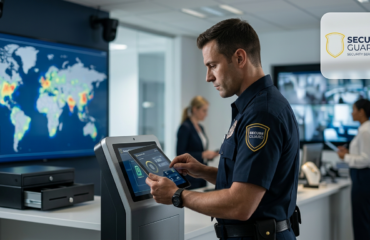
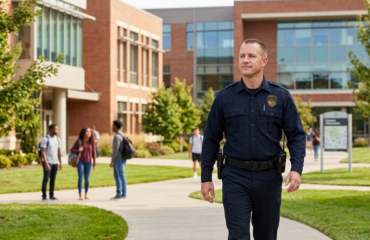
A professional security officer needs more than a uniform and a license. The strongest officers combine observation, communication, judgment, reliability, professionalism, and the ability to follow clear procedures.
However, the right qualities can vary by assignment. A lobby officer may need strong customer-service skills, while a warehouse gate officer may need greater attention to vehicle logs, deliveries, and access procedures.
For that reason, businesses should evaluate the qualities of a good security officer in relation to the property, post orders, operating environment, and responsibilities of the assignment.
This guide explains the qualities that matter most and what property managers should look for when evaluating professional security personnel.
1. Alertness and Situational Awareness
Alertness is one of the most important qualities in security work.
Security assignments can include long periods when nothing unusual happens. Even so, officers need to remain attentive to their surroundings and responsibilities.
A strong officer should notice conditions such as:
- An unsecured door
- A damaged gate
- A vehicle parked in an unusual location
- An unauthorized person in a restricted area
- Lighting that has stopped working
- Activity outside normal operating hours
- A change in normal property conditions
Good situational awareness is based on observation, not assumptions.
The officer should focus on what is actually happening and follow site procedures when something requires attention.
2. Integrity and Accountability
Security officers may have access to areas, information, keys, credentials, equipment, or procedures that are not available to the general public.
Therefore, integrity is essential.
A trustworthy officer should:
- Follow post orders
- Report incidents accurately
- Protect confidential information
- Use access privileges appropriately
- Be honest about mistakes
- Document activity truthfully
- Avoid falsifying patrols or reports
Accountability also matters when something goes wrong.
A professional officer should report the facts rather than hide an error or change a report to avoid responsibility.
3. Strong Communication Skills
Security officers regularly communicate with employees, residents, visitors, contractors, vendors, customers, supervisors, dispatchers, and emergency responders.
For that reason, officers should be able to communicate clearly and professionally.
Strong communication includes:
- Giving clear directions
- Explaining property procedures
- Listening carefully
- Speaking calmly during tense interactions
- Communicating accurate information to supervisors
- Providing useful information to emergency responders
- Writing understandable reports
Communication should remain professional even when another person is upset or difficult.
4. Good Judgment
Security work often involves situations that are not perfectly predictable.
An officer may need to decide whether a situation requires:
- Observation only
- A conversation
- Management notification
- Supervisor support
- Dispatch assistance
- Law-enforcement notification
- Emergency medical assistance
Good judgment means selecting the response that matches the situation, post orders, company policy, training, and applicable law.
The strongest officers do not overreact to minor issues or ignore situations that clearly require escalation.
5. De-Escalation Skills
Not every conflict requires physical intervention.
In many environments, communication and de-escalation are more useful than confrontation.
Professional officers may use techniques such as:
- Speaking calmly
- Listening before responding
- Maintaining appropriate distance
- Using professional body language
- Explaining property rules clearly
- Avoiding unnecessary arguments
- Requesting additional assistance when needed
An officer who remains calm can often help prevent a disagreement from becoming more serious.
Most importantly, the officer should understand when the situation exceeds their role and requires management or public safety personnel.
6. Observation and Attention to Detail
Security work often depends on recognizing small details.
For example, an officer may need to notice:
- A door that normally remains locked but is open
- A visitor without the required credential
- Damage to a fence or gate
- An unusual vehicle
- A missing key or access card
- A blocked emergency exit
- A repeated problem in one part of the property
Attention to detail also improves reporting.
Instead of writing that “something suspicious happened,” a strong officer can document the time, location, people involved, visible behavior, actions taken, and people notified.
7. Accurate Report-Writing Skills
A professional security officer should be able to document activity clearly.
Depending on the assignment, reports may include:
- Daily Activity Reports
- Incident reports
- Patrol records
- Visitor logs
- Vehicle logs
- Property-condition observations
- Photos and supporting documentation
Good reports should be factual, concise, and easy for managers or supervisors to understand.
They should also separate what the officer personally observed from assumptions or secondhand information.
8. Reliability and Punctuality
A skilled officer cannot provide security if they consistently arrive late or miss assigned shifts.
Reliability includes:
- Arriving on time
- Remaining at the assigned post
- Completing required patrols
- Following reporting schedules
- Communicating schedule problems properly
- Completing assigned responsibilities
Attendance is especially important at gates, lobbies, healthcare facilities, warehouses, residential communities, and other locations where an uncovered post can affect operations.
9. Professionalism
Security officers often represent both the security company and the client.
Professionalism can include:
- Appropriate uniform and appearance
- Respectful communication
- Following property procedures
- Maintaining confidentiality
- Avoiding unnecessary personal phone use
- Remaining attentive while on duty
- Treating visitors and employees consistently
A professional officer should help create an orderly environment without becoming unnecessarily confrontational.
10. Customer-Service Skills
Many security assignments are customer-facing.
Officers working at offices, hotels, apartment communities, healthcare facilities, retail properties, and events may regularly interact with the public.
Depending on the assignment, an officer may:
- Give directions
- Help visitors find the correct entrance
- Explain access procedures
- Assist tenants or residents with security concerns
- Direct delivery drivers
- Provide basic property information
Customer service does not mean ignoring security procedures.
The officer should be helpful while still applying the property’s rules consistently.
11. Ability to Follow Post Orders
One of the most important skills in professional security is following site-specific instructions.
Post orders may explain:
- Officer responsibilities
- Patrol routes
- Patrol frequency
- Access-control procedures
- Visitor rules
- Restricted areas
- Emergency contacts
- Incident-reporting requirements
- Client notification procedures
An officer may have years of security experience and still perform poorly if they ignore the client’s procedures.
Therefore, strong officers learn the property instead of assuming every post operates the same way.
12. Teamwork and Communication With Supervisors
Some officers work alone physically, but they should not operate without support.
Professional security programs may involve:
- Other officers
- Field supervisors
- Dispatch personnel
- Property managers
- Client representatives
- Mobile patrol officers
- Monitoring personnel
A good officer knows when to ask for assistance and how to pass accurate information to the next person involved.
For example, an officer may observe an issue, contact dispatch, notify a supervisor, and document the event for the property manager.
Physical Readiness Should Match the Assignment
Some security posts involve extended standing, walking, stairs, outdoor patrols, or other physical duties.
Therefore, officers should be capable of safely performing the essential duties of the specific assignment.
However, physical readiness should not be judged by someone’s body type or whether they fit an arbitrary idea of an “ideal weight.”
The relevant question is whether the officer can safely and reliably perform the actual duties required by the post.
Security Officers Should Not Be Selected for Aggressiveness
A security officer should not be evaluated based on a willingness to chase people, physically confront suspects, or act aggressively.
Strong security work usually depends more on:
- Observation
- Communication
- Judgment
- De-escalation
- Reporting
- Following post orders
- Knowing when to request assistance
Any use of physical force, detention, or arrest-related action must remain within the officer’s training, employer policies, applicable law, and the circumstances of the incident.
Licensing Is a Baseline Requirement, Not a Personality Trait
Professional qualities do not replace licensing and training requirements.
In California, the Bureau of Security and Investigative Services regulates Security Guard Registrations.
Current requirements include:
- Being at least 18 years old
- Completing required Power to Arrest training
- Completing DOJ and FBI criminal-history background checks
- Completing 32 hours of security-officer skills training within the first six months of registration
- Completing eight hours of continuing training each year
Current requirements are available through the California BSIS Security Guard Registration Fact Sheet.
Licensing confirms that an officer has met baseline regulatory requirements. Employers and clients should still evaluate reliability, professionalism, communication, judgment, and post-specific skills.
Different Security Posts Require Different Strengths
The ideal skill mix depends on the environment.
Office and Lobby Security
Strong communication, professionalism, visitor management, customer service, and access-control skills are especially important.
Warehouse and Logistics Security
Attention to detail, gate procedures, driver verification, patrols, documentation, and reliability may be higher priorities.
Residential Security
Residential officers often need communication, visitor management, parking patrol, de-escalation, and resident-service skills.
Healthcare Security
Healthcare officers may need strong communication, patience, de-escalation, access control, reporting, and the ability to work around people under stress.
Retail Security
Retail officers often need observation, customer service, de-escalation, parking patrol, incident reporting, and professional interaction with customers.
Construction Security
Construction assignments may require strong patrol habits, gate procedures, contractor verification, property-condition reporting, and attention to changing site conditions.
How Secure Guard Evaluates and Supports Security Officers
Secure Guard Security Services builds officer assignments around the property, post responsibilities, client procedures, operating environment, and risk level.
Depending on the assignment, our operating structure can include:
- Licensing verification
- Post orientation
- Site-specific post orders
- Field supervisor inspections
- 24/7 dispatch support
- Patrol verification
- Incident reporting
- SecureTrack documentation
Secure Guard’s current officer programs also use active supervision and SecureTrack reporting to help verify attendance, patrols, reports, and field performance.
Learn more about Secure Guard armed and unarmed security officer services.
Questions to Ask About Security Officer Quality
Before hiring a security provider, ask how it evaluates and manages its officers.
- How do you verify officer licenses?
- How are officers selected for different property types?
- How do officers learn the post orders?
- How are communication skills evaluated?
- How are patrols verified?
- How are incident reports reviewed?
- How often do field supervisors visit?
- What happens when an officer is not performing well?
- How are client complaints handled?
- Is dispatch available 24/7?
The provider should explain how officer quality is maintained after deployment, not simply describe hiring standards.
Frequently Asked Questions About Good Security Officer Qualities
What is the most important quality in a security officer?
No single quality is enough. Strong officers usually combine alertness, integrity, communication, good judgment, reliability, professionalism, and the ability to follow post orders.
Do security officers need to be physically fit?
Officers should be capable of safely performing the essential physical duties of their assigned post, such as standing, walking, or conducting patrols when required. Body type or weight alone is not a useful measure of officer quality.
Why are communication skills important for security guards?
Security officers regularly communicate with visitors, employees, residents, clients, supervisors, dispatchers, and emergency responders. Clear communication also supports de-escalation and accurate incident reporting.
What makes a security officer trustworthy?
Trustworthy officers follow procedures, protect confidential information, document activity honestly, use access privileges appropriately, and accept responsibility for their actions.
Why is report writing important for security officers?
Reports create a record of incidents, patrols, property concerns, and officer actions. Clear documentation helps management understand what happened and identify recurring problems.
Should security officers be aggressive?
No. Professional officers should rely on observation, communication, judgment, de-escalation, and established procedures. Aggressiveness is not a substitute for professional security work.
Do licensed security guards still need site training?
Yes. Licensing provides baseline qualifications, but officers still need to learn the property’s entrances, patrol routes, access procedures, restricted areas, emergency contacts, and client expectations.
How does Secure Guard monitor officer performance?
Depending on the assignment, Secure Guard uses field supervision, 24/7 dispatch, SecureTrack, patrol verification, attendance records, Daily Activity Reports, incident reports, and client communication to support officer accountability.