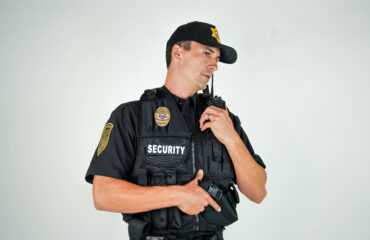
Security services can include much more than placing a guard at an entrance. However, the right type of security depends on the property, its operating hours, its access points, and its risks.
For example, an office building may need lobby security and parking patrols. A construction site, on the other hand, may benefit more from mobile patrol, video monitoring, and surveillance towers.
Therefore, understanding the main types of security services can help property owners choose coverage more carefully. Instead of purchasing a generic security package, they can build a plan around actual conditions.
In addition, a professional security plan can change as the property changes. New tenants, longer operating hours, construction work, new entrances, or repeated incidents may require different coverage.
What Are Physical Security Services?
Physical security services help businesses manage access, monitor property conditions, patrol designated areas, document incidents, and support established procedures. As a result, security can involve several services working together instead of one officer performing every task.
Depending on the site, a security program may include:
- Armed security officers
- Unarmed security officers
- Lobby and gatehouse security
- Foot patrols
- Mobile patrol
- Parking-area security
- Video monitoring
- Mobile surveillance towers
- Event security
- Traffic control
- Executive protection
- Security assessments
- Incident reporting
- Patrol verification
- 24/7 dispatch support
- Field supervision
Most importantly, each service should solve a clear security need. Therefore, the process should usually begin with a review of the property.
1. On-Site Security Officers
On-site security officers are useful when a property needs someone physically present throughout a shift. For instance, a commercial lobby may need continuous visitor management during business hours.
Depending on the post, officers may:
- Monitor entrances and exits
- Verify visitors
- Manage employee access
- Monitor vehicle gates
- Conduct foot patrols
- Observe unusual activity
- Monitor restricted areas
- Document incidents
- Assist employees, residents, or visitors
- Communicate with dispatch and supervisors
Likewise, a warehouse may need a standing officer at a truck gate. A residential property may instead need an officer at a gatehouse.
Learn more about armed and unarmed security officer services.
2. Unarmed Security Officers
Many properties do not need armed coverage. Instead, professional unarmed officers can handle many everyday security duties.
They are often well suited to assignments involving:
- Visitor management
- Lobby security
- Access control
- Customer service
- Routine patrols
- Parking-area observation
- Incident reporting
- De-escalation
For example, offices, hotels, apartment communities, business parks, retail stores, schools, and places of worship often require regular interaction with the public.
Even though these officers are unarmed, they still need proper licensing, post instructions, supervision, reporting procedures, and operational support.
3. Armed Security Officers
Some properties face higher-risk conditions. In those cases, armed security may be considered after a risk assessment.
Factors that may support evaluating armed coverage include:
- Documented serious threats
- Repeated violent incidents
- High-value assets
- Sensitive industrial operations
- Higher-risk cash-handling activity
- Critical infrastructure
- Certain executive-protection assignments
However, armed officers should not be selected simply because they appear more powerful. The decision should reflect the site’s actual risk, public interaction, prior incidents, officer duties, and legal requirements.
As a result, some properties may use armed personnel only at specific posts while assigning unarmed officers to public-facing areas.
4. Mobile Patrol Security
Not every property needs an officer at one fixed location throughout the entire shift. Therefore, mobile patrol can provide a more flexible option.
Mobile patrol services may cover:
- Parking lots
- Parking structures
- Building perimeters
- Exterior doors
- Vehicle gates
- Loading docks
- Storage yards
- Equipment areas
- Multiple buildings
For example, a business may keep one officer at the main entrance while a mobile patrol unit checks parking areas and perimeter doors.
Patrol visits may follow a schedule. Alternatively, they may occur at changing times so the patrol pattern is less predictable.
5. Video Monitoring Services
Video monitoring gives security teams added visibility in areas that officers cannot continuously watch. However, cameras work best when there is a clear response procedure.
Depending on the property, approved cameras may support:
- Entrance monitoring
- Parking-area monitoring
- Perimeter observation
- Loading-area visibility
- Equipment-yard observation
- Restricted-area monitoring
- Alert review
- Incident documentation
For instance, monitoring personnel may review unusual activity and then notify dispatch. Next, an on-site officer or mobile patrol unit can respond when the site’s procedures call for it.
In this way, cameras provide visibility while field personnel provide a physical response.
Learn more about video monitoring services.
6. Mobile Surveillance Towers
Some properties need camera coverage without permanent infrastructure. In that situation, a mobile surveillance tower can provide flexible visibility.
Common applications include:
- Construction sites
- Equipment yards
- Storage areas
- Parking lots
- Vacant properties
- Temporary work zones
- Large open areas
Because the tower can be moved, coverage can change as the site changes. This can be especially useful during construction projects.
In addition, surveillance towers can work with video monitoring, mobile patrol, standing officers, dispatch, and incident reporting.
7. Access Control and Gatehouse Security
Many security concerns begin at an entrance. Therefore, access control is often a central part of a security plan.
Depending on the property, officers may:
- Verify employee credentials
- Confirm visitor appointments
- Review approved access lists
- Maintain visitor logs
- Monitor vehicle gates
- Verify contractors and vendors
- Direct deliveries
- Protect restricted entrances
First, property management should decide who is allowed to enter. After that, security personnel can apply those rules consistently.
8. Event Security Services
Events create temporary security needs that may differ from normal property operations. For example, a corporate event may need guest-list control and VIP coverage.
A public festival, meanwhile, may require several entrances, parking personnel, crowd management, and traffic support.
Depending on the event, security coverage may include:
- Guest entrances
- Ticket or credential checks
- Crowd observation
- Restricted-area security
- Parking coverage
- Traffic support
- VIP areas
- Foot patrols
- Incident response
- Closing procedures
Therefore, event security should be planned around attendance, venue layout, parking, entrances, alcohol service, restricted areas, and emergency procedures.
Learn more about event security services.
9. Traffic Control Services
Some properties and events need help managing vehicles and pedestrians. This is especially true at construction sites, parking facilities, corporate events, and large gatherings.
Depending on the assignment, traffic control services may support:
- Vehicle entrances
- Parking areas
- Construction access points
- Drop-off locations
- Event traffic
- Pedestrian routes
- Loading areas
However, public-road requirements may differ from private-property procedures. Therefore, traffic responsibilities should follow the approved plan and applicable requirements.
10. Executive Protection
Executive protection focuses on people rather than only a fixed property. As a result, planning may begin well before the protected person arrives at a location.
Depending on the assignment, executive protection services may include:
- Risk assessment
- Advance planning
- Route planning
- Transportation coordination
- Airport transfers
- Venue reviews
- Travel protection
- Corporate-event coverage
- Close protection
For example, route planning and venue reviews may reduce unnecessary exposure before an executive reaches a meeting.
Therefore, executive protection should not be viewed simply as placing an armed guard next to a client.
11. Security Assessments and Consulting
If a property manager is unsure which service is needed, a security assessment is a useful starting point. First, the provider reviews the property and its normal operations.
A physical security review may consider:
- Property layout
- Operating hours
- Entrances and exits
- Parking areas
- Visitor activity
- Loading areas
- Restricted spaces
- Existing cameras and alarms
- Previous incidents
- After-hours activity
Next, the provider can identify which risks deserve the most attention. Sometimes the best improvement involves better procedures rather than more guards.
As a result, the final security plan can be based on actual conditions instead of assumptions.
12. Security Reporting and Patrol Verification
Professional security should provide more than visible personnel. In addition, clients should receive clear information about what happens during coverage.
Depending on the assignment, reporting may include:
- Daily Activity Reports
- Incident reports
- Patrol records
- Visitor logs
- Vehicle logs
- Checkpoint activity
- Photos
- Property-condition observations
- Items requiring follow-up
Secure Guard uses SecureTrack to support field reporting, patrol verification, and management visibility.
For example, SecureTrack can support officer attendance, GPS-supported patrol activity, checkpoints, reports, photos, post orders, and supervisor activity depending on the service setup.
13. 24/7 Dispatch Support
Security personnel often work during evenings, weekends, holidays, and overnight hours. Therefore, field officers need a reliable way to contact operational support.
A dispatch operation may help:
- Receive officer updates
- Contact supervisors
- Notify approved client contacts
- Coordinate additional personnel
- Support incident escalation
- Coordinate patrol or monitoring response
- Document important communication
However, dispatch does not replace police, fire, or emergency medical services. Instead, it connects field personnel with supervisors, clients, patrol officers, and other approved responders.
14. Field Supervision
Assigning officers is only one part of professional security. Likewise, ongoing supervision is important after service begins.
Field supervisors may review:
- Officer attendance
- Professional appearance
- Post-order compliance
- Patrol completion
- Reporting quality
- Training needs
- Client concerns
As a result, supervisor visits can identify performance problems before they become recurring service issues.
Which Security Service Does Your Property Need?
| Security Need | Service to Consider |
|---|---|
| Continuous lobby or gate coverage | On-site security officer |
| Visitor and employee access | Access-control or gatehouse officer |
| Periodic parking and perimeter checks | Mobile patrol |
| Remote camera visibility | Video monitoring |
| Temporary open-site camera coverage | Mobile surveillance tower |
| Large gathering or temporary event | Event security |
| Vehicle and pedestrian flow | Traffic control |
| Higher-risk property | Evaluate armed security |
| Customer-facing property | Often unarmed officer coverage |
| High-profile individual | Executive protection |
| Unclear security needs | Security assessment |
Standing Officers vs. Mobile Patrol vs. Video Monitoring
These services solve different problems. Therefore, the duty that needs to be performed should guide the decision.
Use a Standing Officer When You Need:
- Continuous visitor management
- Lobby security
- Continuous gate coverage
- Employee access control
- Immediate on-site presence
Use Mobile Patrol When You Need:
- Periodic security checks
- Parking patrols
- Perimeter inspections
- Coverage across multiple buildings
- After-hours property checks
- Alarm response
Use Video Monitoring When You Need:
- Additional visibility across remote areas
- Camera-alert review
- Perimeter observation
- After-hours monitoring
- Coordination with field security
In many cases, the best plan combines more than one service. For example, a standing officer may manage the entrance while video monitoring watches a remote parking area and mobile patrol handles exterior checks.
Armed vs. Unarmed Security
Not every property needs armed security. In fact, many public-facing properties are better served by professional unarmed officers.
Unarmed coverage is often a good fit when the main duties include:
- Visitor management
- Lobby security
- Routine patrols
- Parking coverage
- Customer service
- De-escalation
On the other hand, armed security may be evaluated when a property has documented higher-risk conditions, serious previous incidents, sensitive operations, or high-value assets.
Either way, the choice should come from a risk assessment rather than appearance or preference alone.
Security Services by Property Type
Commercial Offices
Office security may combine lobby officers, visitor management, employee access, parking patrols, after-hours coverage, and reporting.
Warehouses and Logistics Facilities
Warehouse security may include truck-gate officers, driver procedures, loading-dock monitoring, parking patrols, storage checks, and perimeter security.
Construction Sites
Construction security may combine gate officers, mobile patrol, video monitoring, surveillance towers, equipment checks, and after-hours coverage.
Residential Communities
Residential properties may use gatehouse personnel, visitor procedures, parking patrols, common-area checks, mobile patrol, and video monitoring.
Retail Properties
Retail security may include visible officers, customer assistance, parking patrols, monitoring, incident reporting, and seasonal coverage.
Healthcare Facilities
Healthcare security may include entrance coverage, visitor procedures, parking patrols, restricted-area monitoring, de-escalation, reporting, and support for workplace security procedures.
Hotels
Hotel security may focus on lobbies, guest areas, parking, events, overnight activity, and professional guest interaction.
Events
Event security may include entrance procedures, crowd observation, restricted areas, parking, traffic, VIP coverage, patrols, and incident documentation.
What to Ask Before Choosing Security Services
Before selecting coverage, review the property’s actual needs.
- What risks are we trying to address?
- Which areas need continuous security?
- Which areas only need periodic patrols?
- Do visitors or contractors require controlled access?
- Do parking areas need patrol coverage?
- Do existing cameras need active monitoring?
- Do we need armed or unarmed personnel?
- How quickly do we need a physical response?
- What reporting does management need?
- Is dispatch available after hours?
- How will officers be supervised?
- Can coverage change as the property changes?
Once those questions are answered, the right mix of officers, patrols, monitoring, technology, and reporting becomes easier to identify.
How Secure Guard Builds a Security Program
Secure Guard Security Services builds security programs around the property rather than starting with a generic package.
Our current approach includes:
- Risk Assessment: First, review the property layout, access points, operating hours, previous incidents, visitor activity, and known risk areas.
- Post Order Creation: Next, define officer duties, patrol routes, emergency contacts, reporting expectations, and escalation procedures.
- Officer Selection: Then, match personnel to the environment, risk level, responsibilities, and communication needs of the property.
- Active Supervision: Finally, use field supervisors, dispatch, reporting, and client communication to support accountability and adjust coverage when conditions change.
Depending on the assessment, the final plan may combine standing officers, mobile patrol, video monitoring, surveillance towers, event personnel, traffic control, executive protection, SecureTrack, dispatch, and field supervision.
Explore Secure Guard Security Services or request a security assessment to discuss the right coverage for your property.
Frequently Asked Questions About Types of Security Services
What are the main types of security services?
Common physical security services include on-site officers, armed and unarmed security, mobile patrol, access control, video monitoring, surveillance towers, event security, traffic control, executive protection, reporting, dispatch, and supervision.
Does every business need a full-time security guard?
No. Some properties need continuous standing coverage. However, others may use mobile patrol, video monitoring, or a combination of services instead.
Can mobile patrol replace a standing officer?
Sometimes. For example, properties that mainly need periodic inspections may use mobile patrol. Locations that require continuous access control, lobby security, or immediate on-site presence may still need a standing officer.
Can video monitoring replace security guards?
Video monitoring can provide additional visibility. However, it does not perform every function of an on-site officer. Therefore, many properties combine monitoring with mobile patrol or standing security.
Should every high-value property use armed security?
No. Instead, armed coverage should come from a risk assessment that considers documented threats, previous incidents, property conditions, asset exposure, public interaction, and applicable requirements.
What is a surveillance tower used for?
Mobile surveillance towers can provide flexible camera coverage for construction sites, parking areas, storage yards, open properties, and other locations where permanent camera infrastructure may not be practical.
How can clients verify security patrols?
Depending on the service setup, SecureTrack can document GPS-supported patrol activity, checkpoints, timestamps, reports, photos, incidents, and other field activity.
How do I know which security services my property needs?
First, review your layout, entrances, operating hours, parking, visitors, assets, previous incidents, existing security systems, and required response time. Then, choose the services that address those specific needs.