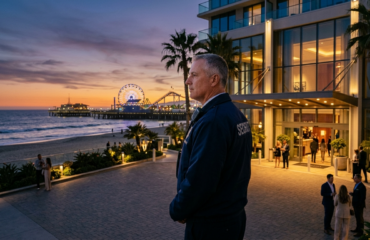
High-rise security should connect lobby access, floor permissions, patrols, camera coverage, and clear communication. A guard at the front desk cannot inspect every parking level or service corridor at the same time. Therefore, building managers need a plan that explains who handles each task and how the team reports concerns.
Office towers, residential buildings, and mixed-use properties also have different needs. For example, a building with shops on the ground floor may need public access downstairs while restricting access to offices or residences above.
Use these eight measures to review your building’s security program. Start with the areas that need attention, then assign clear duties and follow-up actions.
1. Review High-Rise Security Floor by Floor
Start with a walkthrough of the property. Include the lobby, parking levels, service entrances, shared spaces, and areas that require restricted access. Next, compare what you see with the building’s current security instructions.
Look at how people move through the building during busy and quiet periods. A visitor route that works during office hours may need a different process at night. Likewise, a vacant floor may need different checks from a floor with late-working tenants.
Review recent incident reports and maintenance requests as well. For example, repeated reports of a door failing to latch may point to an unresolved repair rather than a need for more cameras.
Record each concern, name the person responsible for follow-up, and set a review date. This turns a walkthrough into an action plan rather than another list of observations.
2. Make Lobby and Visitor Access Consistent
A lobby should welcome authorized visitors while giving staff a clear way to verify access. However, a sign-in book alone does not explain who may enter or where they may go.
Define how the front desk handles expected guests, walk-in visitors, delivery drivers, and contractors. In addition, identify who can approve an exception when a visitor does not appear on an expected-arrivals list.
Build a Clear Check-In Process
- Confirm the visitor’s destination and reason for the visit.
- Verify approval through the building’s established process.
- Issue any required visitor pass or temporary credential.
- Explain the approved route, waiting area, or escort requirement.
- Record departure and recover temporary credentials when required.
Apply the approved rules consistently. Officers should base access decisions on authorization and observed conduct, not assumptions about a person’s appearance.
For contractors, also confirm the work area, scheduled hours, and facility contact. A uniform or company logo should not replace the building’s verification process.
3. Review Elevator and Restricted-Floor Access
Entry into the building should not automatically grant access to every floor. Review which areas residents, tenants, visitors, and contractors need to reach.
Where the building uses electronic access controls, ask the authorized system administrator to review permissions. For example, a temporary contractor credential should match the approved work area and access period.
Also define how management handles lost credentials, tenant departures, and changes in occupancy. Otherwise, access permissions may remain active after the original need ends.
Preserve Emergency Exit Access
Security changes must not obstruct required emergency escape routes. Have qualified building and fire-safety professionals review proposed changes to stairwell doors, locks, or elevator controls before implementation.
For workplace exit routes, OSHA’s exit-route guidance explains requirements for door access and locking arrangements. Review the requirements that apply to your building with the appropriate professionals rather than using a generic security checklist as a compliance assessment.
4. Match Guard Coverage and Patrols to the Building
Separate duties that need continuous attention from tasks that involve moving through the property. Lobby access control and a patrol of several floors may require different staffing arrangements.
For example, do not assume one officer can maintain uninterrupted visitor screening while also inspecting the parking garage. Discuss relief coverage, patrol duties, and shift handovers before approving the schedule.
Secure Guard’s armed and unarmed security officer services include property-specific planning for assignments such as lobby coverage, access control, and patrols. Select the officer type around the duties and site assessment rather than the building’s height alone.
Meanwhile, mobile patrol services may supplement coverage through agreed visits to parking areas, entrances, or exterior spaces. These visits do not provide a continuous presence between inspections.
Write down the patrol areas, visit frequency, reporting duties, and arrangements for responding to a concern.
5. Give Cameras a Defined Monitoring and Response Role
Review what each camera needs to show. Entrances, garage access points, loading areas, and shared corridors may require different views and lighting.
Then test whether the footage supports that purpose. For example, a camera may show a doorway clearly during the day but produce a poor image after dark. Property changes can also block a previously useful view.
Recording and active monitoring are different services. A recorder stores footage, while a monitoring arrangement assigns responsibility for reviewing activity or alerts during specified hours.
Before adding professional video monitoring, agree on who receives alerts and what action follows. Also establish a backup process for equipment or connection failures.
Limit access to footage and system controls to authorized users. Management should approve camera locations, information-sharing rules, and retention practices with privacy requirements in mind.
6. Use Reports to Track Problems Through to Resolution
A patrol report should explain more than whether an officer visited an area. It should record relevant conditions, the action taken, and any follow-up management needs to arrange.
For example, an officer might report a garage door that fails to close. The next step is to notify the designated contact and document the repair request. After maintenance responds, management should confirm whether the problem remains.
Make Reports Useful to the Next Shift
- Identify the date, time, floor, and specific location.
- Describe what the officer observed without guessing at motives.
- Note the action taken and the person notified.
- Attach relevant photographs when policy allows.
- Identify unresolved items that need further attention.
Secure Guard’s SecureTrack reporting tools support incident records and checkpoint documentation. Confirm the features, notifications, and client access included in your assignment.
However, a checkpoint scan alone does not explain the quality of an inspection. Supervisors should review the recorded observations and follow up on missing or unclear information.
7. Align Security Duties With the Building’s Emergency Plan
Building managers should define emergency roles before an incident occurs. The plan should identify who communicates with occupants, contacts emergency services, assists responders, and coordinates with designated building personnel.
Security officers need training on their assigned role. In addition, managers should plan how staff will communicate with people who may need assistance during an emergency.
For workplaces, OSHA’s emergency action planning guidance emphasizes the site’s layout, emergency systems, staff responsibilities, and communication procedures.
Use the building-specific plan and instructions from emergency responders rather than assuming the same evacuation approach suits every tower. Qualified fire-safety professionals should guide the plan and any changes to it.
Private security does not replace firefighters, police, or emergency medical personnel. Officers should request the appropriate assistance and stay within their training and assigned duties.
8. Review Supervision and Tenant Communication
A high-rise security plan needs regular review as the building changes. New tenants, renovation work, different opening hours, or revised delivery arrangements may require updated instructions.
Set a process for approving changes and confirming that each shift receives them. Otherwise, daytime staff may follow one rule while the overnight team follows another.
Supervisors should also review service concerns with management. Useful discussion points include missed duties, report quality, recurring access problems, and completion of agreed follow-up actions.
Our guide to the qualities of a security guard supervisor explains what to look for in field leadership and oversight.
Finally, give tenants and residents a clear way to report non-emergency concerns. Encourage factual reports, but do not ask occupants to confront people or investigate potentially dangerous situations.
What to Include in a High-Rise Security Proposal
Compare proposals against the same building requirements. A low hourly rate means little if one proposal includes patrol coverage and relief staffing while another does not.
Before signing, confirm the following details:
- Coverage: Posts, staffing levels, days, hours, and relief arrangements.
- Duties: Lobby checks, patrol areas, contractor access, and reporting tasks.
- Support: Supervisor visits, after-hours contacts, and staffing backup.
- Technology: Included equipment, monitoring hours, and report access.
- Review process: How management raises concerns and approves changes.
Also ask for a redacted sample report and an explanation of the onboarding process. These details help you understand how the service will work after the first shift begins.
Frequently Asked Questions About High-Rise Security
What Does High-Rise Security Include?
High-rise security can include lobby staffing, visitor checks, floor-access procedures, patrols, camera monitoring, and incident reporting. However, the service agreement and post orders should define the exact duties for each building.
Does Every High-Rise Need 24/7 Guards?
Not every building needs the same schedule. Review overnight occupancy, visitor activity, access requirements, and the tasks that require an officer on site. Then confirm staffing availability and coverage hours with the provider.
Are Cameras a Replacement for Lobby Security?
Cameras and lobby officers serve different purposes. For example, a camera can record an entrance, but it does not carry out an in-person visitor check. Choose the combination that matches the building’s access and response needs.
How Should Managers Review Security Performance?
Compare the work with the agreed post orders. Review attendance, patrol records, incident reports, tenant feedback, and follow-up actions. In addition, meet with the supervisor to address recurring problems and document any changes.
Build a High-Rise Security Plan Around Your Property
Start with the building’s daily activity, not a standard list of equipment. Identify where continuous staffing matters, which areas need patrols, and how officers will communicate with management.
Next, connect access procedures, reporting, maintenance follow-up, and emergency roles. Clear responsibilities make the program easier to manage and review.
Secure Guard Security Services offers high-rise security services in California, including lobby access control, patrols, and security support for commercial and residential buildings.
Request a high-rise security consultation to discuss your building, coverage hours, access points, and reporting needs.