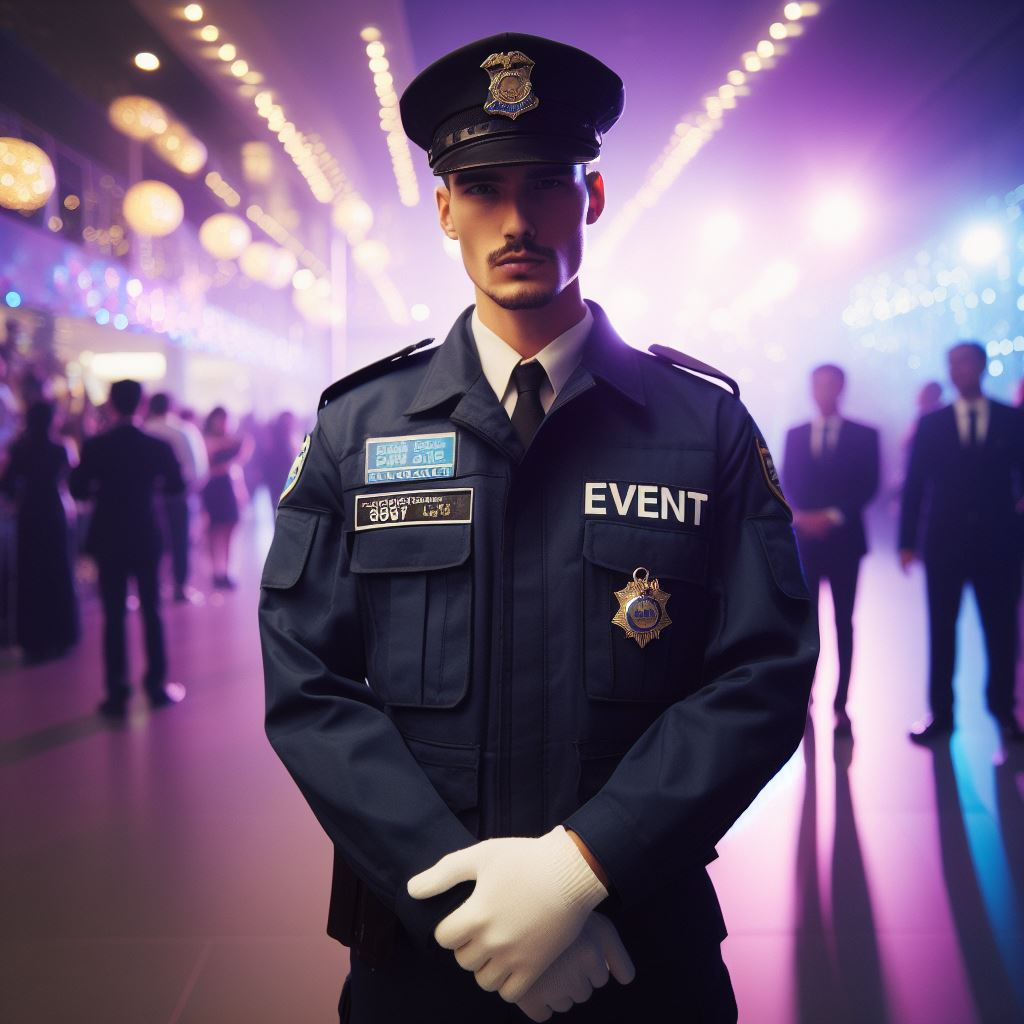
Event security officer responsibilities include much more than standing at an entrance. Professional event officers may help manage access, verify credentials, observe crowds, protect restricted areas, support guest flow, document incidents, and follow established emergency procedures.
Events can create temporary security conditions that differ from a property’s normal operations. A conference, corporate gathering, private event, festival, sporting event, or community function may involve large numbers of guests, vendors, staff, vehicles, temporary entrances, restricted areas, and changing crowd patterns.
For that reason, event security officers should work from a clear security plan rather than improvise on the day of the event.
The Cybersecurity and Infrastructure Security Agency provides a Mass Gathering Security Planning Tool that helps event planners review venue characteristics, entry controls, crowd management, perimeter security, emergency plans, and coordination with law enforcement and first responders.
Secure Guard provides event security officers for events that require professional entry procedures, restricted-area control, crowd observation, communication, and incident documentation.
What Does an Event Security Officer Do?
An event security officer helps carry out the security procedures established for a specific event or venue.
Depending on the assignment, responsibilities may include:
- Entry and exit monitoring
- Credential verification
- Guest flow
- Restricted-area control
- Perimeter observation
- Crowd monitoring
- Vendor access
- Parking-area observation
- Incident reporting
- Emergency communication
The U.S. Bureau of Labor Statistics identifies common security guard duties such as controlling access, patrolling property, monitoring alarms and surveillance systems, responding to emergencies, enforcing property rules, and writing reports.
Review the U.S. Bureau of Labor Statistics security guard profile for additional information.
1. Monitor Event Entrances and Exits
Entry points are often one of the most important parts of an event-security plan.
Depending on the event, officers may support:
- Guest entry
- Credential checks
- Ticket or pass verification procedures
- Vendor check-in
- Employee access
- VIP entrances
- Re-entry procedures
Security officers should follow the procedures established by the event organizer and venue.
They should know which credentials are valid, which entrances are open, which areas require authorization, and who should be contacted when a question arises.
2. Protect Restricted Areas
Many events include areas that are not open to every guest.
Examples may include:
- Backstage areas
- Production rooms
- VIP sections
- Staff-only areas
- Equipment rooms
- Loading areas
- Temporary storage areas
Event security officers may monitor entrances to these areas and verify that only authorized people enter.
Clear credentialing procedures help officers make consistent decisions instead of relying on verbal claims or assumptions.
3. Observe Crowd Conditions
Event officers should pay attention to how people move through the venue.
Potential concerns may include:
- Overcrowded entrances
- Blocked walkways
- Large groups forming in restricted locations
- Guests moving against normal traffic flow
- Congestion near stages or exits
- Disruptive behavior
CISA’s mass-gathering planning guidance includes crowd management as an important event-security consideration.
Officers should communicate changing crowd conditions to supervisors or event management so the team can respond according to the approved plan.
4. Support Guest Flow and Wayfinding
Event security often involves helping people move through a venue safely and efficiently.
Officers may provide directions to:
- Entrances
- Exits
- Restrooms
- Parking areas
- Registration desks
- Assigned seating areas
- Emergency exits
This customer-facing role is especially important at conferences, corporate events, private functions, and large public gatherings.
Professional communication can reduce confusion while allowing officers to maintain security procedures.
5. Monitor Vendors, Contractors, and Deliveries
Events may involve catering companies, production crews, equipment vendors, entertainers, transportation providers, and temporary contractors.
Depending on the event, officers may support:
- Vendor check-in
- Vehicle access
- Delivery entrances
- Temporary credentials
- Loading-zone procedures
- Restricted-area access
These procedures should be established before the event begins.
Security personnel should know which vendors are expected and which entrances they should use.
6. Patrol the Venue and Surrounding Areas
One security post cannot provide visibility across every part of a large event.
Depending on the venue, officers may patrol:
- Interior walkways
- Parking areas
- Building perimeters
- Backstage areas
- Service entrances
- Vendor areas
- Outdoor event zones
For events spread across larger properties, mobile patrol services may provide additional coverage around parking lots, perimeter roads, temporary facilities, and secondary entrances.
7. Communicate Clearly With the Event Team
Strong communication is one of the most important event-security skills.
Security officers may need to communicate with:
- Event organizers
- Venue managers
- Security supervisors
- Other officers
- Parking teams
- Medical personnel
- Law enforcement
- Fire or emergency personnel
Officers should know which communication channel to use and who has authority to make decisions.
For example, a guest-access question may go to event management, while a medical emergency may require immediate contact with emergency services.
Read Secure Guard’s guide to security guard communication skills for more information.
8. Support Established Emergency Procedures
Event officers should understand the emergency procedures that apply to the venue and event.
Depending on their assigned role, officers may help:
- Notify supervisors
- Contact emergency services
- Direct guests away from affected areas
- Maintain clear access routes
- Support evacuation procedures
- Secure restricted areas
Private security personnel do not replace police officers, firefighters, paramedics, or other first responders.
Their role should match their training, post orders, and the venue’s approved emergency plan.
CISA’s event-security planning framework encourages coordination among event planners, security teams, law enforcement, and first responders before a mass gathering begins.
9. Document Incidents and Security Activity
Professional event security should provide useful documentation.
Reports may include:
- Unauthorized access attempts
- Guest disturbances
- Medical incidents
- Property damage
- Lost-property incidents
- Parking concerns
- Restricted-area violations
- Actions taken by security personnel
Secure Guard uses SecureTrack security reporting and patrol verification to support digital incident reports, activity records, photographs, checkpoints, and post orders depending on the client’s service configuration.
Clear reporting helps event organizers understand what occurred and identify improvements for future events.
10. Maintain Professional Conduct Throughout the Event
Event security officers often interact directly with guests, employees, vendors, performers, and clients.
Professional conduct includes:
- Clear communication
- Respectful interaction
- Following post orders
- Maintaining awareness
- Using good judgment
- Avoiding unnecessary confrontation
- Accurately documenting incidents
An officer’s job is to support the event’s security procedures while maintaining a professional environment.
What Event Security Officers Do Not Normally Handle
Event security officers should not be confused with event planners or event managers.
Security personnel typically do not handle responsibilities such as:
- Selecting the event venue
- Creating the event budget
- Booking entertainment
- Managing social media promotion
- Selecting table settings
- Managing catering contracts
- Creating marketing campaigns
Those duties belong to event organizers, planners, venue staff, or other event professionals.
Security officers focus on the physical-security responsibilities assigned to them.
Event Security Planning Should Begin Before Event Day
Security planning should not begin when the first guest arrives.
Before the event, organizers should review:
- Expected attendance
- Venue layout
- Entrances and exits
- Parking areas
- VIP areas
- Restricted zones
- Vendor access
- Emergency exits
- Communication procedures
- Previous incidents or known concerns
CISA’s Mass Gathering Security Planning Tool can help organizers review these issues in a structured way.
How Many Event Security Officers Are Needed?
There is no universal officer-to-guest ratio that works for every event.
Staffing should consider:
- Attendance
- Venue size
- Number of entrances
- Restricted areas
- Parking facilities
- VIP participation
- Alcohol service
- Event duration
- Known security concerns
- Venue or permit requirements
A small corporate gathering with one entrance may require fewer officers than a large outdoor event with multiple gates, parking areas, backstage zones, and several thousand attendees.
The security provider should review the event before recommending staffing.
Armed vs. Unarmed Event Security Officers
Most events do not automatically require armed security.
Unarmed event officers may be appropriate for responsibilities such as:
- Entry control
- Credential checks
- Guest flow
- Restricted areas
- Parking observation
- Incident reporting
Armed officers may be considered when a documented risk assessment, venue requirement, threat concern, or other approved security need supports that level of coverage.
Read Secure Guard’s guide to armed vs. unarmed security for a broader comparison.
California Event Security Officers Must Meet Licensing Requirements
California security guards are regulated by the Bureau of Security and Investigative Services.
Security guard applicants must meet applicable registration, background-check, and training requirements.
Current requirements are available through the California BSIS Security Guard Registration Fact Sheet.
Additional requirements may apply if officers carry firearms, batons, tear gas, or other regulated equipment.
Event organizers should also review any security, staffing, permit, or law-enforcement requirements imposed by the venue or local jurisdiction.
Event Security Can Work With Cameras and Monitoring
Some venues use cameras to provide additional visibility across entrances, parking areas, event floors, hallways, and restricted areas.
Secure Guard’s video monitoring services can support camera observation, activity verification, communication, documentation, and client-approved escalation procedures when appropriate.
Video monitoring should support the event-security team rather than replace clearly assigned personnel where physical coverage is required.
Questions to Ask an Event Security Company
Before hiring event security, ask:
- Are the assigned officers properly licensed?
- How will you assess the venue?
- How many officers do you recommend?
- Where will security posts be located?
- How will entrances be managed?
- How will restricted areas be controlled?
- How are officers supervised?
- How are incidents documented?
- How are emergency situations escalated?
- Can officers work with existing venue cameras and access systems?
A professional provider should explain the security plan before event day.
Build Event Security Around the Venue and Guest Experience
Effective event security officer responsibilities should support both security and orderly event operations.
The right security program may combine entry officers, roaming patrols, restricted-area posts, parking coverage, video monitoring, reporting, and supervisor coordination.
Secure Guard Security Services provides professional event officers, armed and unarmed security personnel, mobile patrols, video monitoring, field supervision, post orders, and SecureTrack reporting.
Explore our event security officer services or our complete range of professional security services.
To discuss security coverage for an upcoming event, call 888-908-7818 or request an event security consultation with Secure Guard.