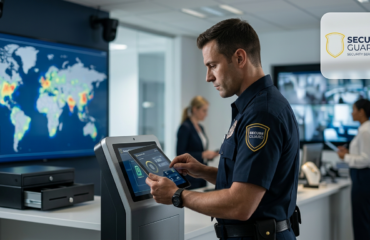
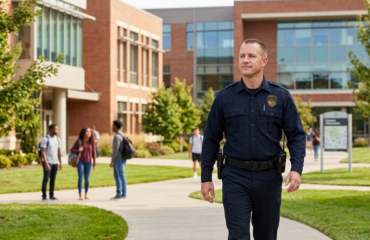
Armed security work can offer a career path for security professionals who are prepared to take on additional training, licensing, responsibility, and accountability.
However, an armed security position involves much more than carrying a firearm. Employers may expect officers to manage access points, conduct patrols, write reports, communicate with clients, follow detailed post orders, use de-escalation, and make sound decisions under changing conditions.
For anyone exploring armed security guard jobs in California, it is important to understand both the legal requirements and the realities of the job before applying.
This guide explains common armed-security roles, California requirements, employer expectations, work environments, schedules, and career-development opportunities.
What Is an Armed Security Guard?
An armed security guard is a security professional who is properly authorized to carry an exposed firearm while performing qualifying security duties.
Depending on the assignment, an armed officer may help protect:
- Commercial properties
- Warehouses and logistics facilities
- Industrial sites
- High-value assets
- Corporate facilities
- Construction sites
- Critical access points
- Executives or other protected individuals
- Other higher-risk properties
Still, armed security is not automatically appropriate for every property. Many assignments are better suited to professional unarmed officers.
The decision to use armed personnel should come from the property’s risk level, operating environment, client requirements, and applicable laws.
California Armed Security Requirements
California separates basic security guard registration from firearms authorization.
In other words, receiving a California Guard Card does not automatically allow an officer to work while armed.
California Security Guard Registration
To apply for a California Security Guard Registration through the Bureau of Security and Investigative Services, applicants generally must:
- Be at least 18 years old
- Complete the required Power to Arrest training
- Complete DOJ and FBI criminal-history background checks
- Meet ongoing security-officer training requirements
BSIS also requires 32 hours of security-officer skills training within the first six months of registration and eight hours of continuing training each year.
Review the current requirements through the BSIS Security Guard Registration Fact Sheet.
BSIS Firearms Permit
To work in an armed security assignment, an eligible security guard must also obtain the appropriate BSIS Firearms Permit.
For an initial Firearms Permit, BSIS requirements include:
- Being at least 21 years old
- Holding or qualifying under an eligible BSIS license or registration
- Being legally eligible to possess a firearm
- Completing required DOJ and FBI background checks
- Completing required firearms training
- Passing required examinations and firearm qualifications
- Completing the required firearms assessment when applicable
- Submitting the permit application and required fees
Applicants should review the current BSIS Firearms Permit Fact Sheet before beginning the process.
The Firearms Assessment for California Security Guards
Security Guard registrants seeking an initial BSIS Firearms Permit are also subject to the applicable firearms assessment requirement.
BSIS uses the Sixteen Personality Factor Questionnaire, commonly called the 16pf, to evaluate factors related to judgment, restraint, and self-control.
Importantly, the assessment must be completed before the initial Firearms Permit application is submitted and within the applicable BSIS time period.
Applicants can review the current process through the BSIS Firearms Assessment information page.
What Do Armed Security Officers Do?
The exact duties depend on the client and property. However, many armed-security assignments still involve the same core professional responsibilities expected from other security officers.
Common duties may include:
- Monitoring entrances and exits
- Managing access control
- Conducting security patrols
- Checking restricted areas
- Monitoring parking areas
- Observing suspicious activity
- Responding to alarms
- Writing Daily Activity Reports
- Preparing incident reports
- Communicating with dispatch and supervisors
- Supporting approved emergency procedures
- Following site-specific post orders
Most importantly, carrying a firearm does not replace communication, observation, professionalism, or de-escalation.
Armed Security Jobs Require Strong Judgment
An armed officer has additional responsibility because a firearm is present during the assignment.
Therefore, employers may place particular importance on:
- Good judgment
- Emotional control
- Situational awareness
- Professional communication
- De-escalation skills
- Attention to detail
- Accurate reporting
- Following policies and post orders
- Safe firearm handling
An armed officer should not view the firearm as the primary solution to security problems.
Instead, professional security should emphasize awareness, communication, planning, and appropriate escalation whenever circumstances allow.
Common Armed Security Work Environments
Armed-security opportunities can appear across several types of properties. Still, actual openings depend on the employer, contract, location, and assessed risk.
Commercial Properties
Some commercial properties may use armed officers when the property’s assets, operating conditions, or documented risk supports that level of coverage.
Warehouses and Logistics Facilities
Armed assignments may involve gate security, patrols, loading areas, vehicle access, high-value inventory, or overnight operations.
Industrial Facilities
Industrial properties may require access control, perimeter patrols, restricted-area monitoring, and protection of valuable equipment or operations.
Construction Sites
Higher-risk construction projects may consider armed security when valuable equipment, materials, prior incidents, or other site conditions justify the assignment.
Executive Protection
Some executive-protection assignments use properly licensed armed specialists when the risk assessment supports armed coverage.
However, executive protection involves much more than firearms. It may also include advance planning, route coordination, travel security, venue assessments, and close protection.
High-Value or Sensitive Properties
Other assignments may involve properties where valuable assets, controlled access, or documented threats support a higher level of protection.
Armed Security Is Not the Right Choice for Every Assignment
A professional security company should not automatically recommend armed personnel.
Many properties can be well served by trained unarmed officers who provide:
- Access control
- Visitor management
- Foot patrols
- Parking coverage
- Incident reporting
- Customer service
- De-escalation
For this reason, armed coverage should follow a site-specific risk assessment rather than a general assumption that armed officers always provide better security.
Learn more about when armed security guards may be appropriate in California.
What Employers Look for in Armed Security Candidates
Licenses and permits are important. However, employers also evaluate whether a candidate can perform the actual job professionally.
Depending on the position, employers may value:
- Reliable attendance
- Professional appearance
- Strong written communication
- Clear verbal communication
- Accurate incident reporting
- Customer-service skills
- Ability to remain calm under pressure
- Strong observation skills
- Ability to follow detailed post orders
- Reliable transportation when required
- Availability for nights, weekends, or holidays
In addition, some positions may prefer candidates with prior security, military, law-enforcement, or related professional experience.
However, those backgrounds are not universal legal requirements for every armed-security job.
Do You Need a College Degree for Armed Security?
A college degree is not a general California BSIS requirement for a Security Guard Registration or Firearms Permit.
Still, individual employers may set their own education standards for specific jobs.
For example, some employers may require a high school diploma or GED, while specialized supervisory, management, executive-protection, or government-related positions may have additional requirements.
Therefore, applicants should separate state licensing requirements from employer-specific hiring standards.
What Is the Work Schedule Like?
Security work does not always follow a traditional Monday-through-Friday daytime schedule.
Depending on the assignment, armed-security officers may work:
- Day shifts
- Swing shifts
- Graveyard shifts
- Weekends
- Holidays
- 12-hour shifts
- Temporary assignments
- Full-time or part-time schedules
For example, warehouses and industrial properties may need overnight coverage, while corporate or executive-protection work may follow a client’s changing schedule.
Applicants should review the shift requirements carefully before accepting a position.
What Challenges Come With Armed Security Work?
Armed-security jobs can involve greater responsibility than many standard security positions.
Potential challenges may include:
- Long periods of alert observation
- Night and weekend schedules
- Working alone at some posts
- Dealing with difficult or upset people
- Maintaining detailed reports
- Following strict firearm procedures
- Remaining calm during unusual incidents
- Keeping licenses and qualifications current
In addition, armed officers must maintain professional judgment even during routine shifts when nothing significant happens.
That consistency is a major part of the job.
What Are the Career Growth Opportunities?
An armed-security position can be one step within a broader security career.
Depending on experience, performance, training, and available positions, officers may pursue roles such as:
- Senior security officer
- Field supervisor
- Patrol supervisor
- Site supervisor
- Account supervisor
- Operations coordinator
- Security manager
- Executive-protection specialist
- Specialized security assignments
In addition, strong reporting, leadership, communication, and client-service skills can become increasingly important as an officer moves toward supervisory or management positions.
How to Prepare for an Armed Security Career
If you are interested in armed-security work in California, a practical path is:
- Understand the profession. Learn what security officers actually do before focusing on the firearm.
- Obtain the required Security Guard Registration. Follow current BSIS requirements.
- Complete required guard training. Maintain your training certificates and continuing education.
- Review Firearms Permit eligibility. Make sure you meet the age and legal requirements before paying for training.
- Complete the required firearms assessment. Follow the current BSIS process.
- Complete approved firearms training and qualification.
- Apply for the BSIS Firearms Permit.
- Build professional security experience. Focus on reporting, patrols, communication, and post-order compliance.
- Apply for positions that match your qualifications.
- Keep all registrations, permits, training, and qualifications current.
For a detailed licensing walkthrough, read our guide on how to become an armed security guard in California.
Applying for Armed Security Jobs With Secure Guard
Secure Guard Security Services hires security professionals for assignments throughout California based on current client needs and available positions.
Job requirements vary by assignment. Therefore, applicants should review each listing carefully before applying.
Depending on the position, Secure Guard may consider factors such as:
- Current Guard Card status
- Current Firearms Permit when armed work is required
- Relevant security experience
- Communication skills
- Report-writing ability
- Reliable attendance
- Shift availability
- Professional conduct
- Site-specific qualifications
Secure Guard’s current Careers & Employment page also highlights benefits such as competitive compensation, benefit options, flexible schedules, training opportunities, and internal promotion paths.
View Secure Guard Careers & Employment to review current opportunities.
Questions to Ask Before Accepting an Armed Security Job
Before accepting a position, make sure you understand the assignment.
- What property will I protect?
- What are the shift hours?
- Is the post armed for the entire shift?
- What permits and qualifications are required?
- What are the patrol responsibilities?
- Will I work alone or with a team?
- Who provides field supervision?
- Is dispatch available during my shift?
- What reports am I expected to complete?
- What site-specific training will I receive?
- What equipment am I expected to provide?
- How are schedule changes and call-offs handled?
Clear answers can help you decide whether the job matches your qualifications, schedule, and career goals.
Frequently Asked Questions About Armed Security Guard Jobs
How old do you have to be to work as an armed security guard in California?
A California Security Guard Registration generally requires an applicant to be at least 18. However, an applicant for an initial BSIS Firearms Permit must be at least 21.
Does a California Guard Card allow you to work armed?
No. A Guard Card alone does not authorize armed security work. An eligible guard must also obtain the applicable BSIS Firearms Permit before performing an armed assignment.
Do you need a college degree for armed security?
California BSIS does not generally require a college degree for a Security Guard Registration or Firearms Permit. However, individual employers may set additional education requirements for specific positions.
Do armed security guards need a psychological assessment in California?
Security Guard registrants seeking an initial BSIS Firearms Permit are subject to the applicable firearms assessment requirement. Applicants should review current BSIS instructions before applying.
What skills are important for armed security officers?
Important skills include observation, communication, good judgment, de-escalation, accurate report writing, attention to detail, reliability, professional conduct, and the ability to follow policies and post orders.
Do armed security guards always work high-risk assignments?
No. Assignments vary by property and employer. However, armed coverage is generally considered when the property’s risk, assets, operating environment, or client requirements justify it.
Can armed security lead to supervisory positions?
Yes. Depending on performance and available opportunities, officers may move into senior officer, field supervision, site supervision, account management, operations, or specialized security roles.
Where can I find Secure Guard security jobs?
Current Secure Guard opportunities can be reviewed through the company’s Careers & Employment page. Job availability and requirements can change, so applicants should review current listings before applying.